Regarding the amendment to the Criminal Procedure Rules that requires a face-to-face hearing before a judge issues a search and seizure warrant, it is reported that the Supreme Court is considering limiting the subjects of the hearing to investigative agencies or third parties designated by investigative agencies.
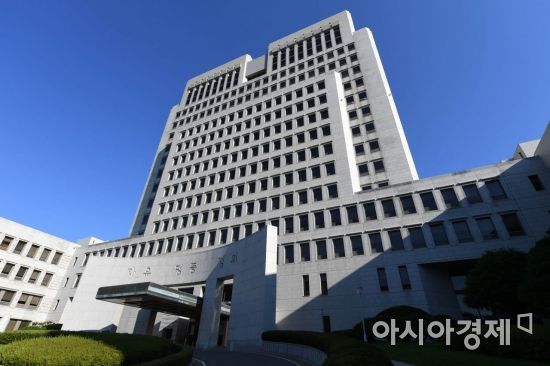
According to the legal community on the 9th, the Supreme Court's Judicial Administration Office reported on court issues, including practical improvements for electronic evidence search and seizure, at the nationwide court chiefs meeting held in Buyeo-gun, Chungnam Province.
The Judicial Administration Office newly added a provision in the amendment to the Criminal Procedure Rules, which was announced for legislative notice last month, stating, "When the court deems it necessary, it may set a hearing date before issuing a search and seizure warrant and question persons who have information necessary to examine the requirements for search and seizure."
In response, the prosecution has opposed the amendment, arguing that investigative information could leak through informants. There were also claims that regulating face-to-face hearings by Supreme Court rules violates Article 12 of the Constitution, which states that "no one shall be compelled to testify except as provided by law." Opposition also came from bar associations and academia.
In response, the Judicial Administration Office reportedly explained on the day that the subjects of the face-to-face hearing could be limited to "investigative agencies" or "investigative agencies and third parties designated by investigative agencies." They considered that if non-public hearings are conducted mainly with investigative agencies, issues such as compromising confidentiality or delays in investigation could be reduced.
It is also reported that, unlike the constitutionally defined "interrogation," which implies forced answers, the face-to-face hearing for search and seizure warrants aims only to resolve doubts before the judge decides whether to issue the warrant, and since it lacks coerciveness, it can be introduced solely by the Supreme Court's rule-making.
Among the amendments, there is also a provision that when investigative agencies search electronic information stored on computers or mobile phones, the warrant application must include an execution plan specifying "search terms to be used for analysis" and "the period to be searched," but the Judicial Administration Office has left room for interpretation considering the investigative agencies' position.
The prosecution expressed concerns that if search terms are preset, it would become difficult to find evidence in forms such as slang used internally by suspects or files like PDFs that are not searchable.
In response, the Judicial Administration Office reportedly explained that even after the amendment is implemented, the execution plan for the warrant can be operated flexibly.
Meanwhile, court chiefs were also briefed on institutional improvements for enhancing the small claims adjudication system and activating citizen participation trials, as well as plans to establish administrative litigation rules.
Kim Sang-hwan, head of the Judicial Administration Office, apologized regarding the recent electronic litigation system outage earlier this month, saying, "We apologize to both the public and court members," and added, "We will establish measures to prevent recurrence and inspect and improve the judiciary's IT infrastructure."
© The Asia Business Daily(www.asiae.co.kr). All rights reserved.
![Clutching a Stolen Dior Bag, Saying "I Hate Being Poor but Real"... The Grotesque Con of a "Human Knockoff" [Slate]](https://cwcontent.asiae.co.kr/asiaresize/183/2026021902243444107_1771435474.jpg)















