0.1% and 70 Times the Median Income
Only 2 out of 10 People "Satisfied with My Income"
As the economy recovers from the COVID-19 pandemic, income satisfaction polarization has worsened.
On the 25th, Yang Kyung-sook, a member of the National Assembly's Planning and Finance Committee from the Democratic Party of Korea, analyzed data from the National Tax Service and found that in 2021, the average annual income of the top 0.1% in combined income (earned income plus comprehensive income from business, finance, and rental) was 1.8497 billion KRW.
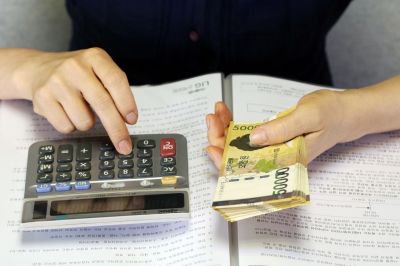
This amount is 70 times the median income earner’s average annual income of 26.6 million KRW when all households are ranked by income level.
The average annual combined income of the top 1% was 470 million KRW, 17.7 times that of the median income earner, and the top 10% had an average annual income of 146.4 million KRW, 5.5 times the median income.
Comparing 2018 and 2021, the average annual income of high earners in the top 0.1% increased by 126.13 million KRW per year, while the top 1% saw an annual increase of 24.65 million KRW.
On the other hand, among 25,359,000 taxpayers with combined income, 40.5%, or 10,266,321 people, earned less than the annual minimum wage of 21.87 million KRW. This amount is calculated based on the 2021 hourly minimum wage of 8,720 KRW.
According to the “Quality of Life in Korea 2022” report published by the Korea Institute for Health and Social Affairs on the 20th, the real gross national income (GNI) per capita in 2021, adjusted for purchasing power considering inflation, was 39.49 million KRW. This represents an increase of about 1.72 million KRW (4.6%) from 37.77 million KRW in 2020, indicating a slight economic recovery from the contraction caused by COVID-19.
However, income satisfaction, which measures how satisfied individuals are with their income, was 23.5% in 2021, showing that only about 2 out of 10 people were satisfied with their income. Among seven indicators in the areas of income, consumption, and assets, six indicators including per capita GNI and median household income improved, but the household debt ratio worsened.
As of 2021, South Korea’s household debt ratio relative to disposable income is relatively high among OECD countries. Major OECD countries such as Japan (115.4%), France (124.3%), and the United Kingdom (148.5%) do not exceed 150%. In contrast, countries like Denmark, the Netherlands, Norway, Sweden, Australia, and Switzerland have household debt ratios exceeding 200%, which are considered high.
© The Asia Business Daily(www.asiae.co.kr). All rights reserved.
![Clutching a Stolen Dior Bag, Saying "I Hate Being Poor but Real"... The Grotesque Con of a "Human Knockoff" [Slate]](https://cwcontent.asiae.co.kr/asiaresize/183/2026021902243444107_1771435474.jpg)















