Low-Cost Package Tourists Influx
Average Spending Only 430,000 KRW Over 5 Days
Thailand Plans to Implement Tourism Tax Increase
Measures Being Considered Including Development of High-End Travel Products
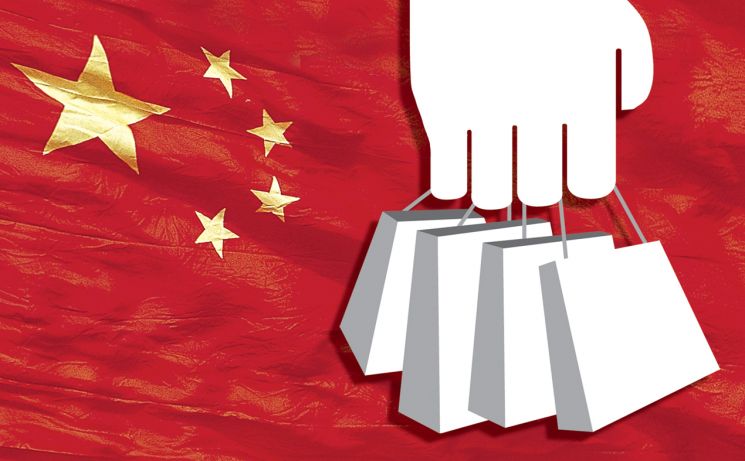
[Asia Economy Reporter Lee Ji-eun] Although Chinese authorities resumed group overseas travel for Chinese citizens earlier this year after banning it due to the spread of COVID-19, Southeast Asian countries that rely on the tourism industry are expressing discomfort. Chinese tourists are engaging in so-called "zero-dollar tourism," using only low-cost package tours, which is criticized for not significantly contributing to increased tourism revenue.
The Wall Street Journal (WSJ) reported on the 15th (local time) that Southeast Asian countries are concerned about the influx of tourists using zero-dollar tourism packages following the lifting of restrictions on overseas travel for Chinese citizens starting from the 6th.
For Southeast Asian countries dependent on the tourism industry, Chinese tourists are a kind of "gye-reuk" (a Korean idiom meaning something burdensome yet necessary). Although the tourism industry was hit hard by COVID-19 and every tourist is valuable, Chinese tourists are judged not to bring substantial income proportional to their numbers.
In fact, in the case of Da Nang, Vietnam, many Chinese tourists purchased low-cost travel packages through a Chinese travel agency called Hava Travel, but the average travel expenditure per person over five days was only 8 million dong (about 436,000 KRW). WSJ reported that individual tourists spend about 50% more than this. Moreover, the spending was mostly at stores operated by Chinese people, so the revenue did not flow into the local tourism income.
Chinese travel agencies sold package tours to tourists at prices cheaper than round-trip airfare and then encouraged them to shop at Chinese-owned stores at prices higher than market value. There were also cases where local tourist sites colluded with travel agencies. In 2016, at Kathu Temple in Phuket, Thailand, a controversy arose when Chinese travel agencies partnered to sell lucky charms to tourists at a high price of 20,000 baht (about 680,000 KRW).
In response, the Thai government took strong measures in 2016 to eradicate low-cost package tours. They seized the accounts of 381 companies, including OA transport companies linked to low-cost travel agencies, and confiscated 2,155 tourist buses. The area around tourist sites was paralyzed by buses transporting Chinese tourists, and as tourists increasingly spent excessive amounts on shopping through low-cost travel packages, the government judged that the country's image was being damaged and took these actions.
Southeast Asian countries are seeking solutions by developing high-end tourism products and raising tourism taxes. The Thai government plans to implement a policy imposing a 300 baht (11,244 KRW) tourism tax on foreigners entering Thailand. Additionally, to increase tourism revenue to 25% of the gross domestic product (GDP), they plan to promote a five-year plan focused on wellness as a catchphrase and develop luxury tourism products.
© The Asia Business Daily(www.asiae.co.kr). All rights reserved.
![Clutching a Stolen Dior Bag, Saying "I Hate Being Poor but Real"... The Grotesque Con of a "Human Knockoff" [Slate]](https://cwcontent.asiae.co.kr/asiaresize/183/2026021902243444107_1771435474.jpg)















