[Asia Economy New York=Special Correspondent Joselgina] Following employment and inflation, now even consumption, which accounts for two-thirds of the US real economy... Since the beginning of the new year, US economic indicators have exceeded market expectations, deepening the Federal Reserve's (Fed) concerns. These signals suggest that the high-intensity tightening efforts continuing since last year have not had a significant impact. Amid growing concerns that higher interest rates may persist for a longer period, some view these signs as indicating a 'soft landing.'
◆US January Retail Sales Increase by 3%
According to the US Department of Commerce on the 15th (local time), January retail sales increased by 3% compared to the previous month. This figure exceeds market expectations (1.9%) by more than 1 percentage point. Last month's retail sales recorded the largest increase in 22 months since March 2021, contrasting with the consecutive 1% declines in November and December last year.
Core retail sales, excluding gasoline and automobiles, also rose 2.6% from the previous month, marking the largest increase in nearly two years. It is evaluated that Americans, who had been reducing consumption due to high inflation, recently reopened their wallets thanks to a strong labor market and wage increases. By item, consumption increased in automobiles, furniture, healthcare, and dining out.
Joel Naroff, president of Naroff Economics, explained, "Consumers are in quite a good state," adding, "When employment conditions are comfortable, this leads to consumer spending." He explained that most of the demand supporting the indicators stems from a strong labor market. Retail sales are considered a pillar accounting for two-thirds of the US real economy and a comprehensive measure of economic health.
Bloomberg reported, "The US economy is showing remarkable resilience at the beginning of the year." Separate indicators in the manufacturing sector also appeared better than expected, and homebuilders showed confidence in the economy as soaring mortgage rates stabilized, the media added. The Wall Street Journal (WSJ) also reported, "Adding signs of US economic growth at the start of the year." Recently, as the US economy has shown strength despite accumulated tightening, expectations for a soft landing have increased on Wall Street. Beyond a soft landing, there is even a so-called ‘no-landing’ scenario where the economy could soar without recession or slowdown.
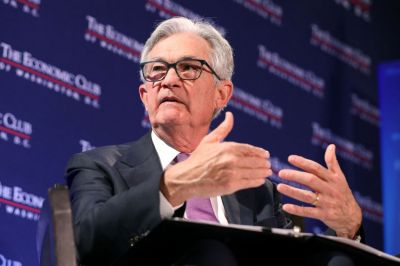
◆Growing Tightening Concerns Amid Strong Economic Indicators
However, these indicators could further fuel inflation and provide grounds for the Fed to resume high-intensity tightening steps.
In particular, the retail sales announced on this day drew more attention as they were released the day after the Consumer Price Index (CPI) data showed inflationary pressures had not eased as much as expected. The market had already lost confidence in the possibility of an early end to Fed tightening following the January employment report, which far exceeded expectations earlier this month. With three consecutive strong indicators including the previous day’s CPI and today’s retail sales, concerns about Fed tightening have intensified.
Initially, the market widely expected the Fed to end the rate hike cycle at 4.75?5.0% with a baby step (0.25 percentage point increase) in March. However, market optimism was dampened in February. The first turning point was the January employment report released on the 3rd. January added 517,000 new jobs, nearly three times the market forecast, and the unemployment rate fell to 3.4%, the lowest since May 1969. On the same day, the Institute for Supply Management (ISM) January Services Purchasing Managers’ Index (PMI) recorded 55.2, returning to expansion.
Moreover, the January CPI released the previous day exceeded market expectations in all detailed indicators, rekindling concerns about prolonged high inflation. January CPI rose 6.4% year-on-year, surpassing Wall Street’s forecast of 6.2%. Furthermore, the month-on-month CPI surged 0.5%, a larger increase than December’s 0.1%. On the same day, Fed officials also expressed that it was too early to halt the rate hike trend.
Olen Klachin of Oxford Economics evaluated, "These indicators support their view that additional rate hikes are necessary to cool the economy and bring inflation down to the 2% target."
According to financial information provider FactSet, the market’s expected benchmark interest rate is 5.28% in August. Investors who were optimistic about a final rate level of 4.9% earlier this month have now turned more hawkish than the Fed’s dot plot forecast (5.1% by year-end). The current US benchmark interest rate is 4.5?4.75%.
The bond market is also reacting sensitively. The 2-year US Treasury yield, sensitive to monetary policy, surpassed 4.6% following the CPI and retail sales announcements. The 6-month yield soared to the highest level since 2007. The US dollar also strengthened. The Dollar Index, which measures the dollar’s value against six major currencies, jumped to its highest level since early January.
However, some argue that January economic indicators may have been excessively inflated during seasonal adjustment processes. Additionally, since there is a lag before accumulated monetary policies are reflected in indicators, it is argued that judgments cannot be made based on just one month’s data.
© The Asia Business Daily(www.asiae.co.kr). All rights reserved.
![Clutching a Stolen Dior Bag, Saying "I Hate Being Poor but Real"... The Grotesque Con of a "Human Knockoff" [Slate]](https://cwcontent.asiae.co.kr/asiaresize/183/2026021902243444107_1771435474.jpg)















