Care, Housework, Counseling, Education, Vocational Training, and Employment Support
Representative Won Mi-hee of the Provincial Assembly Initiated, Approved at the Plenary Session on the 16th
[Asia Economy Reporter Ra Young-cheol] Since the so-called 'caregiver murder' case in 2021 in Daegu, where a young person in their 20s gave up caregiving due to the burden of nursing care, leading to the death of their father, social demands for support for young family caregivers have increased.
Last year, a man in his 30s in Seoul stood trial on charges of abuse resulting in death while caring for his younger sister with severe intellectual disabilities amid social isolation.
Both cases share the commonality that young people responsible for the livelihood of family members requiring care due to disabilities or mental and physical illnesses were placed in welfare blind spots where they could not receive institutional support.
In particular, young family caregivers face issues such as lack of information due to social isolation and negative experiences with benefit reception, preventing them from utilizing available allowances and services, highlighting the urgent need for related legislation.
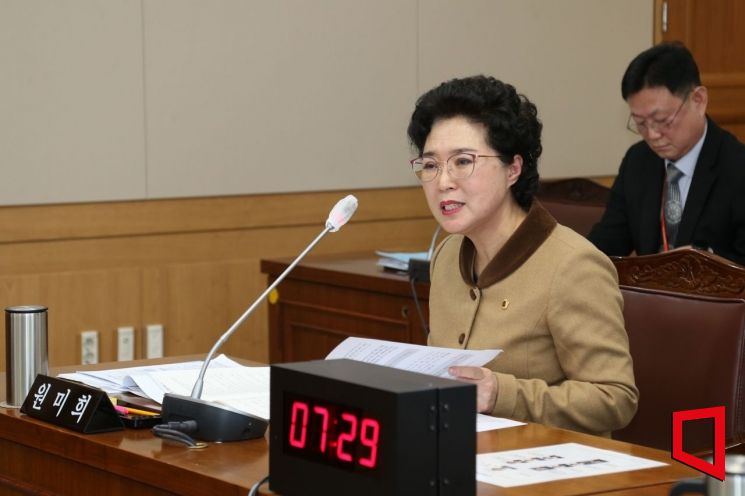 Won Mi-hee, Gangwon Provincial Councilor (Social and Cultural Committee) [Photo provided by Gangwon Provincial Council]
The Gangwon Provincial Council announced on the 14th that "the 'Gangwon-do Family Young Carer Support Ordinance,' which was proposed by Assemblywoman Won Mi-hee of the Social and Cultural Committee to support 'young family carers' in crisis due to social isolation, has passed the standing committee review."
According to the council, the ordinance includes provisions on ▲ the purpose of supporting young family carers, establishment of basic and implementation plans ▲ surveys ▲ matters related to caregiving, household chores, counseling, education, vocational training, and employment, outlining support in the public sector.
According to statistics from foreign cases such as the UK, New Zealand, and Germany, 5-8% of the adolescent and youth population is estimated to be young family carers.
In South Korea, a 2022 nationwide survey targeting middle and high school students and youth aged 13 to 34 found that about 4.11% of the 43,832 respondents were identified as young family carers. Among them, 1,802 youths responded that they are caring for family members, and 731 requested support linkage.
This result emerged after the issue of young family carers was brought to public attention, following the absence of related legislation and official definitions, and the establishment of a 'Family Young Carer Support Measures Plan.'
It is pointed out that conducting accurate surveys at the local government level to identify young family carers in welfare blind spots early and providing systematic support is of utmost importance.
Assemblywoman Won Mi-hee expressed concern, saying, "Young family carers, at a crucial time when they should be preparing for their future, lose the time and opportunity to invest in their studies and career while bearing the responsibility of family care and livelihood, making it easy for their entire lives to fall into a vicious cycle of poverty."
She added, "Through the enactment of this ordinance, I hope that young family carers can develop their abilities, establish sound values, be guaranteed dignity and value as human beings, and grow into members of society who can lead happy lives."
The ordinance is scheduled for final approval at the plenary session on the 16th.
© The Asia Business Daily(www.asiae.co.kr). All rights reserved.
![Clutching a Stolen Dior Bag, Saying "I Hate Being Poor but Real"... The Grotesque Con of a "Human Knockoff" [Slate]](https://cwcontent.asiae.co.kr/asiaresize/183/2026021902243444107_1771435474.jpg)















