Popular restaurant reservation app lets you check waiting status in real time, competing to partner with popular restaurants
As social distancing measures are lifted and more people dine out, the number of users of restaurant reservation applications (apps) is also rapidly increasing. While these apps offer the advantage of allowing users to enter restaurants at their desired time without waiting in line, some concerns have been raised about deepening the digital divide.
Remote Queueing Service... Just Arrive at Your Scheduled Time
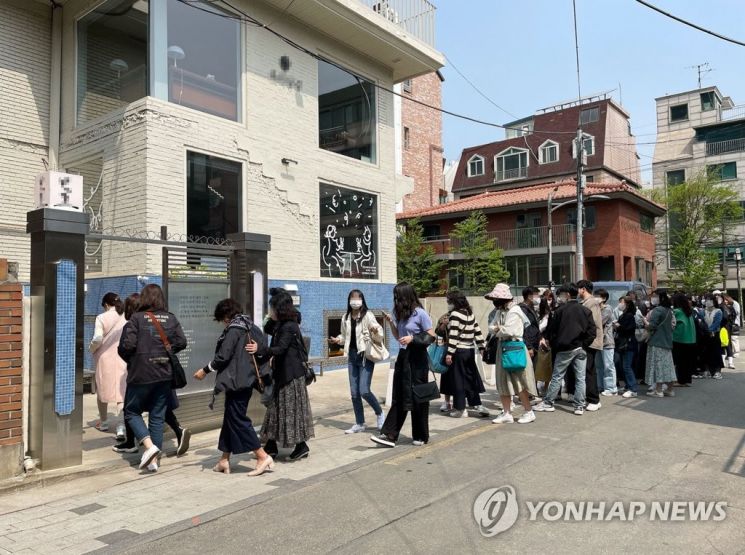
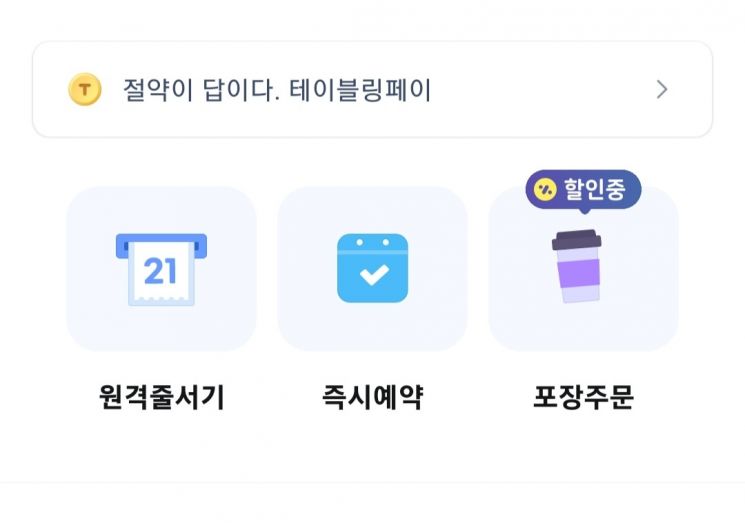
Although there are slight differences between apps, restaurant reservation apps organize restaurant information by region and menu, allowing users to make reservations all at once. In particular, they have introduced a 'remote queueing service' that helps users avoid standing in line in front of restaurants by visiting at the pre-reserved time. Remote queueing refers to a system where users queue remotely through the app without physically waiting in line at restaurants or cafes.
According to NHN data analyzing about 28 million Android users, the number of food reservation app installations significantly increased in the second half of 2022 compared to the first half. CatchTable saw a 65% increase, and Tableling a 44% increase. CatchTable plans to strengthen its queueing feature called 'CatchTable Waiting,' while Tableling has already introduced a remote queueing service.
The remote queueing service is popular among both restaurant owners and customers. By prepaying a portion of the meal cost, it helps prevent 'no-shows' and enables smooth reservation management, allowing owners to serve customers more comfortably. Users can also visit the restaurant at the reserved time without waiting in line and enjoy their meals immediately.
Additionally, users can check the available number of seats and receive real-time notifications of their entry order through online messengers. This is especially convenient in cold and snowy weather, avoiding the discomfort of waiting outside and saving time.
Investment Surges as Partner Restaurants Increase
The dining industry predicts steady growth for restaurant reservation apps. Providing information that allows users to easily identify popular restaurants and the number of partner restaurants secured will determine competitiveness. These apps are particularly popular among the MZ generation, who are willing to pay high prices for a meal without hesitation and value efficiency in terms of time.
A person in their 20s, A, who used CatchTable to reserve a restaurant last Christmas, said, "I made a reservation on my phone and went to the restaurant at the scheduled time. On a busy day like Christmas, I could eat immediately without waiting." Another user, B, said, "Waiting outside in the cold and snow is tough. It's great to reserve through the app and wait at a nearby cafe until I receive an entry notification message."
As restaurant reservation apps rapidly rise, the investment sector is also showing interest. CatchTable successfully raised 30 billion KRW in investment last April, reaching a total accumulated investment of 42.5 billion KRW. AI-based restaurant reservation solution startup TableManager also received a strategic investment of 2 billion KRW from KT last year.
"Register for Waiting" Confuses Elderly... Another Form of 'Digital Divide'
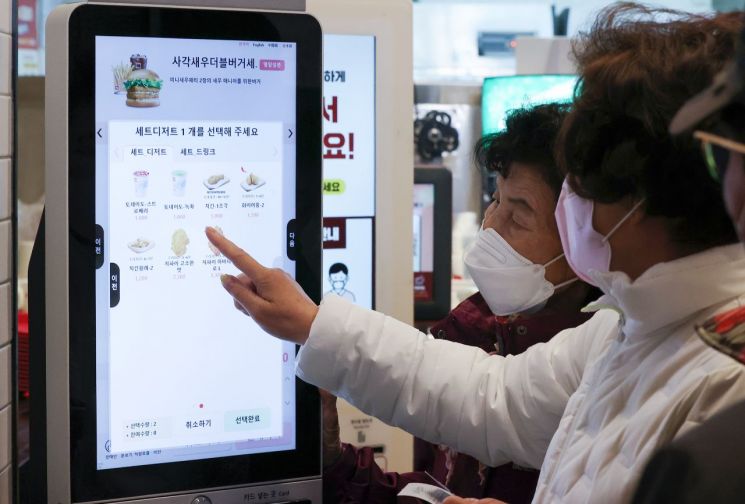 On October 17 last year, elderly members of the Seoul Home Care Senior Welfare Association participated in a digital kiosk training for elderly people with disabilities at the Lotteria Dongmyo Station branch in Jongno-gu, Seoul, experiencing the process of ordering food through the kiosk.
 [Image source=Yonhap News]
However, there are voices that people unaware of remote queueing are suffering. The so-called 'digital divide' appears among the elderly and middle-aged groups who are unfamiliar with or unaware of remote queueing apps.
Some restaurants do not accept reservations via websites or phone calls, so people who waited in line in person have reported "making a wasted trip" due to food stock running out.
There are also concerns that if dining businesses linked to waiting apps introduce reservation fees similar to delivery platform commissions, these costs could be passed directly on to consumers.
Currently, platform operators do not charge partner restaurants or cafes fees or usage charges, but as the number of users increases, there is a possibility that fees may be imposed to generate higher profits.
© The Asia Business Daily(www.asiae.co.kr). All rights reserved.
![Clutching a Stolen Dior Bag, Saying "I Hate Being Poor but Real"... The Grotesque Con of a "Human Knockoff" [Slate]](https://cwcontent.asiae.co.kr/asiaresize/183/2026021902243444107_1771435474.jpg)

















