Popularity of Zero-sugar (Mudang) Continues This Year
'Healthy Pleasure' Trend Embracing Taste and Health
This year, the trend of 'sugar-free (無糖)' is expected to continue as zero-calorie and zero-sugar food and beverage products, including soju, keep being launched. Zero-sugar and zero-calorie products, which have made a mark in the carbonated beverage market, are gaining popularity among the 20s and 30s age group and are becoming a mainstream trend in the alcoholic beverage industry. This is analyzed to be influenced by the trend called 'Healthy pleasure,' meaning 'enjoying health management happily,' which has taken root mainly among consumers in their 20s and 30s.
2030s: "Even if we drink, we have to take care of our 'health'"
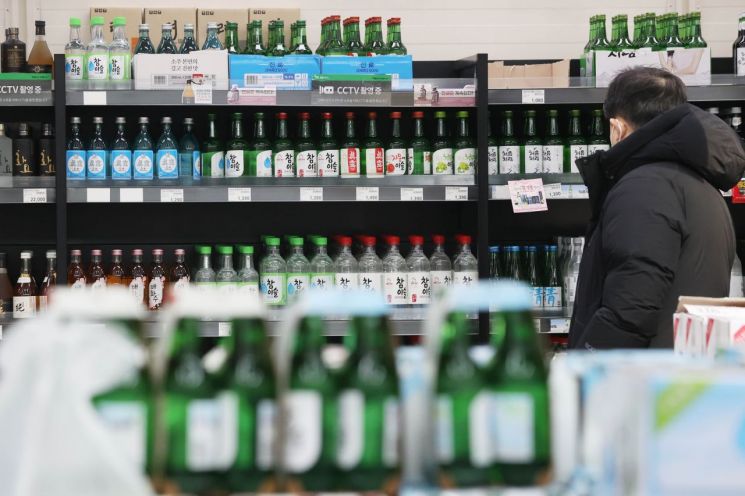
According to the industry on the 9th, liquor companies such as Muhak, Daesun Joojo, Lotte Chilsung Beverage, and Hite Jinro are competitively releasing sugar-free soju. Last year, Lotte Chilsung Beverage received great response with 'Cheoeumcheoreom Saero.' This product uses stevia and erythritol instead of fructose, reducing calories by about 25%. Since its launch in September last year, it has achieved sales of 17 billion KRW (as of last year).
Muhak also improved its existing soju product 'Ttak! Joheundei' to a sugar-free version in 2019. In 2021, it released the 'Fructose Zero Joheundei' product. Daesun Joojo is also emphasizing its sugar-free soju through marketing phrases such as '0% fructose, sugar-free, light tomorrow.' Hite Jinro plans to newly launch its flagship soju product 'Jinro Is Back' as a sugar-free product.
The 'Zero' craze started with carbonated beverages
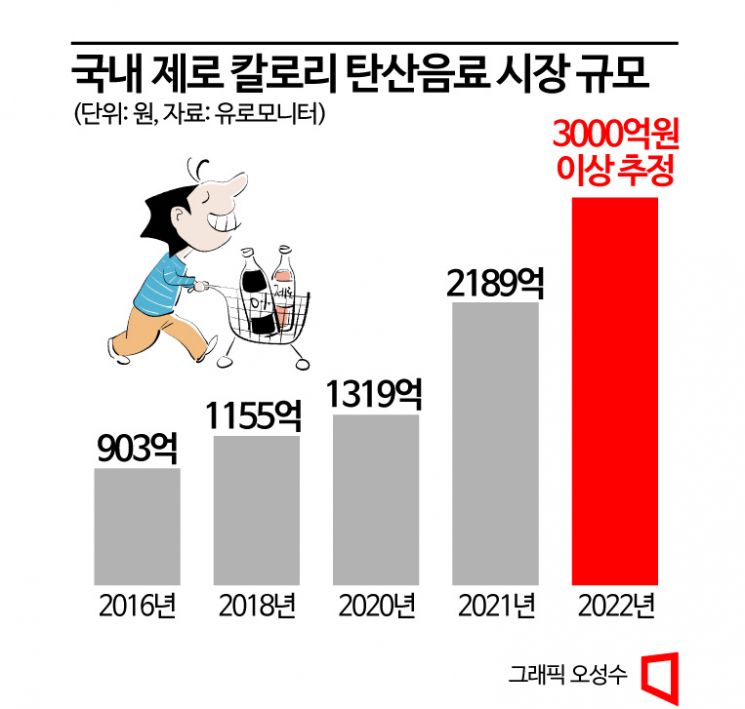
The origin of zero-calorie foods is carbonated beverages. Zero drinks replaced sugar with artificial sweeteners like aspartame to maintain sweetness while reducing sugar and calories, making them healthier and popular. According to market research firm Euromonitor, the zero carbonated beverage market size steadily grew from 90.3 billion KRW in 2016 to 115.5 billion KRW in 2018, 131.9 billion KRW in 2020, and 218.9 billion KRW in 2021, with estimates suggesting it exceeded 300 billion KRW in 2022.
The most widely known zero-sugar carbonated beverage is Korean Coca-Cola, which launched 'Coca-Cola Zero' in 2006. Lotte Chilsung, which introduced 'Pepsi Zero Sugar' in 2020, recorded cumulative sales of 450 million cans of this product as of September last year. Along with this, zero-sugar carbonated beverages such as 'Chilsung Cider Zero,' 'Toms Zero,' and 'Hot6 Zero' achieved sales of 85.1 billion KRW in the first half of last year, a 148.8% increase compared to the same period the previous year.
Health-conscious consumption expected to continue
This zero craze is analyzed to be influenced by the increasing number of MZ generation consumers pursuing 'health.' As the trend of 'Healthy pleasure,' which means enjoying the taste of food while happily managing health, takes root, more people are consuming zero drinks with low sugar and calories.
The growth management app 'Grow' conducted a survey of 560 MZ generation individuals at the start of the year. When asked about 'fields you want to challenge this year (multiple answers allowed),' the most selected item was 'exercise' (71.4%).
Additionally, starting this year, the voluntary labeling system for calories in alcoholic beverages, which requires displaying calories and nutritional information, will be expanded. This is expected to increase the number of consumers who pay attention to calories and nutritional content. Accordingly, the 'zero' trend in the alcoholic beverage and food and beverage industries is expected to become even more intense.
© The Asia Business Daily(www.asiae.co.kr). All rights reserved.
![Clutching a Stolen Dior Bag, Saying "I Hate Being Poor but Real"... The Grotesque Con of a "Human Knockoff" [Slate]](https://cwcontent.asiae.co.kr/asiaresize/183/2026021902243444107_1771435474.jpg)
















