Promotion of 99 Detailed Projects under 5 Major Initiatives
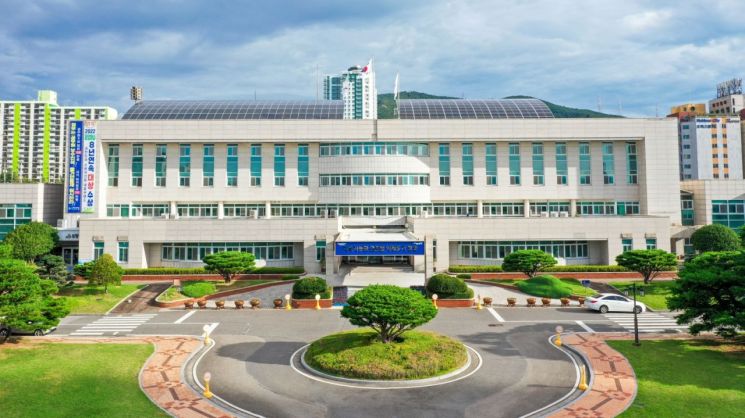
[Asia Economy Honam Reporting Headquarters, Reporter Heo Seon-sik] On the 22nd, Gwangyang City in Jeollanam-do held the ‘Gwangyang City Population Vitality Promotion Committee,’ composed of experts from various fields, at the city hall situation room and announced the finalization of the ‘Basic Population Policy Plan for Gwangyang City in the 8th Elected Term (2022?2026).’
The ‘Basic Population Policy Plan for Gwangyang City in the 8th Elected Term (2022?2026)’ sets the vision of ‘Gwangyang, a sustainable city where all generations are happy together,’ with goals to ‘improve the quality of life throughout the life cycle through youth-friendly policies + responses to low birthrate and aging society + residential environment development’ and ‘strengthen adaptability to population structure changes through the establishment of public-private governance.’
The three major promotion strategies to achieve these goals are ‘establishing a population policy institutional foundation focused on improving citizens’ quality of life,’ ‘implementing detailed population policies for each life cycle stage from childbirth, childcare, youth, to retirees,’ and ‘strengthening publicity, education, and public-private networks through citizen awareness improvement and consensus building.’ The five major promotion tasks include 99 detailed projects.
▲ Under the task of expanding comfortable residential infrastructure, 25 projects aim to promote social population growth.
Detailed projects include constructing high-quality apartments through regional urban development in areas such as Seonghwang, Doi 2/Inseo, Deokrye, and Dowol districts; developing the Gubongsan tourist complex; attracting the Gwangyang Tax Office; completing an interconnected signal system; and creating competitive, life-oriented SOC. Plans also include establishing an eco-friendly city by creating urban forests to reduce fine dust and restoring urban ecological corridors.
Additionally, plans to promote culture, arts, sports, and tourism that citizens can experience include creating media creative spaces, revitalizing local art landmarks, expanding basic sports facilities, and reinforcing existing facilities.
In particular, projects pledged in the 8th elected term such as improving city bus routes, expanding public parking lots, establishing a children’s safety center, building the Gwangyang Cultural Center, and developing Baealdo Park as a camping mecca in Korea will also be pursued.
▲ Under the task of creating a child-rearing friendly environment, 23 projects aim to foster a gender-equal child-rearing environment and overcome low birthrates to increase the birthrate.
Detailed projects include the Nutrition Plus program, establishing a pediatric emergency medical system pledged in the 8th elected term, opening a public postpartum care center, expanding payments for postpartum care, childbirth incentives, and prenatal health management, and supporting early life health management to minimize pregnancy and childbirth burdens.
Also included are projects to create a trustworthy childcare environment, expand public daycare centers, support labor costs for adjusting daycare class sizes, operate the Gwangyang-style rural study village, provide university student loan interest support, expand operation of the Gwangyang Childcare Center, and implement pledged projects such as expanding elementary school entrance congratulatory payments and creating healthy youth play culture spaces to build a seamless child-rearing and childcare care system.
Furthermore, projects supporting reemployment environments for women with career interruptions and post-employment management for working moms through the ‘Cheer Up!’ program are included to promote gender-equal child-rearing environments and work-family balance.
▲ Under the task of supporting economic independence for youth, 25 projects aim to connect the status of Jeollanam-do’s top economic city and nationally recognized excellent job city to youth population inflow.
Detailed projects include operating the POSCO Employment Academy, supporting youth retention incentives, establishing a carbon-neutral recycling demonstration support center pledged in the 8th elected term, building the Gwangyang Bay area materials and components knowledge industry center, attracting next-generation materials, components, and equipment industries such as secondary batteries, creating youth startup farms, supporting young successor farmers’ settlement, establishing youth agricultural management practice rental farms, and operating a youth agricultural university to provide income-generating foundations for youth.
Also included are projects supporting stable housing such as multi-child family housing for newlyweds, housing costs for young workers, youth Hope Stepping Stone accounts, industrial complex dormitory rent support, temporary youth monthly rent support, construction of integrated public rental housing at Gwangyang Happiness Town, and expanding the youth housing loan interest support project pledged in the 8th elected term.
Additionally, support plans include operating youth administrative internships, supporting youth small groups, youth organizations, youth book purchase expenses, youth capacity-building education, activating the youth dream center pledged in the 8th elected term, and creating a Youth Street to strengthen active youth regional activities.
▲ Under the task of creating a vibrant elderly living environment, 15 projects aim to create conditions for retirees, whose numbers are increasing annually, to live actively in old age and prevent outflow outside the region.
Detailed projects include career-type jobs for middle-aged seniors, social contribution and rural convergence industry tailored consulting for middle-aged seniors, customized small houses, weekend farm support for retirees, new farmer settlement technical education, revitalizing rural entrepreneurship, operating lifelong education programs for second careers, strengthening distribution of microorganisms for eco-friendly agriculture, operating the retiree vitality city project, and operating the comprehensive volunteer center’s retiree talent volunteer group pledged in the 8th elected term to support middle-aged seniors’ daily lives.
Furthermore, plans include revitalizing senior welfare centers, issuing welfare cards for city buses for those aged 65 and over, building the Kumho Health Life Support Center, and expanding Gwangyang-style senior jobs pledged in the 8th elected term to create a healthy elderly society.
▲ Under the task of establishing public-private governance to respond to population changes, 11 projects aim to find fundamental solutions through citizen consensus building and awareness improvement regarding population structure issues caused by low birthrate and aging.
Detailed projects include public-private governance activities for living together in Gwangyang, operating a citizen participation group for population policy, promoting awareness improvement campaigns for low birthrate care, and operating Population Week to foster awareness improvement in response to population structure changes.
Other projects include promoting customized care and specialized services for the elderly and supporting stable settlement of multicultural families to respect and support diverse family forms.
Mayor Jeong In-hwa of Gwangyang said, “Since 2020, South Korea has experienced a dead cross phenomenon where the number of deaths exceeds births, leading to a sharp natural population decline,” adding, “Gwangyang is no exception, entering an aged society this year as the proportion of those aged 65 and over exceeded 14% of the total population.”
He continued, “Although the total fertility rate was 1.11 in 2021, ranking first among city-level units in Jeollanam-do, it continues to decline,” and stated, “In the 8th elected term, we will implement meticulous welfare policies covering all life stages from birth to old age without blind spots.”
“We will strive to create a city with convenient spaces for citizens without inconvenience, a city with income through job creation, a city where culture and arts flourish allowing citizens to enjoy dignity as human beings, and a city with stable housing through the supply of top-quality housing by income level compared to other cities,” he added.
In particular, he emphasized, “We will create future growth engines by attracting new industries (secondary batteries, hydrogen, data) and develop Gwangyang as a ‘sustainable global future city’ through revitalizing the tourism industry utilizing Gwangyang Bay’s unique resources.”
Asia Economy Honam Reporting Headquarters, Reporter Heo Seon-sik hss79@asiae.co.kr
© The Asia Business Daily(www.asiae.co.kr). All rights reserved.
![Clutching a Stolen Dior Bag, Saying "I Hate Being Poor but Real"... The Grotesque Con of a "Human Knockoff" [Slate]](https://cwcontent.asiae.co.kr/asiaresize/183/2026021902243444107_1771435474.jpg)
















