Growing Distilled Soju Market in Premium Images
Distillation Methods Divided into Atmospheric and Vacuum... Less Hangover Advantage
Higher Alcohol Content and Longer Aging Increase Price... Easier Choice by Ingredients
Experts Say "Globalizing Distilled Soju Is Worth Trying... Content Is Key"
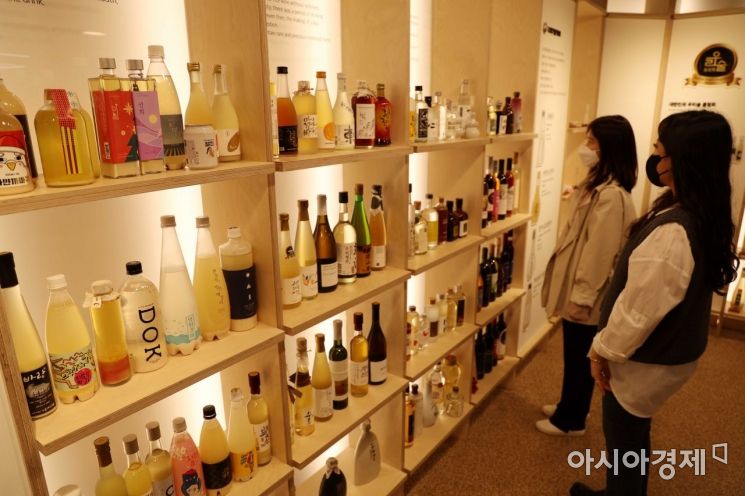
[Asia Economy Reporters Seungyun Song and Eunmo Koo] The premium soju market, led by distilled soju, is emerging as the mainstream in the soju industry. Centered around the MZ generation (Millennials + Generation Z), the traditionally old-fashioned image of traditional distilled soju has transformed into a trendy drink, gaining huge popularity.
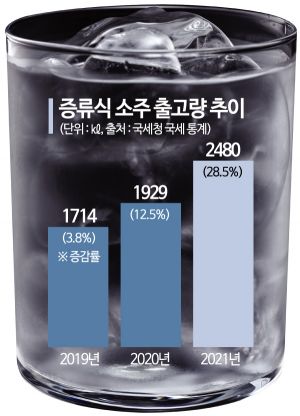
◇ Distilled Soju Captures MZ Generation... Rapid Growth = According to the National Tax Service's tax statistics on the 25th, last year’s domestic distilled soju shipment volume was 2,480㎘, an increase of 28.5% compared to the previous year. Domestic distilled soju, which was at 1,651㎘ in 2018, grew to 1,714㎘ (3.8%) in 2019, 1,929㎘ (12.5%) in 2020, and nearly 30% last year. Considering that the total domestic liquor shipment volume was 3,099,828㎘ last year, down 3.5% from 3,214,807㎘ in 2020, and that the shipment volume of diluted soju, mass-produced brands like Chamisul and Chum Churum, decreased by 5.5% to 825,848㎘, this achievement stands out even more.
The growth trend of the distilled soju market is expected to continue for the time being. The liquor industry estimates the domestic distilled soju market size this year to be about 70 billion KRW. Considering it grew from the 10 billion KRW range in 2011 to 45 billion KRW last year, this is a remarkably rapid growth rate. Given that the domestic liquor market size is about 9 trillion KRW based on shipment prices, and that diluted and distilled soju combined account for a 3 trillion KRW market including both household and entertainment sectors, the industry views there is still high growth potential.
Distilled soju distinctly reveals the aroma of its raw grain ingredients and, due to its manufacturing process, contains almost no impurities, resulting in relatively less hangover. This is one reason it has gained great popularity among the MZ generation. The industry also analyzes that this trend aligns with the recent premiumization of the liquor market, where more people seek quality drinks even at higher prices. It is also interpreted as a change brought about by the establishment of solo drinking culture during the COVID-19 period.
◇ Price Differences Based on Raw Materials and Aging Period = Distilled soju is made by fermenting grains such as rice and barley to create a base mash, which is then refined and heated to produce the final liquor. When the base mash is heated, alcohol evaporates first because its boiling point (78°C) is lower than water’s (100°C). Collecting and cooling this evaporated vapor turns it back into liquid, resulting in a liquor with a higher alcohol concentration than the original mash. This process is called distillation, and soju made through this process is called distilled soju.
Distilled liquors are broadly divided into atmospheric distillation and vacuum distillation based on the distillation method. Atmospheric distillation occurs at normal pressure (1 atm) and distills various aromatic substances together, resulting in a rich aroma. Vacuum distillation lowers the pressure below atmospheric pressure, allowing distillation at lower temperatures, which produces a smoother taste. Generally, atmospheric distillation, which strongly reflects the characteristics of the raw materials, undergoes aging for over six months to mellow the harsh alcohol taste before release. Vacuum distillation, which focuses on a smooth and clean taste with relatively less raw material flavor, often has a shorter aging process or is released immediately.
Typically, the higher the alcohol content and the longer the aging period, the more expensive the price. Price also varies depending on the raw materials used. Since the manufacturing process is labor-intensive, factors such as the distillation method and aging duration are reflected in the price.
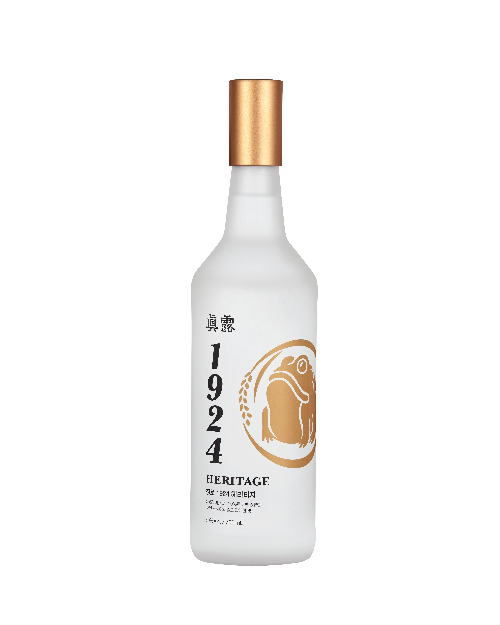
◇ Hundreds of Varieties... Checking Main Ingredients is Essential = The existing distilled soju market was led by HiteJinro’s ‘Ilpoom Jinro’ and Gwangjuyo Group’s ‘Hwayo.’ However, with trendy soju like One Spirits’ ‘One Soju’ and various products emphasizing different raw materials and origins flooding the market, the number of varieties has reached hundreds. To choose a distilled soju that suits oneself, it is advisable to first check the main ingredients. Usually, rice, barley, or sweet potato are used. Rice offers a clean and light taste, barley is characterized by a relatively nutty and deep flavor, and sweet potato retains its unique aroma and savory notes. The longer the aging process, the deeper the flavor of the raw materials. Differences in aroma and taste also arise depending on the distillation method (atmospheric or vacuum) and the type of aging container used, so these factors should also be considered.
Myung Wook, a liquor columnist and visiting professor at Sookmyung Women’s University, explained, “We are now in an era where content creates value, and for liquor, the history behind it has become important. Distilled liquor is basically the easiest to sell, and Korea’s premium image continues to grow. If diversification processes such as differentiating alcohol content for localization are undertaken, there is high growth potential not only domestically but also overseas.”
© The Asia Business Daily(www.asiae.co.kr). All rights reserved.
![Clutching a Stolen Dior Bag, Saying "I Hate Being Poor but Real"... The Grotesque Con of a "Human Knockoff" [Slate]](https://cwcontent.asiae.co.kr/asiaresize/183/2026021902243444107_1771435474.jpg)

















