Samba, Epis Merger 'Wings'... Expected to Reach 3 Trillion
Celt, Bio-similar Steady... Early Achievement of 2 Trillion
Diagnostic and Vaccine Companies' Fortunes Diverge
SK바사 Seeks New Path with mRNA and CGT as Flu Vaccine Resumes
[Asia Economy Reporter Lee Chun-hee] Major pharmaceutical and bio companies that experienced explosive growth during the COVID-19 pandemic are now encountering new momentum in the post-COVID-19 era. While companies that have steadily continued their core businesses maintain rapid growth, those whose COVID-19-related boom has ended are overcoming crises by entering new business areas.
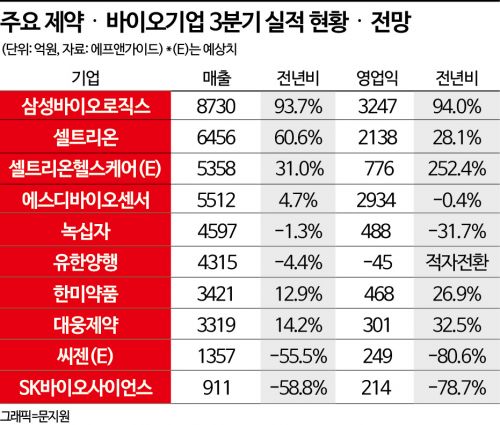
According to related industries and financial information provider FnGuide on the 11th, the third-quarter earnings of 10 major listed pharmaceutical and bio companies, including Samsung Biologics, Celltrion, Celltrion Healthcare, SD Biosensor, Green Cross, Yuhan Corporation, Hanmi Pharmaceutical, Daewoong Pharmaceutical, Seegene, and SK Bioscience, showed mixed results in the third quarter.
‘Samba’ 3 Trillion KRW · Celltrion 2 Trillion KRW... New Records Expected with Rapid Sales Growth
The most notable are Samsung Biologics and Celltrion. Both companies continue to deliver solid results in their core businesses?contract development and manufacturing organization (CDMO) and biosimilars (biopharmaceutical generics), respectively?while seeking new growth opportunities.
Samsung Biologics achieved early annual sales of 2 trillion KRW within the third quarter as its CDMO business continued to grow and the merger with Samsung Bioepis, a biosimilar and new drug development company, was completed. The consolidated provisional results recorded third-quarter sales of 873 billion KRW, bringing cumulative sales to 2.0357 trillion KRW. Even considering the merger effect with Bioepis, Samsung Biologics’ standalone sales reached 1.6896 trillion KRW, maintaining growth momentum and raising expectations that it could become the first pharmaceutical and bio company to achieve consolidated annual sales of 3 trillion KRW.
The strong dollar trend also contributed to sales growth, given the CDMO industry's characteristics where export ratios are high and raw material costs are borne by clients. In terms of orders, Samsung Biologics currently counts 12 of the world's top 20 global big pharma companies as clients and has announced plans to secure all 18 clients except Moderna and BioNTech.
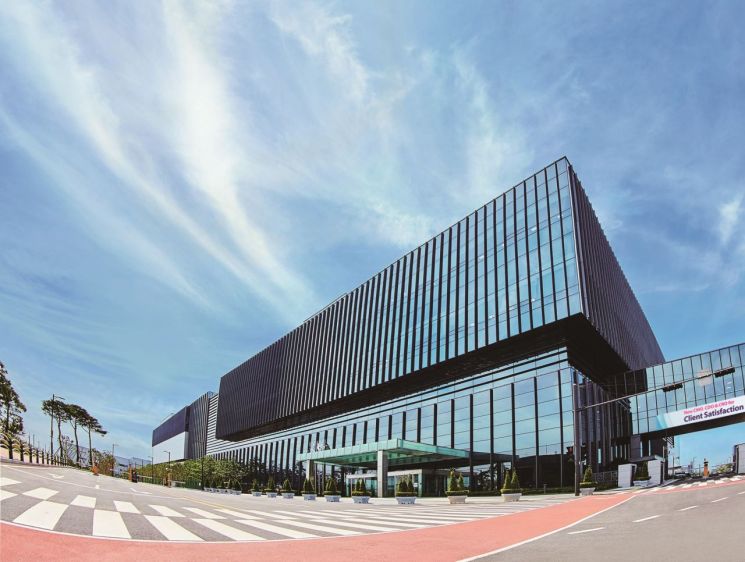
Celltrion’s cumulative consolidated sales approached 1.7733 trillion KRW by the third quarter, making its first-ever entry into the 2 trillion KRW annual sales club a foregone conclusion. Celltrion maintains stable market shares in Europe with its core biosimilar products?Remsima, Truxima, and Herzuma?while the biosimilar ‘biobetter’ Remsima SC (subcutaneous injection form) is rapidly expanding its market since its European launch, accelerating growth. Additionally, Celltrion is pursuing new technology development such as antibody-drug conjugates (ADC) and bispecific antibodies through technical collaborations with various domestic and international companies.
Existing large pharmaceutical companies continue to show strong performance centered on new drug development firms. Daewoong Pharmaceutical achieved its first-ever quarterly sales of 301.5 billion KRW in the third quarter, driven by the launch of the gastroesophageal reflux disease (GERD) drug ‘Pexuclu’ and increasing exports of the botulinum toxin ‘Nabota.’ Pexuclu, launched in July, is accelerating market entry by securing additional indications for gastritis beyond GERD, while Nabota recorded sales of 40.4 billion KRW, with exports alone reaching 32.6 billion KRW.
‘End of COVID-19 Benefits’ for Vaccines and Diagnostics... Need to Find New Growth Engines
The fortunes of vaccine and diagnostic companies that grew rapidly during COVID-19 diverged significantly. As COVID-19 transitions to an endemic phase, diagnostic demand is expected to sharply decline, with market expectations for Seegene’s third-quarter results at 135.7 billion KRW in sales and 24.9 billion KRW in operating profit?down 55.5% and 80.6%, respectively, compared to the same period last year.
In contrast, SD Biosensor’s third-quarter sales grew 4.7% year-on-year, with operating profit decreasing by only 0.4%. SD Biosensor stated, "Although overall sales slightly declined due to fewer COVID-19 cases, sales increased in product lines considered new growth engines, such as the COVID-19 and influenza simultaneous diagnostic kit and the rapid molecular diagnostic device ‘Standard M10.’" If this growth trend continues, there is speculation that the company could achieve the ‘3 trillion KRW annual sales’ milestone, which it failed to reach last year with 2.93 trillion KRW. Currently, SD Biosensor’s estimated annual sales for this year stand at 2.9956 trillion KRW.
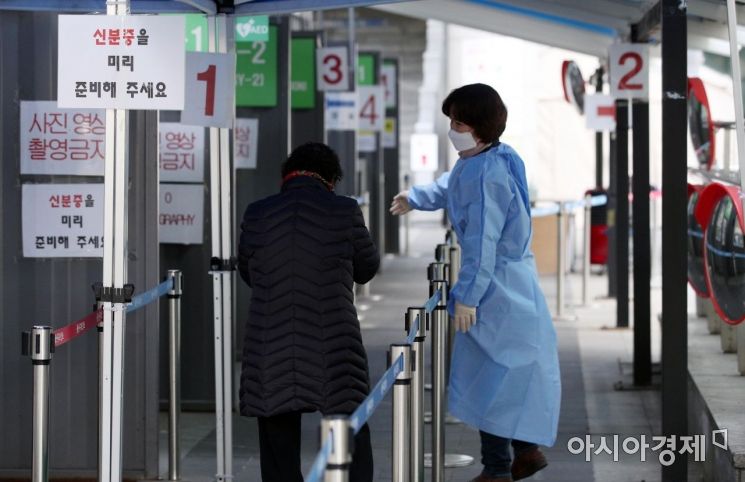 On the 7th, citizens are receiving PCR tests at the COVID-19 screening clinic in Yongsan-gu, Seoul. Photo by Hyunmin Kim kimhyun81@
SK Bioscience, which recorded nearly 1 trillion KRW in annual sales last year through COVID-19 vaccine CDMO, is experiencing a sharp decline in performance. With global vaccine demand decreasing, third-quarter sales fell back to triple digits at 91.1 billion KRW, down 34.2% year-on-year.
In response, SK Bioscience is rapidly seeking an exit strategy from COVID-19. It plans to resume production of the influenza vaccine ‘Skycellflu,’ which held the number one domestic market share before supply interruptions, starting next year to recover performance. Additionally, as a long-term growth strategy, the company aims to expand exports of its self-developed COVID-19 vaccine ‘Skycovione’ and secure new platform technologies such as messenger RNA (mRNA) and cell and gene therapies (CGT).
© The Asia Business Daily(www.asiae.co.kr). All rights reserved.
![Clutching a Stolen Dior Bag, Saying "I Hate Being Poor but Real"... The Grotesque Con of a "Human Knockoff" [Slate]](https://cwcontent.asiae.co.kr/asiaresize/183/2026021902243444107_1771435474.jpg)


















