Low Corporate Investment Despite Low-Interest Policy
High Savings Account Ratios Hurt Household Economy
Economic Vitality Declines as Companies Avoid Bankruptcy
Fiscal Input Needed to Foster Investment Environment
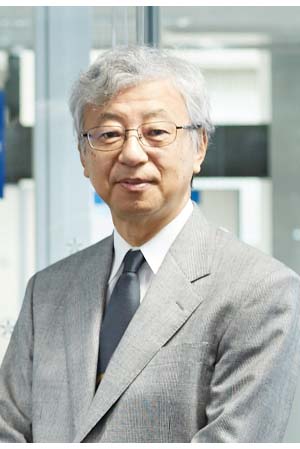 Professor Emeritus It? Motoshige, University of Tokyo.
 [Image source: Screenshot from the It? Motoshige Laboratory homepage]
[Asia Economy Reporter Lee Ji-eun] Professor Moto Shige Ito, an emeritus professor at the University of Tokyo and one of the architects of "Abenomics," emphasized the need to abolish the Bank of Japan's (BOJ) negative interest rate policy, saying that the BOJ's continued low interest rate stance is "somewhat excessive."
In an interview with the Asahi Shimbun on the 28th, Professor Ito stated, "Regarding the achievement of the 2% inflation target that BOJ Governor Haruhiko Kuroda set early in his tenure, tangible results have rarely materialized in the real economy."
Professor Ito is a leading international economics expert representing Japan. During former Prime Minister Shinzo Abe's administration, he was appointed as a private advisor to the Council on Economic and Fiscal Policy and participated in designing the "Abenomics" policy. He also led four rounds of corporate tax rate cuts under the Abe government.
He argued that the BOJ's low interest rate policy has had little impact on increasing corporate investment and expanding the supply side necessary for economic growth.
Professor Ito explained, "I believe the low interest rate policy has somewhat succeeded in stimulating consumption and boosting demand in Japan's weak economy. However, if companies do not actively increase investment and raise wages?i.e., if the supply side does not move?economic growth will not increase, and Japanese companies are not investing that much."
He also pointed out a negative effect where Japanese companies lacking self-sustainability rely on low interest rates to avoid bankruptcy, which reduces economic vitality. Professor Ito said, "With near-zero interest rates, companies that should have been weeded out have survived. Among economists, there is a view that interest rates should be higher to promote economic metabolism."
Furthermore, he expressed concern that low interest rates would severely impact Japanese households, which tend to attract assets through savings deposits. If accommodative monetary policy raises inflationary pressure and reduces the value of money, the actual amount households receive through savings deposits will decrease.
He noted, "In the U.S., the middle class earns retirement funds through asset management such as investment trusts rather than savings deposits. In contrast, the problem in Japan is that savings deposits account for a high proportion of financial assets."
Considering these side effects, Professor Ito suggested that the BOJ should now abolish the three representative monetary policies: quantitative easing, negative interest rates, and yield curve control (YCC). Among these, he identified the YCC policy as the most necessary to discontinue. The YCC policy refers to the BOJ's unlimited purchase of government bonds to keep the 10-year government bond yield at a target level.
He said, "It is quite unreasonable for the government and central bank to control interest rates that should be determined by the market, so it should be stopped. However, when abolishing a policy that has been maintained with difficulty, care must be taken to avoid causing major problems such as market confusion."
Ultimately, Professor Ito emphasized that what should take precedence over the low interest rate stance is the government injecting fiscal resources to create an environment where companies can invest. Monetary policy alone is insufficient to achieve economic growth.
He argued, "Since all three arrows of Abenomics are important, the Abe administration tried to realize one of them?deregulation?by cutting corporate taxes and concluding the Trans-Pacific Partnership (TPP). To break away from low growth, the government must use fiscal resources to motivate companies, such as supporting the selection of semiconductor factory sites in Kyushu."
© The Asia Business Daily(www.asiae.co.kr). All rights reserved.
![Clutching a Stolen Dior Bag, Saying "I Hate Being Poor but Real"... The Grotesque Con of a "Human Knockoff" [Slate]](https://cwcontent.asiae.co.kr/asiaresize/183/2026021902243444107_1771435474.jpg)















