LNG·LPG, Mackerel·Myeongtae·Banana Tariffs Removed
"Kimjang Prices Lower Than Last Year"... Government to Supply 15,000 Tons of Garlic, Chili, Onion, and Salt
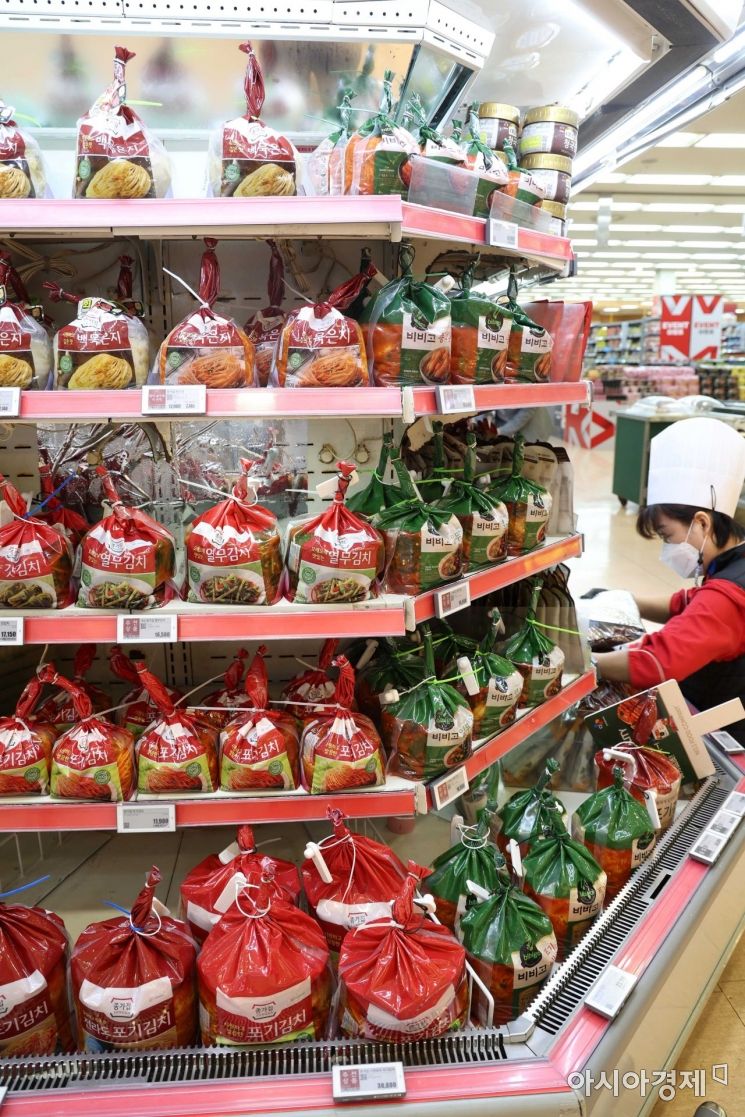 Ahead of the kimchi-making season, on the 20th, a citizen shopping at a large supermarket in downtown Seoul as the price of napa cabbage soars. Photo by Mun Ho-nam munonam@
[Asia Economy Sejong=Reporters Kim Hyewon and Kwon Haeyoung] The government will expand the application of tariff quotas on liquefied natural gas (LNG), liquefied petroleum gas (LPG), mackerel, pollock, tropical fruits, and other items to stabilize the cost of living for low-income households during the winter heating season and to ease the burden of grocery prices. To manage the supply and prices of kimchi-making ingredients, a total of 10,500 tons of stockpiled garlic, chili peppers, onions, and salt will be released into the market.
Tariffs Removed on LNG, LPG, Mackerel, Pollock, Bananas... Lowering Living Costs for Low-Income Households in Winter
The government announced on the 28th that it plans to expand the application of tariff quotas to 10 items, aiming for implementation in early November.
First, to alleviate the heating and transportation cost burdens on low-income households, tariff quotas will be applied to LNG, LPG, and crude oil used for LPG production. Due to prolonged gas supply disruptions caused by the Russia-Ukraine conflict and sharp exchange rate increases, import prices of LNG have continued to rise. The zero-percent tariff quota, which is set to expire at the end of this year, will be extended until March next year. As a result, the city gas fee, which has risen about 40% in four rounds this year, is expected to decrease by approximately 1,400 KRW per household per month. The tariff rates on LPG and crude oil for LPG production will also be reduced from 2% to 0% until March next year to ease heating and transportation costs.
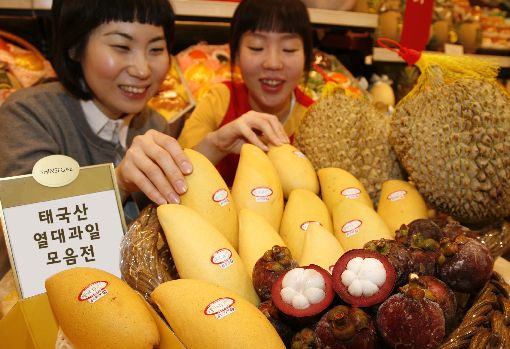
To stabilize grocery prices, tariffs on two popular fish species favored by low-income consumers and tropical fruits with large import volumes will also be reduced. Mackerel, a fish species with increased winter consumption, will have a new zero-percent tariff quota applied (from 10% to 0%), and pollock’s adjusted tariff will be temporarily abolished (from 22% to 10%). Due to rising exchange rates causing price increases in tropical fruits mainly consumed by low-income households, tariff quotas will be newly applied to bananas, mangoes, and pineapples at zero percent until the end of the year (from 30% to 0%). According to the September Consumer Price Index by Statistics Korea, pollock prices rose 11.6% year-on-year, while bananas, mangoes, and pineapples increased by 11.2%, 18.5%, and 16.4%, respectively.
Additionally, the zero-percent tariff quota on eggs and egg products will be extended until June next year, and a new zero-percent tariff quota will be applied to corn for processing until the end of the year to resolve instability in food raw material supply.
The government estimates that this expansion of tariff quota applications will have a support effect worth approximately 480 billion KRW.
"Kimchi-Making Prices Lower Than Last Year"... Government to Supply 10,500 Tons of Garlic, Chili Peppers, Onions, and Salt
On the same day, the government held an emergency economic ministers’ meeting chaired by Deputy Prime Minister and Minister of Economy and Finance Choo Kyung-ho and announced measures to stabilize the supply of kimchi-making ingredients.
For garlic, 5,000 tons of stockpiled peeled garlic will be processed and supplied to large supermarkets on the condition that it is sold to consumers at a 30% discount. Approximately 1,400 tons of dried chili peppers will be released into the market at about 500 tons per week, and onions will be released at 240 to 500 tons per week, totaling 3,600 tons. The government expects a decrease in solar salt production and plans to supply 500 tons from stockpiles to the market, selling it to consumers at up to 30% lower prices.
Production of napa cabbage and radish, key ingredients for kimchi, is expected to be at last year’s level, and the government plans to strengthen growth management. Supply of red pepper powder and mustard greens is expected to be at last year’s level, while the supply of green onions, salted shrimp, and anchovy fish sauce is expected to increase compared to last year.
To reduce grocery burdens, the government will support discount events for kimchi-making ingredients. The Ministry of Agriculture, Food and Rural Affairs will conduct discounted sales of agricultural products at 820 locations, including marts, traditional markets, local agricultural product direct stores (local food), eco-friendly stores, and online malls from December 3 to December 7. Kimchi vegetables will be sold at a 20% discount, and traditional markets will offer discounts of up to 30%. The maximum discount limit is 30,000 KRW. NongHyup will also sell kimchi vegetables at 5-40% discounts by item at Hanaro Mart and online malls.
The Ministry of Oceans and Fisheries will offer discounts on solar salt, salted shrimp, and anchovy fish sauce at the 'Korea Fisheries Festa' held from the 31st of this month to the 16th of next month. From December 11 to 20, 15 traditional fish markets will hold an event where customers purchasing kimchi ingredients can receive up to 30% (up to 20,000 KRW per person) back in Onnuri gift certificates.
The Ministry of SMEs and Startups will raise the purchase limits for Onnuri gift certificates in November and December. The purchase limits by type are 1 million KRW for card type, 700,000 KRW for paper type, and 1 million KRW for mobile type.
The government will operate a 'Kimchi Ingredient Supply Stabilization Task Force' starting next month to ensure smooth supply and discounts of kimchi ingredients. The task force will include staff from the Ministry of Agriculture, Food and Rural Affairs, Ministry of Oceans and Fisheries, Ministry of SMEs and Startups, and NongHyup.
Deputy Prime Minister Choo said, "As the kimchi-making season begins in November, price volatility centered on kimchi ingredients may increase. We will thoroughly manage the supply and prices of all kimchi ingredients to ensure that kimchi-making prices remain lower than last year."
© The Asia Business Daily(www.asiae.co.kr). All rights reserved.
![Clutching a Stolen Dior Bag, Saying "I Hate Being Poor but Real"... The Grotesque Con of a "Human Knockoff" [Slate]](https://cwcontent.asiae.co.kr/asiaresize/183/2026021902243444107_1771435474.jpg)















