High-Income Groups Less Sensitive to Interest Burden Prefer Variable Rates
Variable Rates Amplify Base Rate Hike Effects and Reduce Financial Stability
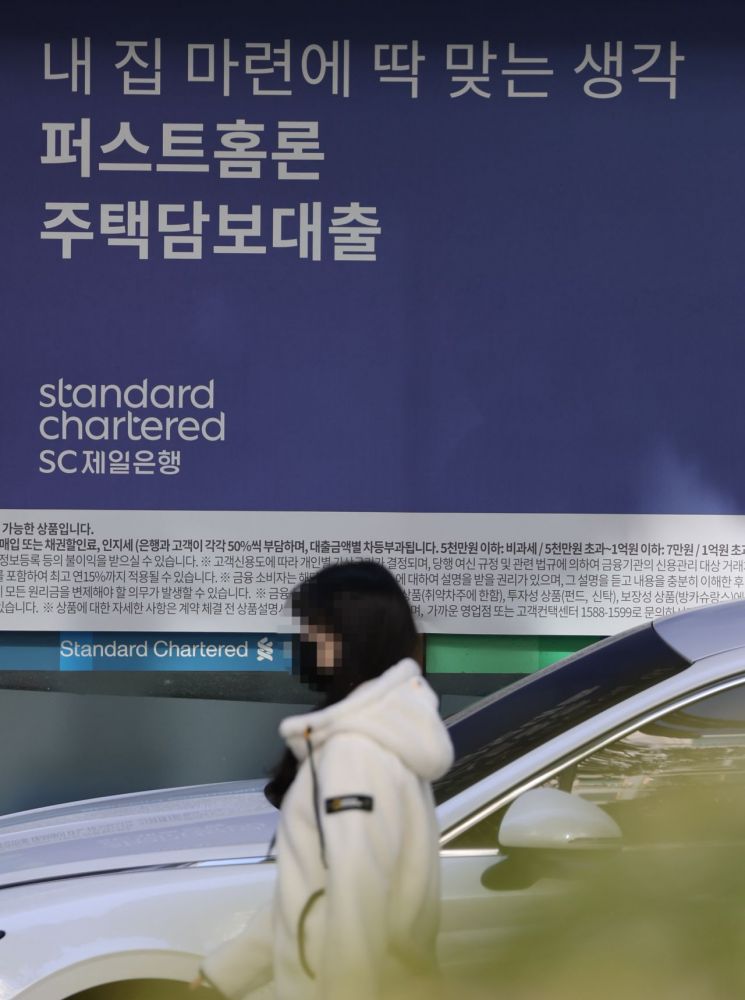
The Bank of Korea stated that while a high proportion of variable interest rate loans enhances the effect of base rate hikes, it may also increase household debt burdens and threaten financial stability. Therefore, policymakers should seek ways to increase the proportion of fixed-rate loans in the long term.
On the 25th, the Bank of Korea revealed in its BOK Issue Note titled "Analysis of Determinants of Variable Interest Rates in Recent Household Mortgage Loans" that "the share of variable interest rate loans in bank mortgage loans has been rising since early 2020, reaching 45.7% in August this year, exceeding the average of previous years."
The Bank explained that the significant increase in the share of variable interest rate loans is mainly due to "fixed interest rates rising faster than variable rates as they reflect long-term interest rate fluctuations (widening the fixed-variable rate gap), highlighting the advantages of variable rates, and a sharp reduction in the supply of policy mortgage loans compared to the average of previous years."
According to the Bank's analysis, borrowers preferred variable interest rates more as the gap between short- and long-term interest rates widened, increasing the difference between fixed and variable rates. Additionally, during periods of rising housing prices, speculative transactions with relatively short homeownership durations increased, leading to a greater selection of variable rates, which are currently at lower levels.
High-income groups preferred variable interest rate loans as they were less sensitive to changes in interest burdens, whereas middle- and low-income groups tended to avoid interest burden changes due to rate fluctuations, resulting in lower preference for variable rates.
From the supply side, it was analyzed that the preference for variable interest rates is constrained when the supply of policy mortgage loans is high, banks have longer deposit maturities, and the target proportion of fixed-rate loans is high.
The Bank pointed out that while a high proportion of variable interest rate loans amplifies the transmission effect of base rate hikes on loan interest rates, it also increases household debt burdens during rate hike periods, acting as a vulnerability factor for financial stability.
Regarding the future proportion of variable interest rate mortgage loans, the Bank explained, "It will be greatly influenced by changes in the short- and long-term interest rate spread according to the monetary policy stance of major countries, while the supply of the Korea Housing Finance Corporation’s Anshim Conversion Loans and the continued decline in housing prices will act as reducing factors."
The Bank advised that to increase borrowers' preference for fixed-rate loans, financial institutions need to continuously expand conditions that allow for the handling of fixed-rate loans.
The Bank stated, "Policymakers should first focus on supplying policy finance to vulnerable groups such as low-income and low-credit borrowers who are vulnerable to interest rate fluctuations," and added, "In the long term, efforts to expand long-term funding methods such as covered bonds and mortgage-backed securities (MBS) issuance, which can support banks’ own efforts to increase the proportion of fixed-rate loans, should be supported."
© The Asia Business Daily(www.asiae.co.kr). All rights reserved.
![Clutching a Stolen Dior Bag, Saying "I Hate Being Poor but Real"... The Grotesque Con of a "Human Knockoff" [Slate]](https://cwcontent.asiae.co.kr/asiaresize/183/2026021902243444107_1771435474.jpg)















