Caught 3 Times in Last 2 Years, Industry on Edge
Random Player Testing During Rounds
KADA "Introducing New Method of Blood Testing"
[Asia Economy Reporter Jang Hee-jun] In sports where winners and losers are determined after fierce competition, the issue of 'fairness' is always controversial. The most taboo topic at this time is 'doping' through illegal drugs. Golf is no exception to the dangerous temptation of doping.
'Drug-Clean' Golf?… Few but Steady Doping Cases Detected
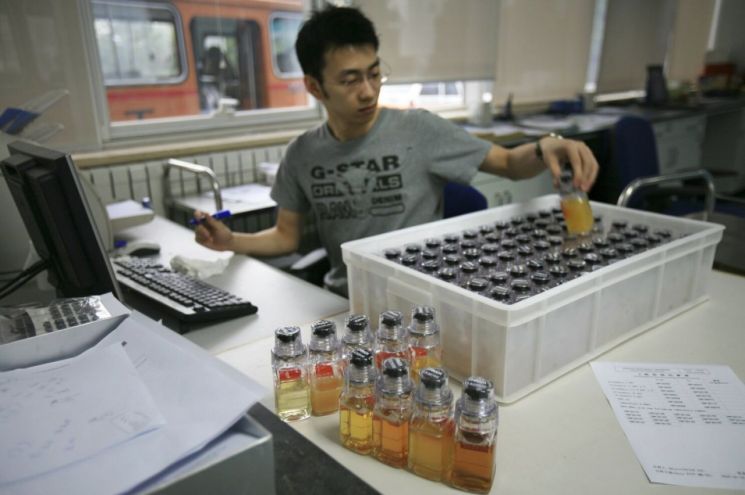
According to the Korea Anti-Doping Agency (KADA) on the 29th, golf, like other sports, is included in doping tests. The categories vary in detail depending on the affiliation, from professional golf to disabled golf and the Korean Sports Council. Looking only at professional golf, there were only 2 cases from 2014 to 2019, but in 2020 there were 2 cases, and in 2021, 1 case of doping violations were detected respectively.
Last year, the number of doping rule violations detected in sports was 18 cases. In the professional sports field, bodybuilding had the highest number with 8 cases, followed by swimming with 2 cases, baseball with 1 case, and so on. In professional sports, professional baseball had 2 cases, and professional golf had 1 case detected. Although there is a perception that "golf is a drug-clean sport," in reality, it is difficult to say that golf is completely free from drug doping.
This year, in July, a banned substance was detected in the sample of a male professional golfer. The substance is called 'Canrenone,' a type of diuretic included in hair loss medication prescriptions. It is designated as a prohibited substance at all times, and a violation results in a one-year suspension from competition. However, the player in question was recognized as having no significant fault and the penalty was reduced to six months.
Some have argued that golf is a blind spot for doping tests. Rory McIlroy (Northern Ireland), the FedEx Cup winner in the 2021-2022 season, stated at a press conference before a tournament several years ago that "strict doping tests including blood sampling as well as urine tests are necessary."
Since then, the Professional Golfers' Association (PGA) has introduced blood tests, but considering the number and frequency of tests, it is still criticized for not being as strict as doping tests in other sports.
KADA: "We Will Introduce a New Method of Blood Testing"
What about the domestic situation? Both urine and blood tests are conducted, but the perception remains the same. It is known that golf players mainly provide urine samples rather than blood because they need to use their arms during the game. Because of this, some argue that the effectiveness of testing is lower than in other sports where blood sampling is conducted.
However, this is not true. According to the Korea Anti-Doping Agency, the method of sample collection is not chosen based on the characteristics of the sport but rather the proportion of blood tests is determined after assessing the risk level of each sport according to the annual Testing Distribution Plan (TDP). Subsequently, tests are divided into three types: random tests, ranking tests, and targeted tests. Random tests involve calling players out randomly during a round for testing.
All tests are conducted without any prior notice and are unannounced as a principle.
A KADA official explained, "Blood tests are not completely avoided just because golf players use their arms a lot; they are conducted according to a pre-established plan at a level that does not affect performance," adding, "To improve testing efficiency, we are reviewing the introduction of a new dry blood spot (DBS) testing method that requires only a small amount of blood, planned for next year."
Each professional association is also sensitive to doping. Although testing at tournaments is entrusted to the Korea Anti-Doping Agency, associations regularly provide guidance and education on banned substances during normal times.
A Korea Professional Golfers' Association (KPGA) official said, "Every season, before the opening in March to April, we hold a tour pro seminar for players and conduct doping prevention education," adding, "If players need to take medication due to illness or poor condition, they are guided to confirm whether the substance is banned before taking it."
© The Asia Business Daily(www.asiae.co.kr). All rights reserved.
![Clutching a Stolen Dior Bag, Saying "I Hate Being Poor but Real"... The Grotesque Con of a "Human Knockoff" [Slate]](https://cwcontent.asiae.co.kr/asiaresize/183/2026021902243444107_1771435474.jpg)
















