Vice Minister Park Il-jun "Electricity Bill Hike Cannot Be Delayed"
Price Authorities Oppose Additional Electricity Rate Increase
OECD Also Warns "KEPCO's Investment Capacity Declines"
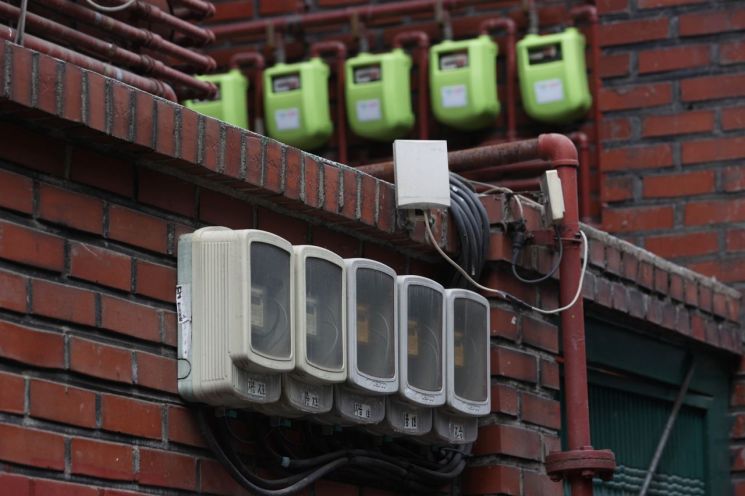
[Asia Economy Sejong=Reporter Lee Jun-hyung] Park Il-jun, Vice Minister of the Ministry of Trade, Industry and Energy, stated that "the electricity rate increase can no longer be postponed." This was a direct support move for Korea Electric Power Corporation (KEPCO) after the Ministry of Economy and Finance opposed an additional electricity rate hike in the fourth quarter citing high inflation. Vice Minister Park also expressed his intention to raise industrial electricity rates for businesses.
On the 23rd, at the 'Industry Meeting to Discuss Measures to Overcome the Energy Crisis' held at KEPCO Namseoul Headquarters in Yeongdeungpo-gu, Seoul, Vice Minister Park said, "In the current energy crisis situation, the electricity rate increase can no longer be delayed," emphasizing that "considering the cost recovery rate and realistic burden capacity, rate hikes for large-volume users such as large corporations are inevitable."
Vice Minister Park’s emphasis on the necessity of raising electricity rates comes as price authorities continue to deliberate over the fuel cost adjustment unit price for the fourth quarter. The fuel cost adjustment unit price is a component of electricity rates that reflects quarterly fluctuations in fuel costs. Initially, the Ministry of Trade, Industry and Energy planned to announce the fourth quarter fuel cost adjustment unit price on the 21st. However, the announcement was postponed as price authorities, including the Ministry of Economy and Finance, opposed KEPCO’s request for an additional increase in the fuel cost adjustment unit price.
"Electricity Bill Must Increase by 80,000 KRW per Household"
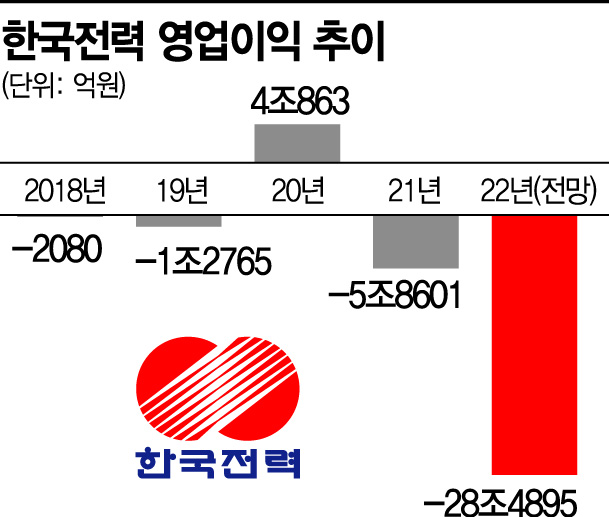
KEPCO recently reported to the government that the fourth quarter fuel cost adjustment unit price should be raised by 50 KRW per kWh. This means that to avoid selling electricity at a loss amid soaring international oil prices and energy costs, KEPCO must raise electricity rates by an additional 50 KRW per kWh in the fourth quarter of this year. Furthermore, in data submitted to Assemblyman Kim Hoe-jae of the Democratic Party on the 21st, KEPCO stated that to resolve the deficit accumulated due to the 'negative margin' structure, electricity rates must be raised by 261 KRW per kWh next month. Typically, if electricity rates increase by 261 KRW per kWh, the electricity bill for a four-person household using an average of 307 kWh per month would increase by more than 80,000 KRW.
The Ministry of Trade, Industry and Energy is not unaware that the fundamental solution to KEPCO’s ballooning deficit is an electricity rate increase. This is why Vice Minister Park, who oversees energy policy at the ministry, has directly come to KEPCO’s aid. In fact, domestic electricity rates have not kept pace with the rapid rise in international energy prices. The Organisation for Economic Co-operation and Development (OECD) recently expressed concern over KEPCO’s reduced investment capacity due to delays in raising electricity rates in Korea.
UK Raises Electricity Rates by 68%
Major countries have already reflected the surge in energy prices in their electricity rates. According to the Ministry of Trade, Industry and Energy, the UK’s electricity rates increased by 68% in June this year compared to January last year. During the same period, electricity rates in advanced countries such as Japan (36%), Germany (22%), and the United States (22%) also rose simultaneously. In contrast, domestic electricity rates have remained stagnant over the past two years.
The ministry also holds the position that industrial electricity rates should be increased. Originally, industrial electricity rates were set lower than residential rates because companies consume large amounts of electricity, but due to the recent surge in energy prices, the cost recovery rate has fallen to the 60% range. In 2020, domestic industrial electricity rates ranked 22nd out of 34 OECD countries at 94.8 USD per MWh.
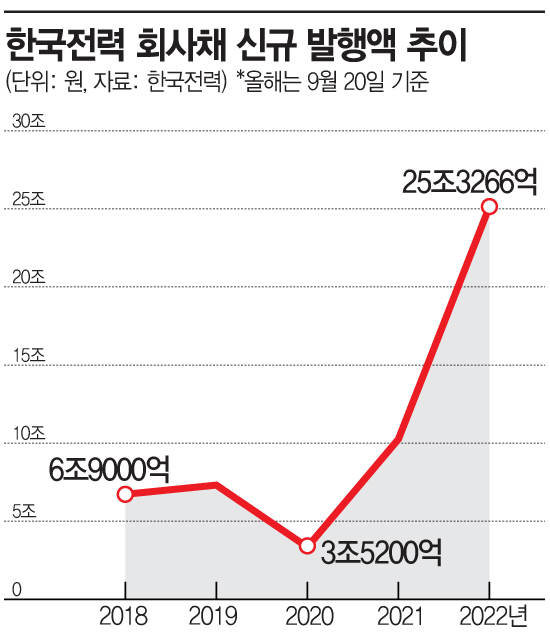
Electricity rates are also negatively impacting the bond market. Backed by government guarantees, KEPCO is issuing AAA-rated high-interest corporate bonds in the trillions of won every month to raise operating funds, absorbing liquidity in the bond market. KEPCO’s new corporate bond issuance this year recently exceeded 25 trillion KRW, accounting for about 40% of the total domestic corporate bond issuance. A Ministry of Trade, Industry and Energy official said, "The large-scale corporate bonds issued by the energy public enterprise to purchase energy are worsening the financing conditions for small and medium-sized enterprises."
© The Asia Business Daily(www.asiae.co.kr). All rights reserved.
![Clutching a Stolen Dior Bag, Saying "I Hate Being Poor but Real"... The Grotesque Con of a "Human Knockoff" [Slate]](https://cwcontent.asiae.co.kr/asiaresize/183/2026021902243444107_1771435474.jpg)

















