Mid-term Presentation on Innovation Plans for Public Institutions under the Ministry of Land, Infrastructure and Transport
Work Reorganization to Focus Solely on Core Tasks
Measures to Resolve Information Monopoly and Prevent Abuse of Power in Public Institutions
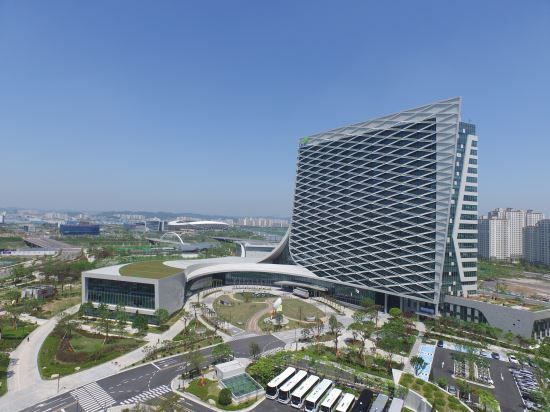
The Korea Land and Housing Corporation (LH), which faced turmoil over allegations of land speculation by its executives and employees, will include not only the individuals themselves but also their spouses and direct relatives in any future investigations related to such suspicions. Additionally, projects unrelated to the corporation’s core duties, such as district energy projects and project financing (PF) businesses, will be abolished.
The Korea Real Estate Board will increase the number of standard houses and strengthen verification of local governments to enhance the accuracy and transparency of public announcements. Korea Railroad Corporation (KORAIL) will conduct an in-depth diagnosis of railway control and facility maintenance operations and seek improvement measures.
On the 8th, the Ministry of Land, Infrastructure and Transport (MOLIT) announced the "Progress on Innovation Plans for Public Institutions under MOLIT," which includes these measures. This is an interim report, and the innovation plans will continue to be implemented. Following Minister Won Hee-ryong’s directive, a public-private joint task force (TF) has been formed since July 8 to verify innovation plans for each public institution and identify innovation tasks.
◆ Reallocation of Tasks... Focus on Core Missions = MOLIT diagnosed that some institutions have become excessively large and are performing tasks unrelated to their founding purposes, resulting in inadequate public services. Therefore, they decided to reallocate tasks so that public institutions can focus on their core duties.
First, LH, the largest institution, will promptly abolish district energy projects and PF businesses that are unrelated to its core duties, and consider transferring tasks such as housing benefit investigations to local governments or local public corporations.
Furthermore, 20 poorly performing investee companies will be gradually liquidated, and efficiency measures will be developed for the current wage peak system, under which about 49% of personnel perform separate tasks unrelated to their main duties.
Additionally, the supply-centered approach of building apartments without transportation measures will be improved by supplementing the system to accurately predict traffic volume and demand from the planning stage.
Rental housing in the currently developing 3rd New Town will be located about 60% near subway stations, with plans to increase average size and improve finishing materials to enhance housing quality, transforming the institution into one that can provide necessary services to the public.
KORAIL will promote improvements to the railway safety system under the basic principle of ensuring that railway safety, which is directly linked to the public’s lives, is not compromised in pursuit of efficiency.
They will conduct an in-depth diagnosis of national tasks such as railway control and facility maintenance and develop fundamental improvement plans.
Service quality enhancements will also be pursued, including improving odor in train restrooms, separating unisex restrooms by gender, expanding air conditioning in nursing rooms, and installing closed-circuit television (CCTV) in luggage compartments.
The Korea Expressway Corporation will return the operation and management of the national intelligent transportation system (ITS), currently entrusted by MOLIT, back to MOLIT (local land offices) and increase efficiency in highway maintenance and management through smart road management integrated with artificial intelligence (AI) and the Internet of Things (IoT).
The Korea Transportation Safety Authority will open its eight legally mandated training programs to the private sector, and tasks such as reviewing appraisal reports for collateral loans and the land adjudication information system performed by the Korea Real Estate Board will also be transferred to the private sector, actively delegating tasks that can be efficiently performed by the private sector rather than held by the public sector.
The Incheon Airport Corporation’s maglev train between Incheon Airport and Yongyu Station, which has a utilization rate of only about 11% compared to predicted demand, will have its operation method improved, and the Korea Airports Corporation will promote transferring aircraft handling operations at Muan and Yangyang airports to the private sector.
◆ Blocking Unfair Practices and Abuse of Power Using Public Institutions’ Exclusive Information = Internal controls will be strengthened to prevent unfair practices that exploit exclusive information produced and held by public institutions or their position as the "gap" (dominant party) in advance.
MOLIT requires public institutions with subsidiaries or investee companies to form committees for reemployment screening, appointing more than half of the members as external members, and conduct reemployment screening for all executives and employees.
They will also strictly apply conflict of interest prevention guidelines and establish measures to prevent unfair practices, such as verifying whether retired employees are working at contracting companies.
For LH, in addition to the measures presented in the government’s "Major Progress on Speculation Eradication Measures" announced in October last year, investigations will be strengthened by expanding the scope of investigation during regular real estate transaction inspections from current employees to include spouses and direct relatives, and extending the investigation area to surrounding regions.
The restriction period for retired LH employees undertaking contracts will also be strengthened, extending the period for appraisers from one year to two years after retirement.
For the Korea Real Estate Board’s housing and land price public announcements, system improvements will be made from next year to enhance accuracy, including expanding the volume of standard houses, strengthening external verification, and conducting local government verification before public information is viewed.
The Housing and Urban Guarantee Corporation (HUG) will conduct a full investigation into habitual procedural issues or abuse of power to ensure that citizens using guarantee products do not experience inconvenience due to high-handed procedures, and will promote adjustments to guarantee fee rates to reduce the burden on citizens.
The Korea Expressway Corporation will review the rental fee system to encourage service improvements by highway rest area operators.
The National Railroad Corporation will live broadcast the entire evaluation process, including technical reviews and design evaluation meetings, to improve the fairness and transparency of turnkey evaluations.
Kim Heung-jin, Director of Planning and Coordination at MOLIT, said, "Innovation in public institutions is still at an early stage. We will sequentially implement tasks that can be immediately pursued to ensure that public institutions under MOLIT can faithfully perform their core duties."
© The Asia Business Daily(www.asiae.co.kr). All rights reserved.
![Clutching a Stolen Dior Bag, Saying "I Hate Being Poor but Real"... The Grotesque Con of a "Human Knockoff" [Slate]](https://cwcontent.asiae.co.kr/asiaresize/183/2026021902243444107_1771435474.jpg)















