Daily Necessities Delivered Within 1-2 Hours
Intensifying 'Quick Commerce Competition'
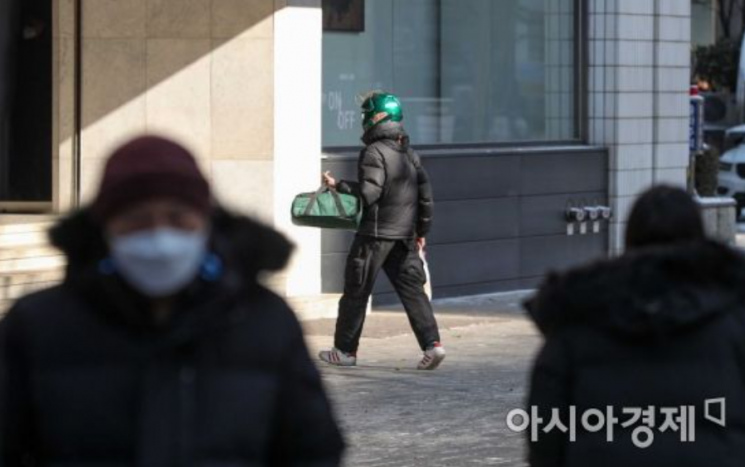
[Asia Economy Reporter Heo Midam] Recently, the delivery war within the distribution industry has been intensifying. As consumer demand for fast delivery has increased due to the COVID-19 pandemic, competition in the 'quick commerce (instant delivery)' market, where orders are delivered within an hour, is becoming full-fledged, surpassing dawn delivery. Quick commerce is characterized by providing rapid delivery services using small-scale logistics hubs within urban areas.
Recently, large supermarkets, convenience stores, and other distribution companies have been focusing on introducing quick commerce services. Unlike Europe and the U.S., where startups lead the quick commerce market, in Korea, large corporations have entered the quick commerce market centered around Baedal Minjok's 'B Mart', GS Retail's 'Udeal', CJ Olive Young's 'Oneul Dream', and Emart's 'SSG Go'.
The reason the distribution industry is enthusiastic about quick commerce services is that social distancing measures implemented during the COVID-19 pandemic have significantly increased demand for online shopping and fast delivery. Sales related to quick commerce are also on the rise. Baedal Minjok's product sales last year, including B Mart sales, recorded 421.7 billion KRW, an increase of 92.8% compared to the previous year. According to a report released by Hana Financial Investment, B Mart's sales last year doubled from the previous year to 350 billion KRW.
As a result, the main focus of the distribution industry seems to be shifting from dawn delivery to quick commerce. Companies that previously introduced dawn delivery services are also increasingly withdrawing recently, citing low profitability relative to investment.
Operating dawn delivery requires building infrastructure such as logistics centers throughout the region, resulting in huge initial investment costs. Additionally, since overnight work must be carried out at dawn, labor costs are about 1.5 to 2 times higher than usual. Ultimately, as the high-cost, low-efficiency structure leads to deteriorating profitability, companies are discontinuing their dawn delivery businesses. For this reason, Lotte On and GS Fresh Ji have successively withdrawn from the dawn delivery business.
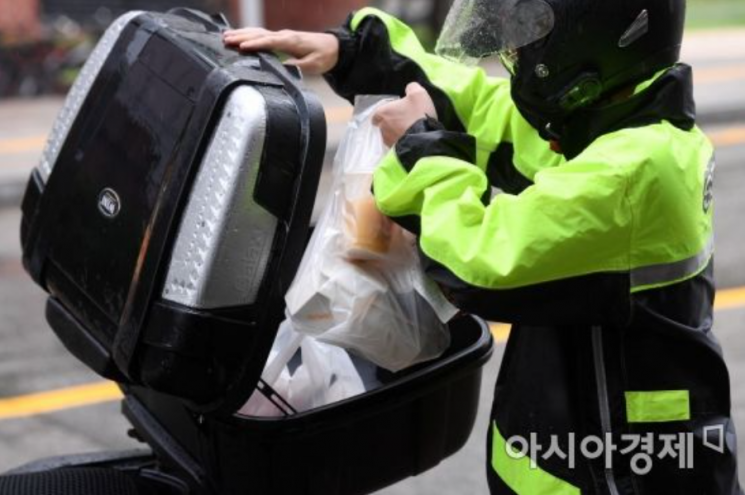
On the other hand, quick commerce does not require building separate logistics centers at high costs to operate. Offline stores spread nationwide serve as logistics centers instead. Also, when consumers order online using quick commerce, products are delivered immediately from nearby stores rather than from logistics centers, enabling fast delivery.
Consequently, the outlook for the quick commerce market is bright. The global company Delivery Hero has forecasted that the global quick commerce market size will grow to 448 billion euros (approximately 609 trillion KRW) by 2030.
However, some voices criticize that quick commerce competition infringes on local small businesses. Since large corporations sell fresh food and daily necessities that small business owners traditionally sell through quick commerce, there are concerns that these small businesses may suffer financial damage.
In response, the government plans to seek industrial development through coexistence between large corporations and small business owners rather than immediately imposing regulations on quick commerce.
Jung Sangyoung, Director of the Distribution Logistics Division at the Ministry of Trade, Industry and Energy, said at the 'Is Quick Commerce the Future of Distribution?' forum held at the National Assembly Members' Office Building in May, regarding questions about regulatory directions for quick commerce, "We are not considering regulation (of quick commerce)," adding, "Opinions are divided on whether the market will continue to expand, and since there are consumer interests involved, social public discussion on these issues is necessary first."
© The Asia Business Daily(www.asiae.co.kr). All rights reserved.
![Clutching a Stolen Dior Bag, Saying "I Hate Being Poor but Real"... The Grotesque Con of a "Human Knockoff" [Slate]](https://cwcontent.asiae.co.kr/asiaresize/183/2026021902243444107_1771435474.jpg)
















