Ministry of Economy and Finance Releases August Issue of Monthly Fiscal Trends
Management Fiscal Balance Deficit of 101.9 Trillion Won
Tax Revenue Increased but Spending Surged Due to Supplementary Budget Impact
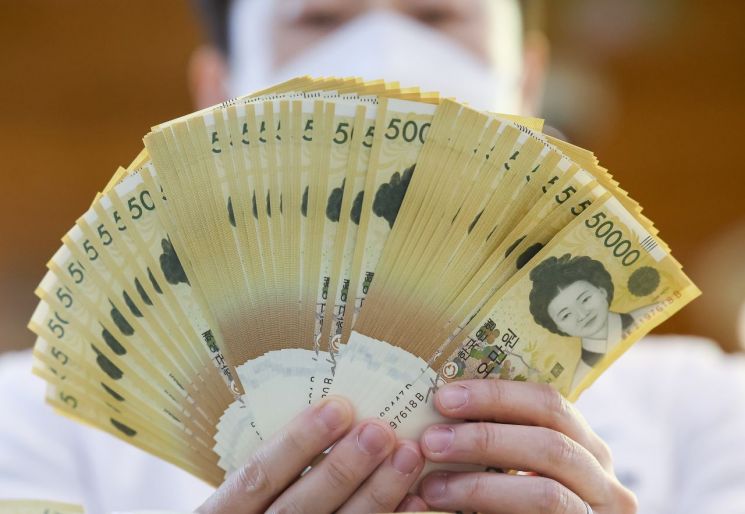
The cumulative national budget deficit has exceeded 100 trillion won as of the first half of this year. Although national tax revenue increased by more than 36 trillion won compared to last year, spending on supplementary budget projects increased even more significantly. The central government debt was recorded at 1,007.5 trillion won.
According to the August issue of the Monthly Fiscal Trends published by the Ministry of Economy and Finance on the 18th, the cumulative managed fiscal balance from January to June this year showed a deficit of 101.9 trillion won. The managed fiscal balance is derived by subtracting social security fund balances, such as the National Pension, from the integrated fiscal balance, which is the total revenue minus total expenditure, reflecting the actual fiscal condition of South Korea.
The managed fiscal balance deficit has been increasing significantly each month, with 45.5 trillion won in March and 71.2 trillion won in May. As of June, it increased by 22.2 trillion won compared to the same period last year. National total revenue was 333.4 trillion won, up 35.8 trillion won year-on-year, but total expenditure surged by 63.6 trillion won to 409.4 trillion won during the same period. The integrated fiscal balance also recorded a deficit of 75 trillion won, increasing by 27.08 trillion won compared to the same period last year.
The Ministry of Economy and Finance explained, "The expanded deficit in the second quarter was due to concentrated spending, with 32.1 trillion won out of the 38 trillion won supplementary budget projects for May and June being executed," adding, "We plan to manage it within the planned range until the end of the year." Previously, the government set the managed fiscal balance target at 110.8 trillion won based on the second supplementary budget.
At the end of June, the central government debt balance was 1,007.5 trillion won, down 11.2 trillion won from the previous month (1,018.8 trillion won). The repayment of treasury bonds (26.1 trillion won) exceeded issuance (14.6 trillion won), slowing the debt increase. However, according to the Ministry of Economy and Finance, central government debt is expected to rise to 1,037.7 trillion won by the end of the year. Including local government debt, the total national debt will increase to 1,068.8 trillion won. This is a steep rise compared to 660.2 trillion won in 2017, the first year of the Moon Jae-in administration.
The government’s increased issuance of treasury bonds to cover the fiscal deficit is raising alarms about national debt. From January to July this year, treasury bond issuance reached 120.1 trillion won, accounting for 67.7% of the annual total issuance limit. In the last month alone, 15.6 trillion won worth of treasury bonds were issued. The Ministry of Economy and Finance explained, "Last month, treasury bond yields fell due to global recession concerns and a preference for safe assets, but this month, yields slightly rose again as concerns over monetary tightening in major countries resurfaced."
Foreign net investment in treasury bonds increased by 3.5 trillion won last month, raising the total holdings to 185.6 trillion won. Consequently, the foreign holding ratio of treasury bonds surpassed 20% for the first time.
© The Asia Business Daily(www.asiae.co.kr). All rights reserved.