KEPCO's First Half Deficit Hits 14.3 Trillion Won... Over 76 Times Increase in One Year
Fuel Cost Surge 'Direct Hit'... Prices of Anthracite and LNG Soar
SMP Doubles... Fuel and Power Purchase Costs Rise by 16.5 Trillion Won
"Additional Electricity Rate Hike Needed"... Government Struggles with High Inflation
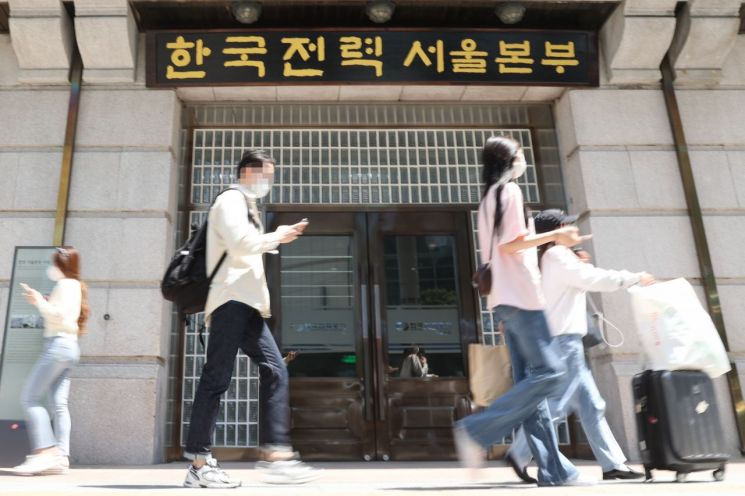 Korea Electric Power Corporation Seoul Headquarters located in Jung-gu, Seoul. [Image source=Yonhap News]
[Asia Economy Sejong=Reporter Lee Jun-hyung] Korea Electric Power Corporation (KEPCO) recorded a loss exceeding 14.3 trillion won in the first half of this year alone. This was the result of electricity rates failing to keep pace with the rise in fuel costs such as international oil prices. KEPCO is accelerating asset sales to improve its financial structure, but experts point out that this is insufficient to resolve the record-breaking deficit.
KEPCO announced on the 12th that its operating loss for the first half of this year was 14.3033 trillion won. Considering that KEPCO posted a loss of 187.3 billion won in the first half of last year, the operating loss has increased more than 76 times in just one year. Sales amounted to 31.9921 trillion won, an 11.5% increase compared to the same period last year (28.6848 trillion won), while operating expenses rose 60.3% to 46.2954 trillion won.
The reason KEPCO posted the largest-ever deficit is due to the sharp rise in fuel costs this year. According to KEPCO, the price of thermal coal in the first half of this year was $318.8 per ton, soaring 221.7% compared to $99.1 per ton in the same period last year. During the same period, the price of liquefied natural gas (LNG) jumped 132.7%, from 577,700 won per ton to 1,344,100 won per ton. Consequently, the electricity wholesale price (SMP), which is the price KEPCO pays to power producers for electricity, increased by 117.1% to 169.3 won per kWh in the first half of this year compared to 78 won in the same period last year.
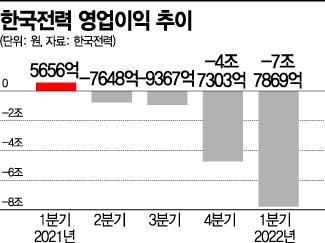
Power Purchase Costs Surge by 9.7 Trillion Won... Electricity Sales Revenue Up by 2.5 Trillion Won
This explains why KEPCO’s fuel and power purchase costs increased by 16.5 trillion won (95.9%) over the past year in the first half of this year. Specifically, fuel costs for subsidiaries rose by 6.8239 trillion won, and power purchase costs from private power producers increased by 9.6875 trillion won. A KEPCO official explained, “Power demand increased, leading to higher generation, and fuel prices such as coal and LNG surged, causing SMP to more than double in one year.”
On the other hand, KEPCO’s electricity sales revenue increased by only 2.5 trillion won (9.3%) compared to the first half of last year. This is because the government did not properly reflect the fluctuations in fuel costs in electricity rates for the sake of stabilizing people’s livelihoods. In fact, although KEPCO’s fuel costs increased by 14.8 won and 33.8 won per kWh in the first and second quarters respectively, the government froze the fuel cost adjustment rates. KEPCO estimates that if the government had raised the fuel cost adjustment rates by 3 won and 5 won per kWh in the first and second quarters respectively, electricity sales revenue in the first half of this year would have increased by about 1.1 trillion won.
Additional costs such as facility investments were also not reflected in electricity rates. Under the current electricity rate determination structure, KEPCO’s supply costs including facility investment and operation are difficult to be separately reflected in the rates. According to KEPCO, if the electricity supply costs excluding fuel costs that were not reflected in last year’s electricity rates had been included in the first half of this year, electricity sales revenue would have increased by about 4.9 trillion won.
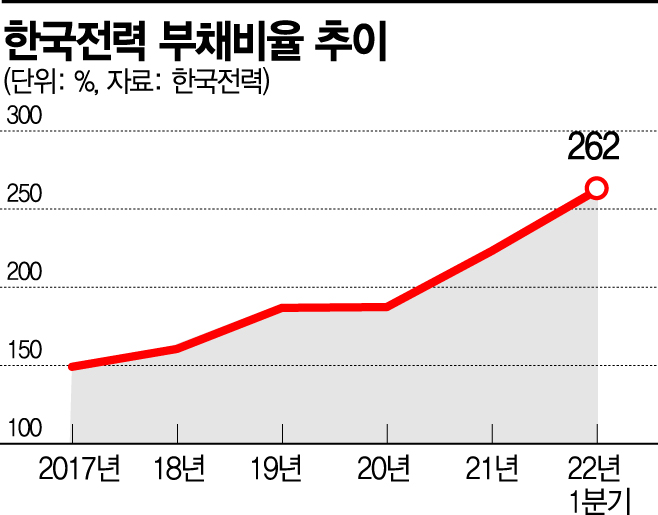
The Second Half Remains Challenging... "Cost-Based Electricity Rates Are Urgently Needed"
The problem is that electricity rates are unlikely to rise enough in the second half to significantly reduce KEPCO’s deficit. The government is prioritizing livelihood stabilization over electricity rate hikes. Given that last month’s consumer price inflation rate reached 6.3%, the highest in about 24 years since the 1998 financial crisis, the government inevitably feels burdened by raising electricity rates, which directly affect the economy of ordinary citizens. Lee Chang-yang, Minister of Trade, Industry and Energy, recently said at a press briefing, “Since people’s livelihoods are difficult, the government must minimize electricity rate hikes within the scope of cooperation,” adding, “I believe it is necessary to stabilize prices as much as possible.”
In response, KEPCO entered an emergency management system in May and is pursuing cost reductions amounting to 6 trillion won. KEPCO has already reduced costs by about 1.8 trillion won in the first half of this year through high-intensity self-help measures such as asset sales. A representative example is the remaining site of the Uijeongbu Substation, which was sold to Daewoo Construction for 294.5 billion won. KEPCO also plans to select a sales agent this month to sell its 14.77% stake in Korea Electric Power Technology and begin the sale in earnest next month.
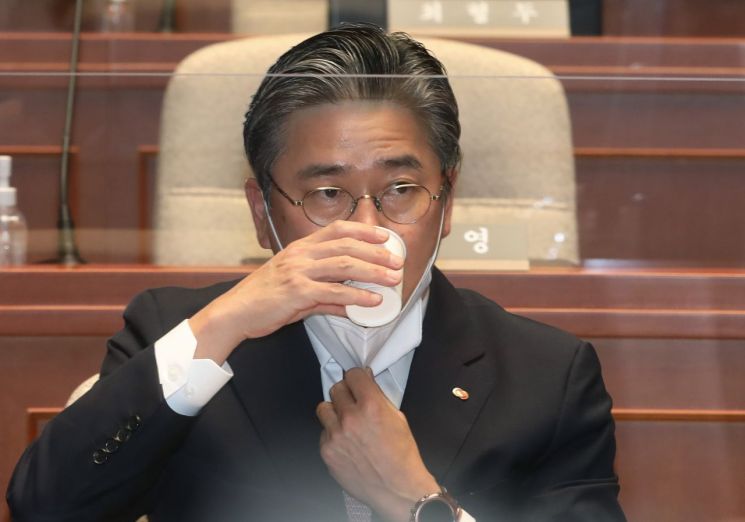 Jeong Seung-il, President of Korea Electric Power Corporation, Drinking Water
(Seoul=Yonhap News) Reporter Baek Seung-ryeol = Jeong Seung-il, President of Korea Electric Power Corporation, is drinking water while attending the People Power Party Policy Members' Meeting held at the National Assembly in Yeouido, Seoul, on the afternoon of June 27. The meeting was organized to discuss nuclear phase-out and electricity rate increases. 2022.6.27 [Photo by National Assembly Press Photographers]
srbaek@yna.co.kr
(End)
<Copyright(c) Yonhap News Agency, Unauthorized reproduction and redistribution prohibited>
However, there are concerns that these self-help measures alone are insufficient to resolve KEPCO’s deficit. This is because only 3.9% of total operating expenses can be reduced internally. KEPCO explains that cost reductions through asset sales and adjusting investment timing have little effect on reducing operating losses.
KEPCO emphasizes the urgent need for cost-based electricity rates. Another KEPCO official said, “The large deficit in the first half was due to the failure to sufficiently reflect cost fluctuations caused by rising international fuel prices in electricity rates,” adding, “(KEPCO’s deficit) is not a short-term management deterioration or survival issue of an individual company, but a threat to the entire national power ecosystem.”
© The Asia Business Daily(www.asiae.co.kr). All rights reserved.
![Clutching a Stolen Dior Bag, Saying "I Hate Being Poor but Real"... The Grotesque Con of a "Human Knockoff" [Slate]](https://cwcontent.asiae.co.kr/asiaresize/183/2026021902243444107_1771435474.jpg)

















