Long-term Hotel Stay Packages Trend After COVID-19
Average Stay 31 Days · Cost 2 Million KRW
Experts: "Hits the 'Value for Heart' Important to MZ Generation"
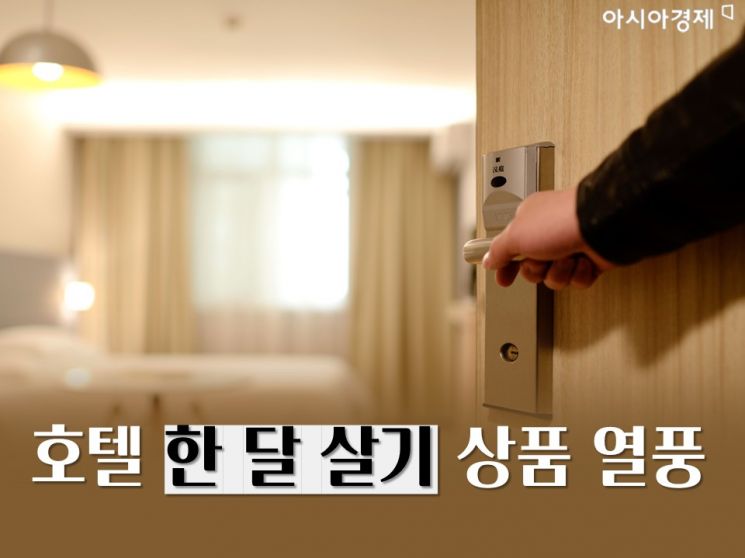 Long-term hotel stay packages ranging from 1 to 3 months are gaining popularity among the MZ generation. / Photo by Song Hyundo, Asia Economy intern reporter
[Asia Economy Reporter Lim Ju-hyung, Intern Reporter Song Hyun-do] #A (27), who lives in the Seoul metropolitan area, recently purchased a "hotel one-month stay" voucher. It is a pass that allows long-term stay in a luxury hotel room for one month, priced at about 1.2 million KRW, which includes services such as cleaning and laundry, as well as access fees for facilities like the sauna and fitness center. A said, "It's not a small amount for a working person," but added, "Thinking that I can freely use the hotel room for a month without worrying about house chores feels like having taken a vacation."
Recently, a so-called "hotel one-month stay" craze has been sweeping among the MZ generation. After the COVID-19 pandemic, some hotels released long-term stay products to fill empty rooms, capturing the attention of people in their 20s and 30s.
The one-month stay is a type of long-term accommodation program offered by hotels. It involves selling hotel room stay vouchers in units of 1 to 3 months, with prices ranging from under 1 million KRW to over 5 million KRW. Most stay vouchers include free parking, simple breakfast, room cleaning and laundry services, and access to ancillary facilities.
Among the MZ generation, the one-month stay vouchers have already made a significant impact. A new term "hokeshon" (a portmanteau of hotel + vacation), meaning spending a vacation at a hotel, has emerged. On YouTube and social media platforms, famous influencers post review videos of the one-month stay vouchers.
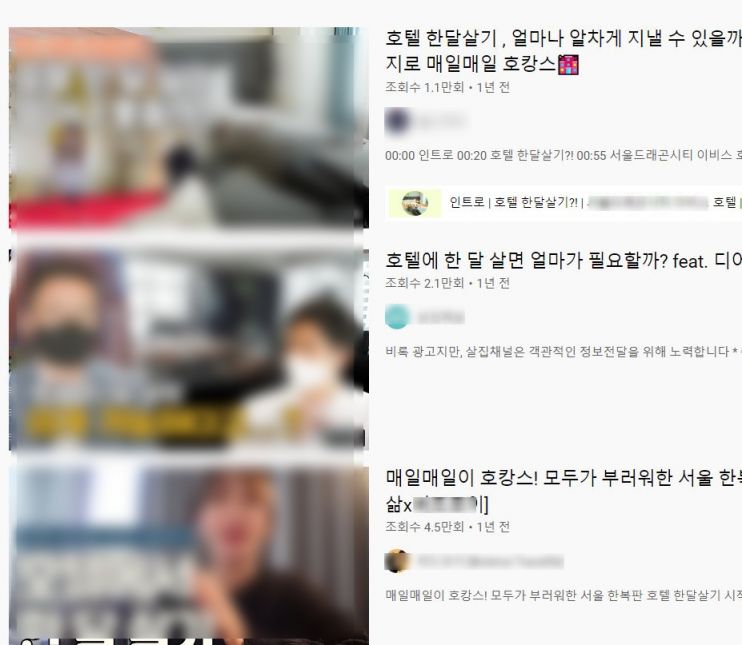 Videos reviewing 'living for a month' packages are gaining popularity on YouTube and other platforms. / Photo by YouTube Capture
Consumers who use the "one-month stay" say they are attracted by the "convenience." B (27) said, "Even on days when I don't order room service, they empty the trash cans every day and take care of all kinds of trash from delivery food. You don't know how convenient that is." B added, "It's not cheap, but considering the service, I don't feel like I'm losing out."
Another long-term guest, C (32), said, "There was a time when work was busy for about a month, and I purchased the one-month stay product to save commuting time." C added, "It cost about 1 million KRW, but even after working late, I didn't feel that tired, so it was good."
According to data released by "Hotel-e-Salm," a representative hotel one-month stay platform, the transaction amount for long-term stay products from January to July this year surged 247% compared to the same period last year. The average stay per user was 32 days, and the average expenditure on the product was 2 million KRW.
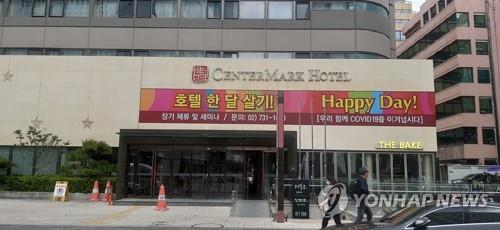 The one-month hotel stay package first appeared as a promotion during the COVID-19 outbreak in 2020. The photo shows an advertisement for a one-month stay at a hotel in Seoul. Photo by Yonhap News
Long-term stay products appeared starting in 2020, when the COVID-19 pandemic was severe. That year, famous hotel chains such as Shilla Hotel launched promotions for "one-month stay vouchers" allowing stays for one month.
Due to social distancing and overseas travel restrictions, the domestic hotel industry suffered greatly at the time. To reduce losses and fill rooms, they sought to attract long-term stay customers. Although it began as a way for hotels in distress to find a way out, the one-month stay has become a representative product of the domestic hotel industry as it gained tremendous popularity.
Experts say the success factor of the one-month stay voucher lies in so-called "gashimbi" (a Korean term meaning psychological satisfaction relative to price). Professor Eun-hee Lee of Inha University's Department of Consumer Studies explained, "The one-month stay is renting a hotel room long-term at a slightly cheaper price than short-term stays," adding, "It can be seen as a case that hits the desires of the MZ generation, who value appropriate pricing and the satisfaction of 'experience.'"
© The Asia Business Daily(www.asiae.co.kr). All rights reserved.
![Clutching a Stolen Dior Bag, Saying "I Hate Being Poor but Real"... The Grotesque Con of a "Human Knockoff" [Slate]](https://cwcontent.asiae.co.kr/asiaresize/183/2026021902243444107_1771435474.jpg)

















