NEMAF Opening Film '(Self) as a Space for Awareness of Nature'
"Hope to Share the Possibility of Awareness with Nature..."
Megabox Hongdae, Seoul Art Cinema, and Seogyo Art Experiment Center will host the Seoul International Alternative Video Art Festival (NEMAF) from the 18th to the 26th. It is the only genre-defying video media art festival in Korea. The festival showcases new media art videos and exhibitions, including alternative films, digital films, experimental films, and video art. This year's theme is "Nature as Media: Interaction." Over 130 works from thirty countries will be presented. All the works share a perspective that moves beyond viewing nature as an object for humans, instead exploring coexistence with all beings and the interrelationships within each realm of existence from a new viewpoint.
The opening work is the trilogy "(Self-)Recognition as a Space of Nature" directed by Florian Fischer and Johannes Krell. This piece, which won the Golden Bear Short Film Award at the 2019 Berlin International Film Festival, addresses the ambivalent relationship between humans and nature. It examines the social attributes of natural and landscape spaces and prompts reflection on the extent to which screens project human unconsciousness. Executive Director Kim Jang-yeonho stated, "This year's theme, 'Nature as Media: Interaction,' views nature not as an object but as a living, breathing body that is part of us. Just as media communicates through nature and learns the wisdom of life, we aim to share the possibility of perception that interacts with nature as a body in mutual action."
"(Self-)Recognition as a Space of Nature" is divided into three parts: "Still Life," "Kaltes Tal," and "Umbra." "Still Life" reflects on the relationship between humans and the environment and questions the conventional genre norms of classical nature films. By changing the gaze, it positions animals as both receivers and senders, while the familiar environment flows sinuously, unable to find a place between stillness and movement, realism and hypnosis, naturalness and artificiality.
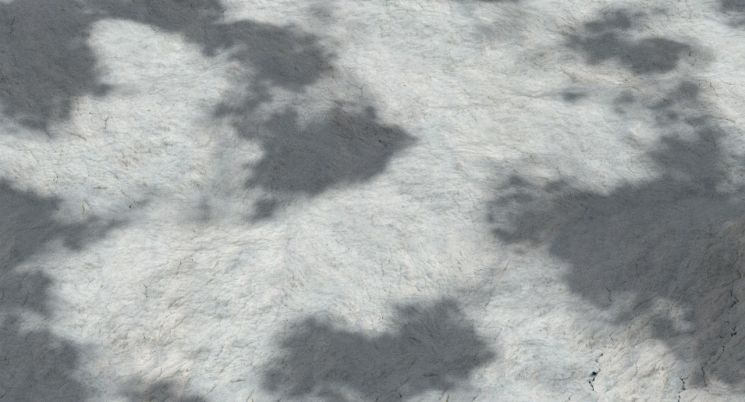
"Kaltes Tal" depicts the process of an open-pit mine being restored into a limestone forest. It constructs the absurd story of responding to the irreversible depletion of natural resources as an evident fact. Starting from a narrative style, it attempts a transition to a ghostly alternative world that examines the ambivalent relationship with nature. "Umbra" studies rare optical phenomena occurring in nature, such as the pinhole effect during a solar eclipse. It regards these as independent images that existed before human evolution and evokes a visual dialogue between phenomena and apparatus, archetype and image, self and self-recognition.
© The Asia Business Daily(www.asiae.co.kr). All rights reserved.
![Clutching a Stolen Dior Bag, Saying "I Hate Being Poor but Real"... The Grotesque Con of a "Human Knockoff" [Slate]](https://cwcontent.asiae.co.kr/asiaresize/183/2026021902243444107_1771435474.jpg)















