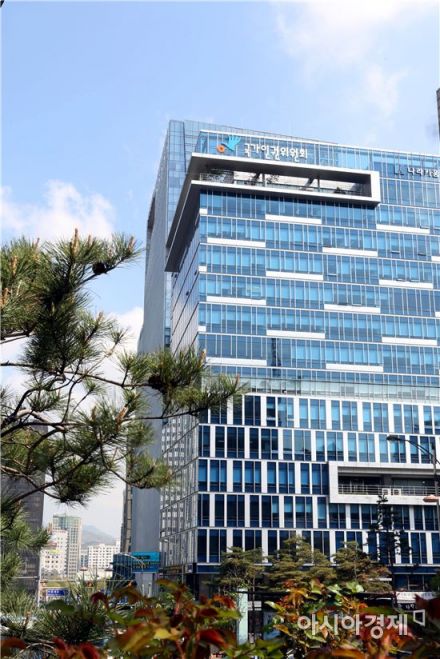
[Asia Economy Reporter Seongpil Cho] The National Human Rights Commission announced on the 19th that it has recommended the Minister of Health and Welfare, the heads of local governments, and superintendents of education to improve systems and laws to guarantee the basic rights of children in childcare facilities.
The Human Rights Commission urged the Minister of Health and Welfare to amend the Child Welfare Act to provide human rights protection education to children in childcare facilities and to establish specific mandatory regulations for facility operators to guarantee the privacy and self-determination rights of protected children. The heads of local governments were instructed to ▲ inspect and strengthen supervision of the health rights of protected children ▲ provide sufficient information to children and guardians ▲ assign an adequate number of dedicated child abuse officers and train professional instructors for human rights education of protected children. Furthermore, the superintendents of education were urged to ensure that children in facilities receive individual electronic learning devices and learning support programs and have access to remote classes.
Previously, the Human Rights Commission conducted three rounds of on-site investigations from November 2020 to November last year at 10 childcare facilities located in Seoul, Gwangju Metropolitan City, Gyeonggi Province, Chungcheongnam Province, Gyeongsangbuk Province, Jeollanam Province, and Jeju Province. The investigation revealed that when transferring abused children to new childcare facilities, the children’s wishes and psychological conditions were often not considered, and sufficient information was not provided to the parties and guardians. Instead, children were assigned based on the facility capacity within the jurisdiction. Additionally, many childcare facilities operated control-oriented rules such as restrictions on outings and mobile phone use, and few facilities explicitly stipulated the protection of children’s rights in their regulations.
The Human Rights Commission pointed out that although local governments operate child protection departments including child welfare and dedicated child abuse officers, the workforce is insufficient compared to the incidence of child abuse cases, limiting effective prevention and relief activities. Other issues identified include ▲ lack of effectiveness and professionalism in self-reliance education before protection ends ▲ formalistic human rights education focused on abuse prevention laws ▲ inadequate psychological support for COVID-19 related stress.
© The Asia Business Daily(www.asiae.co.kr). All rights reserved.
![Clutching a Stolen Dior Bag, Saying "I Hate Being Poor but Real"... The Grotesque Con of a "Human Knockoff" [Slate]](https://cwcontent.asiae.co.kr/asiaresize/183/2026021902243444107_1771435474.jpg)















