In the High-Interest Era, "Economic Independence Burden"... Increasing 'Kangaroo Generation'
64.1% of Unmarried Adults Aged 19-49 Live with Parents
Giving Up Loans Due to Interest Burden... "Monthly Rent Is a Burden on Entry-Level Salaries"
Financial Authorities: "Measures Needed for Borrowers at Risk of Default Due to Loan Rate Hikes"
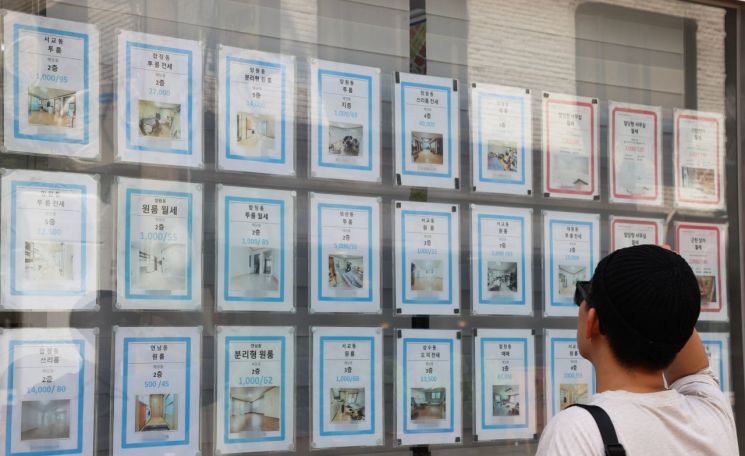 As interest rates rise, the number of 'adult kangaroo kids' who give up economic independence due to the burden of loan interest and monthly rent is increasing. The photo is unrelated to specific expressions in the article. [Image source=Yonhap News]
[Asia Economy Reporter Kim Jung-wan] #. Park (30), an office worker living in Incheon, has given up on becoming independent despite being in his fourth year of working. Although his workplace is in Seoul and he aimed for housing independence, the endlessly rising loan interest payments inevitably delay his actual independence. Park sighed, saying, "After spending two hours every day to get to work, I really want to be independent, but the loan interest is more frightening."
In the era of high interest rates, more people are identifying themselves as 'adult kangaroo tribe' due to the burden of loan interest and monthly rent. The kangaroo tribe refers to those who, despite being of an age to be independent, economically rely on their parents.
It was found that two out of three unmarried adults aged 19 to 49 live with their parents. According to a research report titled 'Co-residence with Parents and Intergenerational Resource Transfers' published in the June issue of the Health and Welfare Forum by Senior Research Fellow Choi Sun-young of the Korea Institute for Health and Social Affairs on the 28th, 64.1% of unmarried adults aged 19 to 49 were living with their parents.
Senior Research Fellow Choi explained, "The high co-residence rate of the unmarried population with their parents shows that the unmarried population in Korea is not independent in terms of housing at least," adding, "Continued co-residence with parents and ongoing economic support from non-co-resident parents after becoming an adult should be explained through more in-depth research at the level of institutional and policy issues rather than cultural characteristics of our society."
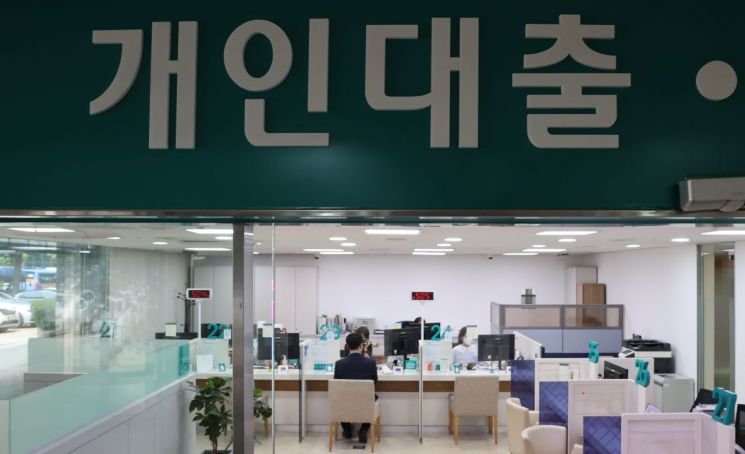 As interest rates rise, the burden of interest has also increased, leading some to give up on loans. The photo is unrelated to specific expressions in the article. [Image source=Yonhap News]
Due to the soaring interest burden, there are cases among young people who have given up on loans. Kim (29), living in Uijeongbu, Gyeonggi Province, intended to secure a jeonse (long-term deposit lease) house with a loan, but gave up after calculating that the interest and living expenses exceeded the monthly rent burden. Kim said, "Although I am employed and receive a salary, thinking about economic independence is truly burdensome," adding, "When I consider the interest, economic independence feels like a very distant story."
The Bank of Korea raised the base interest rate from 0.5% to 0.75% in August last year and further increased it to 1.75% this year. Accordingly, market interest rates have also risen significantly. The COFIX (June), which serves as the benchmark for variable-rate mortgage loans at commercial banks, rose by 1 percentage point compared to a year ago to 1.98%, causing mortgage loan interest rates at commercial banks to rise to the 7% range annually.
With the interest rate hike period, more young people have postponed buying their own homes through mortgage loans and opted for monthly rent. According to an analysis of Supreme Court registry information by real estate information provider Zigbang, the number of first-time homebuyers nationwide averaged 38,749 per month from the beginning of this year to May, falling below 40,000 for the first time since statistics were published in 2010.
Especially, those aged 39 and under averaged 19,480 monthly buyers, dropping below 20,000 for the first time ever. On the other hand, according to the Ministry of Land, Infrastructure and Transport on the 30th, among the total 404,036 jeonse and monthly rent transactions nationwide in May, monthly rent accounted for 240,321 cases (59.5%), significantly surpassing the 163,715 jeonse transactions (40.5%).
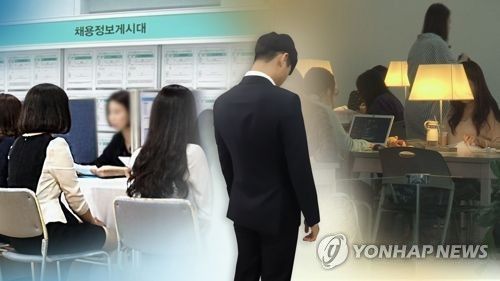 There are also opinions that the monthly rent in Seoul is burdensome for young workers earning their first salary. The photo is unrelated to specific expressions in the article. [Image source=Yonhap News]
Meanwhile, some say that even monthly rent is a burden on the salary of young workers just starting their careers. Han (27), who succeeded in getting a job last April, said, "Although I got a job, I feel that economic independence is still far away." He added, "To pay monthly rent in Seoul, I have to give up a significant portion of my salary," and "My parents told me to wait until housing prices go down."
As monthly rent transactions increase, the apartment monthly rent price index in the metropolitan area hit a record high in June. According to KB Real Estate Live On, the apartment monthly rent price index in the metropolitan area rose 0.6 points from 103.0 last month to 103.6 in June. In June, Seoul rose 0.5 points month-on-month to 102.8, with Gangbuk at 102.9 (up 0.6 points) and Gangnam at 102.7 (up 0.4 points). Gyeonggi and Incheon recorded 104.1 (up 0.8 points) and 103.6 (up 0.4 points), respectively.
Meanwhile, as the financial burden increases and loan utilization decreases, financial authorities have urged banks to slow the pace of loan interest rate hikes.
On the 20th, Lee Bok-hyun, Governor of the Financial Supervisory Service, at a meeting with bank presidents, said, "During periods of rising interest rates, the gap between deposit and loan interest rates tends to widen, leading to criticism of banks' excessive profit-seeking," and pointed out, "It is necessary to calculate and operate interest rates based on more reasonable and transparent standards and procedures." He added, "When raising loan interest rates, banks should consider converting loans to low-interest loans or easing the scope and speed of interest rate adjustments for borrowers at risk of delinquency."
© The Asia Business Daily(www.asiae.co.kr). All rights reserved.
![Clutching a Stolen Dior Bag, Saying "I Hate Being Poor but Real"... The Grotesque Con of a "Human Knockoff" [Slate]](https://cwcontent.asiae.co.kr/asiaresize/183/2026021902243444107_1771435474.jpg)


















