Growing Wage Increase Demands Due to Inflation... Companies Abandon Hiring Amid Economic Downturn Concerns
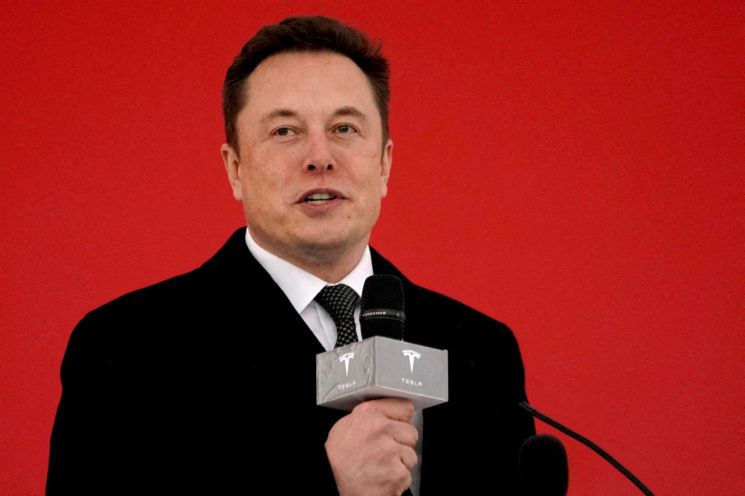 Elon Musk, CEO of Tesla, stated on the 21st, "There is a considerable possibility that the economy will enter a recession in the near future," and added, "We plan to reduce 3 to 3.5% of the total workforce over the next three months."
 Photo by Reuters Yonhap News
[Asia Economy Reporter Park Byung-hee] There are growing concerns that the high-intensity tightening measures taken by countries worldwide in response to record inflation could bring a cold wave to the labor market. While workers are demanding wage increases due to rising prices, companies are responding with aggressive layoffs out of fear of an economic recession. Global companies have already begun restructuring efforts.
On the 21st (local time), Bloomberg News pointed out the recent decline in job postings on the recruitment information site Indeed, stating, "Employers are quietly reducing hiring plans due to fears of a recession." David Bied, from the recruitment consulting firm Confferi, told Bloomberg in an interview that "hiring is being cut in discreet ways, such as only allowing approval by the CEO."
In fact, on the same day, Elon Musk, CEO of Tesla, said at the Qatar Economic Forum hosted by Bloomberg, "There is a considerable possibility that the economy will fall into a recession in the near future," and announced, "We plan to reduce the total number of employees by 3 to 3.5% over the next three months." Amazon and Walmart, the two largest employers in the United States, have also recently announced plans to reduce the number of part-time workers.
On the other hand, workers are demanding wage increases amid soaring prices, leading to conflicts worldwide. According to the BBC, the UK railway union demanded a 7% wage increase and launched the largest strike in 33 years. The management, citing fewer passengers compared to pre-COVID-19 levels, refuses to accept the union's demands and is countering with a maximum 3% increase.
Christopher Pissarides, a professor at the London School of Economics who won the 2010 Nobel Prize in Economics for his research on labor markets, said in an interview with CNBC on the same day, "The labor market is worse than in the 1970s in terms of the need for more restructuring," and pointed out, "In addition to automation due to technological development, the world is facing inflation caused by the Ukraine war."
© The Asia Business Daily(www.asiae.co.kr). All rights reserved.
![Clutching a Stolen Dior Bag, Saying "I Hate Being Poor but Real"... The Grotesque Con of a "Human Knockoff" [Slate]](https://cwcontent.asiae.co.kr/asiaresize/183/2026021902243444107_1771435474.jpg)















