[Seoul District News] Dongjak-gu Transforms Daebang Comprehensive Social Welfare Center 3rd Floor ‘Gamseong Gonggam Workshop’ into a Communication Space for Single-Person Households · Operates ‘Daebang Play’ and ‘Art Gallery’ as Autonomous Leisure and Rest Spaces, Performance and Cultural Venues... Songpa-gu Wirye-dong ‘Mom’s Home-cooked Meal Chance Volunteer Group’ Shares ‘Home-cooked Meals’ with 30 Low-income Elderly Single-person Households...
Jungnang-gu Receives Neighbor Aid Goods Worth 100 Million Won from (Sa) Hope Sharing People... Seongbuk-gu’s YouTube Channel ‘Seulgiroun Jeongbo Saenghwal’ Receives Positive Reviews... Gwangjin-gu, Second Half Public Work...
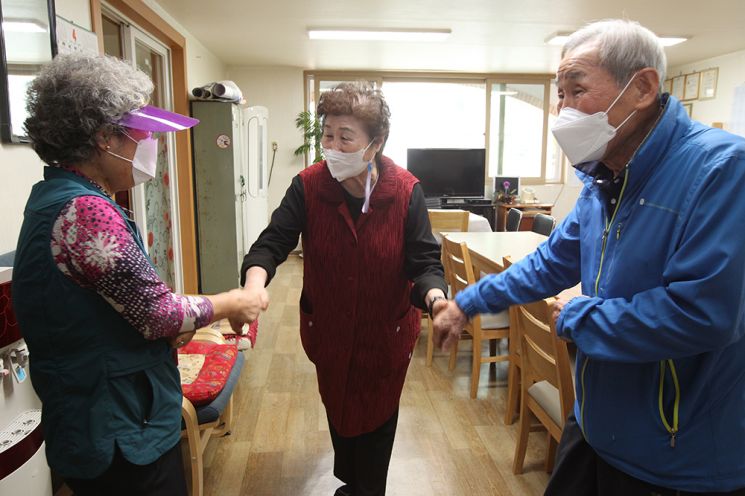 Dongjak-gu will establish a communication space for single-person households called 'Singgeulbeonggeul Sarangbang' within the Daebang Comprehensive Social Welfare Center on July 1. The photo shows elderly people chatting at the Daebang-dong senior center.
[Asia Economy Reporter Park Jong-il] Dongjak-gu (Mayor Lee Chang-woo) is creating a communication space called ‘Single Bungle Sarangbang’ for single-person households, such as young people and seniors living alone in the area, to prevent feelings of isolation.
This project was selected in the Seoul Metropolitan Government’s single-person household support project competition by remodeling an idle space within Daebang Comprehensive Social Welfare Center, a hub for single-person household users in the area, into a multipurpose cultural space for rest and meetings.
With the increase of single-person households among not only young people but also middle-aged, seniors, and disabled individuals in the area, and the reduction of opportunities for interaction due to the prolonged COVID-19 pandemic, the district has prepared a place for communication to alleviate loneliness.
The single-person household communication space ‘Single Bungle Sarangbang’ will transform the 3rd floor of Daebang Comprehensive Social Welfare Center into an Emotional Empathy Studio, operating Daebang Play and an Art Gallery.
Daebang Play provides a space for autonomous leisure activities and rest, such as board games and comic books, while the Art Gallery serves as a community hall, creating a gallery and a solo stage to offer performance and cultural spaces.
‘Single Bungle Sarangbang’ will open in July and can be used as an autonomous communication and exchange space for single-person households outside program hours. Operating hours are weekdays from 9 a.m. to 8 p.m. and Saturdays from 9 a.m. to 4 p.m.
Programs will be offered year-round with ongoing recruitment of participants, and special lectures will be held three times a year tailored to the generational needs of single-person households such as youth and middle-aged groups. Any single-person household resident in the area, from young people to middle-aged, seniors, and disabled individuals, can use the space.
For more details about the single-person household communication space, please contact the Welfare Policy Division.
Park Mi-young, head of the Welfare Policy Division, said, “We hope that by creating a community space for single-person households, feelings of isolation will be alleviated and, furthermore, intergenerational exchange and resident networks will be revitalized.”
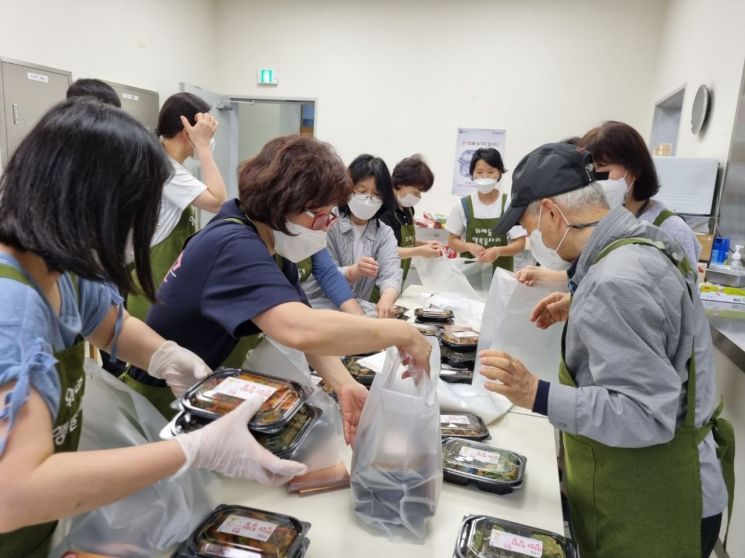
The ‘Mom’s Home-cooked Meal Chance Volunteer Group,’ composed of residents from Wirye-dong, Songpa-gu, visited 30 low-income elderly living alone and severely disabled households in the area and delivered home-cooked meals and donated items on the 13th in celebration of May, Family Month.
Formed in 2019, the ‘Mom’s Home-cooked Meal Chance Volunteer Group’ is a resident volunteer organization that shares home-cooked side dishes with low-income residents. This event was organized to share the warm affection of the community with vulnerable groups who have difficulty cooking due to mobility issues during Family Month.
On the day, about 10 members of ‘Mom’s Home-cooked Meal Chance’ visited 30 low-income elderly living alone and severely disabled households, delivering nutritious foods such as individually packaged beef bulgogi and donated items like mask straps sponsored by the Volunteer Center, while checking on their health and well-being.
Considering that most recipients belong to high-risk groups for COVID-19 infection, members strictly adhered to quarantine guidelines such as wearing masks and minimized infection risk by adjusting visit times with appropriate intervals.
A district official said, “We thank the ‘Mom’s Home-cooked Meal Chance Volunteer Group’ for delivering carefully prepared meals and the warm affection of neighbors to vulnerable residents. We will continue to do our best to minimize blind spots in care caused by the prolonged COVID-19 pandemic and overcome difficulties faced by vulnerable groups together.”
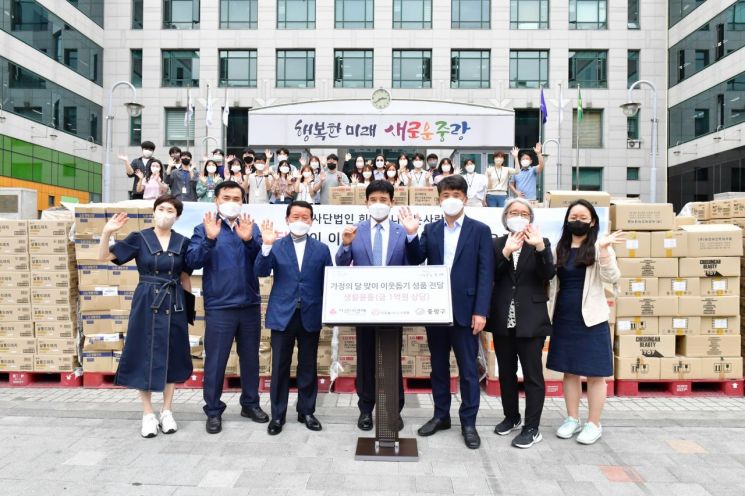 At the donation ceremony held on the 13th, Kim Tae-hee, Acting Mayor of Jungnang-gu (third from the right), Kim Jeong-an, President of the Hope Sharing People Association (fourth from the right), and related officials are posing for a commemorative photo.
Jungnang-gu announced that it received neighbor-helping goods worth 100 million KRW for low-income vulnerable groups in celebration of Family Month from the nonprofit organization Hope Sharing People.
At the goods delivery ceremony held in front of Jungnang-gu Office on the 13th, the district received one 11-ton truckload of daily necessities worth 100 million KRW, including cosmetics, shampoo, body wash, detergent, and toothpaste.
The received goods will be distributed to vulnerable groups through local social welfare facilities and food markets.
Kim Tae-hee, acting mayor of Jungnang-gu, said, “We thank Hope Sharing People for continuously donating daily necessities to help neighbors in need. We will ensure that the donated items are delivered to places where they are needed.”
Meanwhile, Hope Sharing People is a social public interest corporation that has donated a total of 1.34 billion KRW worth of scholarships for low-income students, quarantine supplies, and daily necessities sets to Jungnang-gu over the past three years.
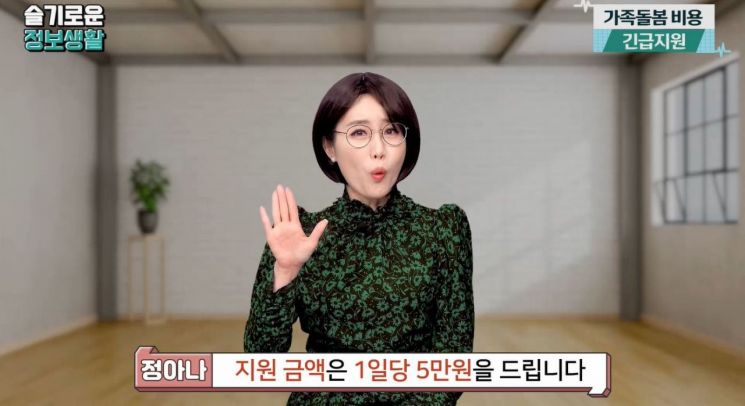 Jung Ah-na, born in the Year of the Monkey in 1968, the host of Seongbuk TV's "Wise Information Life," which explains public information in an easy-to-understand way to residents in their 40s to 60s, is giving a precise explanation about family care leave.
The response to the new program ‘Wise Information Life’ on Seongbuk-gu’s YouTube channel ‘SeongbukTV’ is heating up.
‘Wise Information Life’ is a program independently produced and released by Seongbuk-gu since April to deliver public information and policies that help residents’ daily lives in an easy-to-understand manner. This was partly in response to requests from middle-aged residents in their 40s to 60s who find it difficult to identify essential information amid the flood of information.
Seongbuk-gu quickly collected residents’ complaints and established ‘Wise Information Life’ on the official YouTube channel ‘SeongbukTV.’ To deliver information more easily and familiarly, they created a character called ‘Jeong Ah-na, the Public Information Top Instructor born in the Year of the Monkey, 1968.’ Currently, ‘Jeong Ah-na’ is managed by Jung Soo-kyung, a 35-year-old officer of the Public Relations and IT Media Team at Seongbuk-gu Office.
‘Wise Information Life’ has released three episodes so far on family care leave, dementia prevention, and housing lease contract reporting. The family care leave episode has 2,100 views, dementia prevention about 1,000 views, and the housing lease contract reporting episode released on the 16th is rapidly gaining views. Positive reactions can be seen in comments such as “I will share this with my uncle and family,” “I had heard about it somewhere but didn’t know I was eligible; this is very useful,” and “Thank you for providing valuable information that could have prevented financial loss if unknown.”
Meanwhile, the official YouTube channel ‘SeongbukTV’ started operating in January 2021 with the slogan ‘Communicating simple daily life in a fresh way.’ Besides ‘Wise Information Life,’ it produces tailored content for different generations such as ‘60-second Fact Seongbuk’ and ‘Seongbuk Issue.’ It also offers various content focusing on ‘people,’ including ‘Do You Know Seongbuk’ and ‘Seongbuk People Inside,’ produced in collaboration with Seokyeong University, satisfying residents’ thirst for information and communication.
A Seongbuk-gu official said, “We will make various efforts to deliver the vast amount of public information and policies in an easy-to-understand way from the residents’ perspective so that all residents can enjoy the benefits of administrative services.”
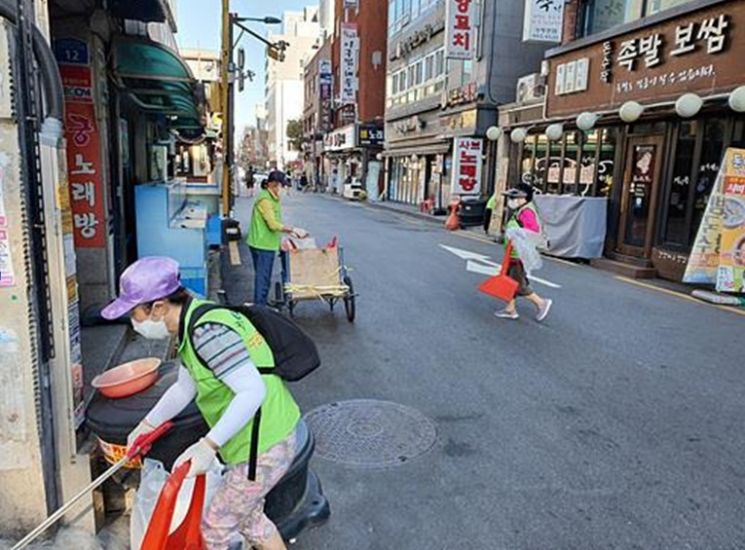
Gwangjin-gu is recruiting participants for the public work project operating in the second half of 2022.
The ‘2022 Second Half Public Work Project,’ running from July 11 to December 2, is divided into four fields: Green Environment, Public Service Support, Safety Management, and Digital Jobs, consisting of 49 projects across 34 departments.
The recruitment target is 268 people: 202 for general projects for those aged 18 and over, and 66 for elderly projects for those aged 65 and over.
Eligibility includes ▲Gwangjin-gu residents aged 18 or older ▲unemployed or those on leave/closed businesses due to COVID-19, daily workers without regular income ▲applicants whose combined property value of themselves, spouse, and family is 400 million KRW or less ▲those not restricted by the public job participation period (no more than twice in two years).
Additionally, those currently receiving livelihood benefits under the National Basic Livelihood Security Act, unemployment benefits, or cases where two people from one household participate are excluded from selection. Even if eligibility is met, participation may be denied based on factors such as household head status and number of dependents, along with project-specific qualifications, priority points, and considerations.
Applicants wishing to apply must visit their local community service center with ID by the 20th, complete and submit the public work project application and information provision consent form, among other required documents.
Selected participants will receive wages of 28,000 KRW for 3 hours of work per day and 37,000 KRW for 4 hours per day (5,000 KRW meal allowance separate), working 3-4 hours a day, 5 days a week, with weekly and annual leave pay and enrollment in the four major insurances.
Announcement of selected participants will be individually notified by the project departments on July 6. For more details, contact the Gwangjin-gu Job Policy Division or local community service centers.
The district plans to operate the second half public work project with 20 more participants than the first half to provide basic livelihood security and employment stability to residents while promoting a ‘win-win’ effect.
In particular, this recruitment added eligibility for those on leave or closed businesses due to COVID-19 and increased the family property ownership limit from 300 million KRW to 400 million KRW to encourage more residents to participate in the public work project.
© The Asia Business Daily(www.asiae.co.kr). All rights reserved.
![Clutching a Stolen Dior Bag, Saying "I Hate Being Poor but Real"... The Grotesque Con of a "Human Knockoff" [Slate]](https://cwcontent.asiae.co.kr/asiaresize/183/2026021902243444107_1771435474.jpg)

















