China Eases Tightened Real Estate Policies Again to Stimulate Economy
Real Estate Transactions Plummet in Most Cities Due to Quarantine Measures
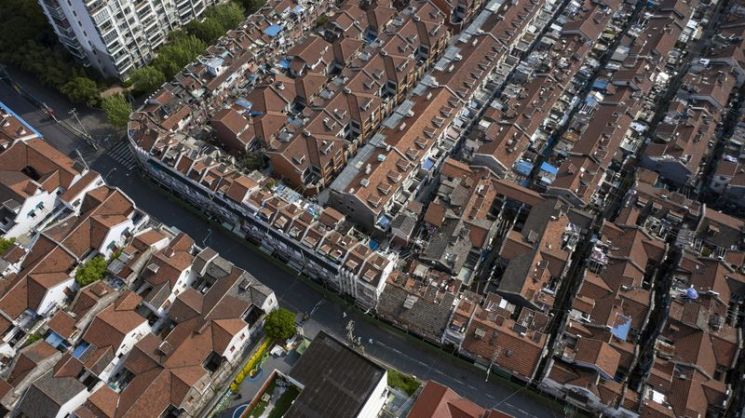
[Asia Economy Reporter Kim Hyunjung] China has significantly relaxed real estate-related regulatory policies as part of its economic stimulus efforts, but the transaction market has yet to revive. However, since the main cause is interpreted as mobility restrictions due to the government's zero-COVID policy, there are also forecasts that a rebound could occur within a short period if quarantine measures succeed.
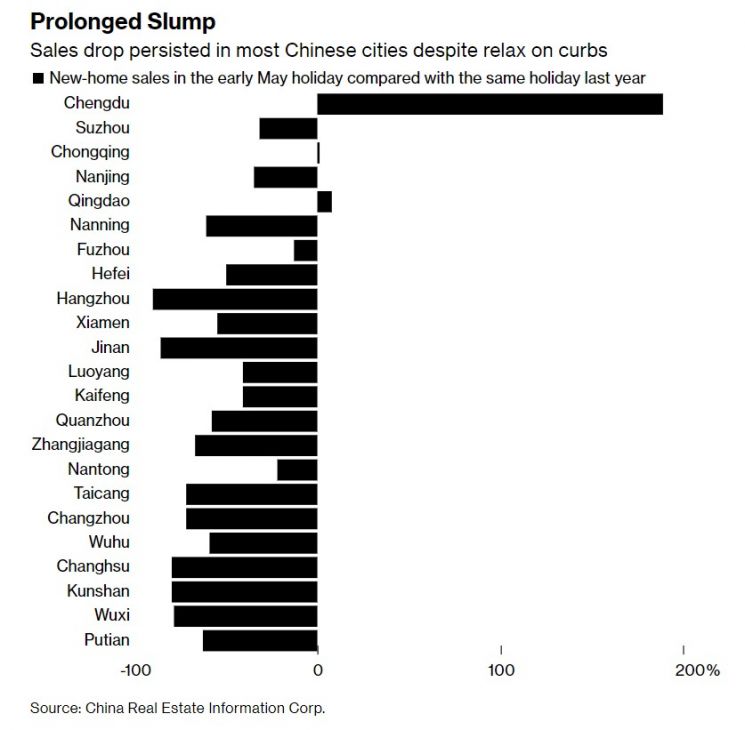
On the 8th (local time), Bloomberg News cited the China Real Estate Information Corporation (CRIC) announcement, reporting that new home sales in 23 major cities tracked by the corporation decreased by 33% year-on-year (by area) during the five-day Labor Day Golden Week holiday. Except for Chengdu (which saw a 189% increase), most cities such as Hangzhou (-90%), Jinan (-86%), Changshu (-80%), Kunshan (-80%), and Wuxi (-79%) experienced a sharp decline in home sales.
Since the second half of 2020, the Chinese government had implemented stringent regulations, including limiting banks' real estate loan quotas, restricting real estate developers' debt ratios, and banning insurance companies' investments related to real estate. However, from the end of last year, to stimulate the economy, various regulations were eased, such as raising the loan-to-value (LTV) ratio for mortgage loans for non-homeowners from 70% to 80% and lowering additional interest rates. This was in consideration of the slowdown in growth caused by the prolonged COVID-19 pandemic, soaring producer prices, and the deepening side effects of regulations like the real estate market slump.
In April this year, Suzhou, an eastern city of Nanjing and a manufacturing hub, allowed real estate purchases by residents not originally from the city, and Harbin in the north withdrew the regulation prohibiting the sale of newly owned homes within three years. In major cities such as Beijing, Shanghai, Shenzhen, and Guangzhou, mortgage interest rates were lowered, and especially in Shanghai's Jinshan District, housing purchase subsidies were even provided. Nevertheless, the market appears unable to recover due to obstacles such as COVID-19 quarantine measures.
The news agency viewed that the possibility of additional lockdowns under the zero-COVID policy is freezing consumption activities, including real estate transactions across China. In fact, tourism spending during this month's Labor Day holiday was 64.7 billion yuan (approximately 12.258 trillion KRW), a sharp 43% decrease compared to the previous year.
However, if the quarantine issues causing the slump are resolved, there is also a forecast that the real estate market could recover in the short term. Nomura Securities recently stated in an investment memo, "If the spread of COVID-19 can be contained until June, the real estate market could broadly rebound."
© The Asia Business Daily(www.asiae.co.kr). All rights reserved.
![Clutching a Stolen Dior Bag, Saying "I Hate Being Poor but Real"... The Grotesque Con of a "Human Knockoff" [Slate]](https://cwcontent.asiae.co.kr/asiaresize/183/2026021902243444107_1771435474.jpg)
















