[Seoul District News] Dongjak-gu Completes Inspection of 41 Smart and 67 Parasol-Type Shade Structures; Adds 5 Smart Shades by May... Gwanak-gu Selected for Seoul Crime Prevention Infrastructure Project... Gangbuk-gu Advances Zero Food Waste in Restaurants... Songpa-gu Provides Corporate Local Income Tax Filing Guidance... Yangcheon-gu Installs 41 LED Lights in Parks and Sports Facilities... Jungnang-gu Lights Dark Alleys with 2 LED Smart Security Lights
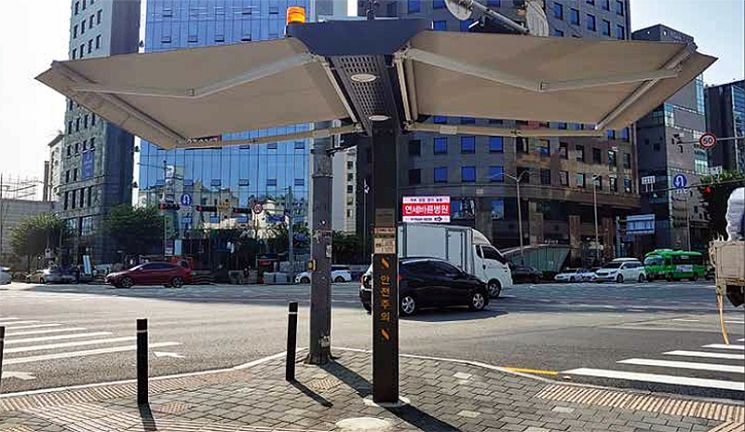
[Asia Economy Reporter Park Jong-il] Dongjak-gu (Mayor Lee Chang-woo) has advanced the operation of 108 “Heat Relief Shelter Shade Tents” where residents can avoid the strong spring ultraviolet rays and road heat.
This April has seen abnormal high temperatures ranging from spring wildfires to early summer weather. According to the Korea Meteorological Administration, temperatures will rise sharply from this month, with the heatwave expected to start in June and continue beyond August.
Accordingly, the district began early operation of heat relief shelter shade tents in the area from the 15th, including 41 smart-type and 67 parasol-type tents. Prior to this, inspections were completed to check the automatic opening/closing and any abnormalities of the smart shade tents, as well as any damage to the parasol shade tents.
Since 2013, the district has been the first nationwide to promote the shade tent project, providing shelters that cool down residents waiting for traffic signals or buses during hot summers.
Last year, 12 smart shade tents were additionally installed at busy crosswalks and traffic islands, operating a total of 108 shade tents. Some shade tents in areas like Sindaebang-dong were also equipped with foldable chairs for pregnant women and the elderly to rest briefly.
This year, based on active feedback from residents, additional shade tents will be installed at crosswalks near schools and shopping districts with high foot traffic in Sadang-dong and Daebang-dong.
In particular, due to positive reviews and requests for additional installations of “smart shade tents” that combine IoT and solar power technology, five more will be installed by May.
Unlike conventional parasol shade tents, smart shade tents operate automatically according to set temperature, wind speed, sunrise and sunset times, allowing quick response to sudden weather changes such as strong winds and reducing labor.
Additionally, LED lighting is installed even when folded after sunset, serving as street lamps and improving urban aesthetics, which has increased resident satisfaction with heat reduction facilities.
The district has also subscribed to liability insurance for public facilities to prepare for resident safety accidents caused by shade tents, designating shade tent managers at each community service center to inspect daily for malfunctions, proper operation, and other special issues.
Lee Chang-woo, Mayor of Dongjak-gu, said, “Through the operation of heat relief shelter shade tents, we will provide residents with a cool urban environment and gradually expand the installation of eco-friendly smart shade tents using solar power to enhance our environmental policies.”
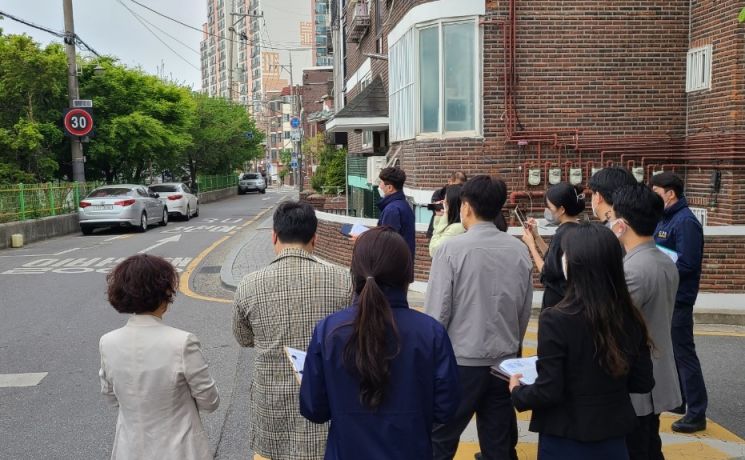
Gwanak-gu announced that it has been finally selected as a target site for the Seoul Metropolitan Government’s crime prevention infrastructure construction project.
This contest was conducted for autonomous districts and police stations seeking environmental improvements linking crime prevention infrastructure construction and living safety (crime prevention) design projects. The district applied with Sinlim-dong, the planned site for this year’s Safe Alley Design Project, in collaboration with Gwanak Police Station, and was selected after document and on-site evaluations.
Accordingly, the district is about to fully proceed with the “Sinlim-dong Safe Alley Design Project,” which was originally planned by the district, receiving support from Seoul City for basic design, detailed design, construction contract issuance, and financial burden.
The “Safe Alley Design Project” is a public design project that applies environmental design (CPTED) techniques with living safety (crime prevention) design to suppress criminal psychology, prevent crime opportunities in advance, and create a resident-led safe village.
The district plans to form a Crime Prevention Design TFT and jointly develop designs for basic design with the Autonomous Police Committee, Seoul City, Seoul Metropolitan Police Agency, and Gwanak Police Station.
Also, through detailed environmental analysis of Sinlim-dong, where the proportion of single-person households is increasing, the district will identify specific problems and apply field-customized solutions that address diverse demands through resident participation.
A district official said, “Being selected for this crime prevention infrastructure construction project will maximize the effect of the Safe Alley Design Project,” adding, “We will actively strive to improve Sinlim-dong, a densely populated single-person household area, into a safer and more pleasant village.”
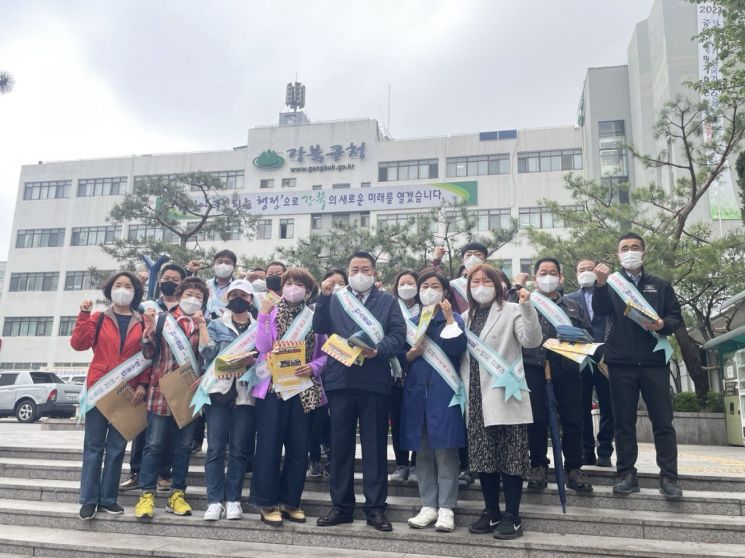
Gangbuk-gu (Mayor Park Gyeom-su) conducted a “Carbon Neutral Campaign to Reduce Food Waste” on the 22nd in celebration of Earth Day.
The campaign was held to practice carbon neutrality in daily life by reducing food waste.
On that day, Gangbuk-gu Public Health Center, along with members of the Korea Foodservice Central Association Gangbuk Branch and consumer food hygiene monitors, conducted the campaign around Suyu Station to promote the “Take Only What You Can Eat” movement and participation in the “Zero Leftover Food Project” at restaurants.
According to data released by the Ministry of Environment, if all citizens reduce food waste by 20%, greenhouse gas emissions can be reduced by up to 1.77 million tons annually. This is equivalent to planting 360 million pine trees. It also saves 1.8 billion kWh of energy annually, enough to supply 186 million briquettes to 390,000 low-income households.
Many local governments have made various efforts to reduce food waste, such as packaging leftover food, but this has caused another environmental problem due to disposable waste.
To solve this, the district judged that it is essential to create self-service corners where restaurant customers can take only the side dishes they will eat, and is promoting the Zero Leftover Food Project targeting general restaurants this year.
The Zero Leftover Food Project supports part of the cost of purchasing side dish refrigerators for operating self-service corners in establishments, with about 200 businesses currently expressing interest in participating.
The district is also considering providing table-side side dish containers for businesses that find it difficult to install side dish refrigerators due to space constraints or other operational conditions.
Park Gyeom-su, Mayor of Gangbuk-gu, said, “Achieving a carbon-neutral society is only possible with voluntary participation from citizens,” adding, “I hope the Zero Leftover Food Project at general restaurants will be the foundation for Gangbuk-gu to become the ‘Number One Carbon Neutral District.’”
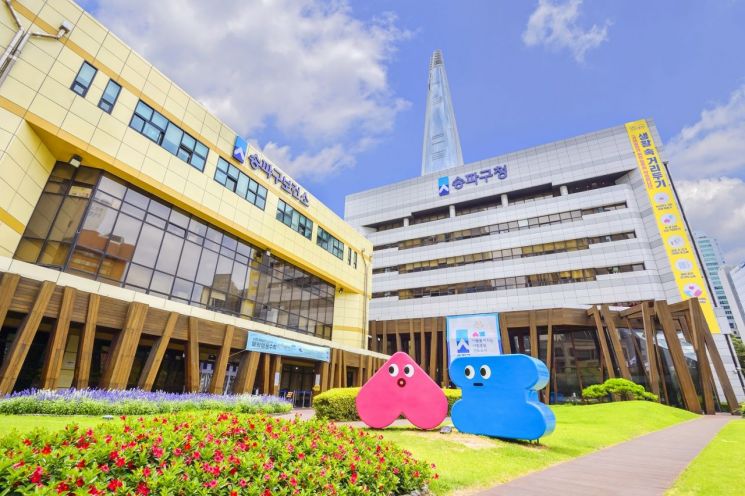
Songpa-gu (Mayor Park Seong-su) announced on the 26th that it has sent 20,023 notices to corporations and tax agents with business sites in the district to encourage the filing and payment of the corporate local income tax for December 2021.
As of the end of December 2021, domestic corporations located in the area and foreign corporations with domestic source income must file and pay corporate local income tax by May 2. Corporations with no income or losses for the business year are also subject to filing. Corporations with business sites in two or more local governments must file and pay proportionally for each site.
Filing and payment can be done by submitting the tax base and tax amount report, balance sheet, comprehensive income statement, retained earnings appropriation statement, tax adjustment statement, apportionment statement, and other required documents through the Seoul City eTax or WeTax websites.
If electronic filing is difficult, it is possible to visit the Songpa-gu Tax Division 2 or file by mail. However, the district asks visitors to comply with COVID-19 prevention guidelines when filing in person.
The district has extended the payment deadline for corporate local income tax by three months to August 1 for small and medium-sized enterprises affected by COVID-19, such as those with restricted operating hours.
Additionally, to improve taxpayer convenience, the district has established a dedicated response team for corporate local income tax filing and payment. It has also set up an emergency response system in close cooperation with Seoul City to prepare for system failures and designated dedicated personnel for electronic filing and payment to minimize taxpayer inconvenience. For details, contact Songpa-gu Tax Division 2.
Park Seong-su, Mayor of Songpa-gu, said, “We ask corporations to file and pay within the deadline to avoid penalties such as additional taxes,” adding, “We will continue to implement various support measures to reduce tax burdens by monitoring the economic situation, ensuring that valuable taxes contribute to Songpa’s development and residents’ quality of life.”
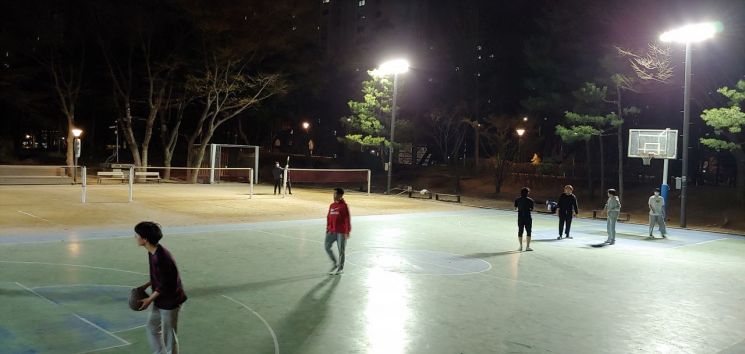
Yangcheon-gu (Mayor Kim Soo-young) announced that it has replaced 41 outdated tower lights at sports facilities in four parks, including Yangcheon Park Plaza and basketball courts, with smart LED lighting.
This project was promoted through resident participation budgeting, replacing existing metal halide lamps with LED floodlights that have high luminous efficiency and wireless remote brightness control, at a cost of 1 million KRW.
The district expects to save 3 million KRW annually in electricity bills through this. It also improved the average illuminance of sports facilities by more than three times (from 56 lux to 169 lux), enhancing the overall usage environment.
In particular, the basketball court at Yangcheon Park had an average illuminance below 40 lux before replacement, causing inconvenience for nighttime use. After switching to LED lighting, illuminance rose dramatically to 150 lux, creating a safe and comfortable sports environment.
Additionally, the district established a smart lighting control system based on IoT, enabling wireless remote control of brightness. During rarely used late-night hours, brightness is adjusted to below 50% in real time, contributing to carbon neutrality by reducing power consumption in response to the climate crisis.
An official from the Parks and Greenery Division said, “We secured sufficient illuminance through the full replacement of tower lights at park sports facilities to provide residents with a pleasant exercise environment, so we hope everyone visits with confidence.”
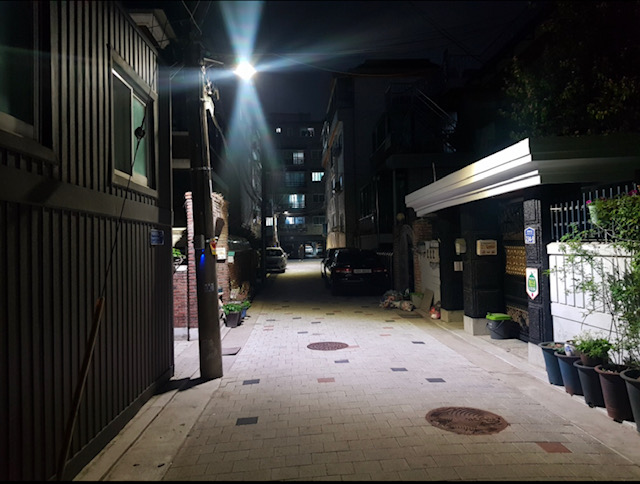
Jungnang-gu is providing residents with a safe way home by installing LED smart security lights in the Muk 2-dong area.
The district announced that it installed 288 LED smart security lights in the Jangmi Village area of Muk 2-dong, a city regeneration New Deal project site. LED smart security lights apply IoT (Internet of Things) technology and are more eco-friendly than conventional sodium security lights. They also allow real-time monitoring and control of malfunctions for prompt repairs.
The dark alleys of Muk 2-dong, where security lights were insufficient or outdated and improvement was continuously requested, have been refurbished into bright and safe walking paths.
About 200 million KRW was invested in the LED smart security light replacement project, which was carried out as part of the smart crime prevention design project under the Muk 2-dong urban regeneration revitalization project, with construction completed this month.
A district official said, “With the completion of the security light installation, we can now provide residents with much brighter walking paths,” adding, “By December this year, CCTV and emergency bells will also be installed in the security light areas to create an even safer village.”
The district is also promoting barrier-free walking path projects around Jungnang Station Road and Dongil Road and creating small rest spaces in a 250-meter section of Jungnang Station Road as part of the urban regeneration revitalization project to create a pleasant and safe environment in Jangmi Village, Muk 2-dong.
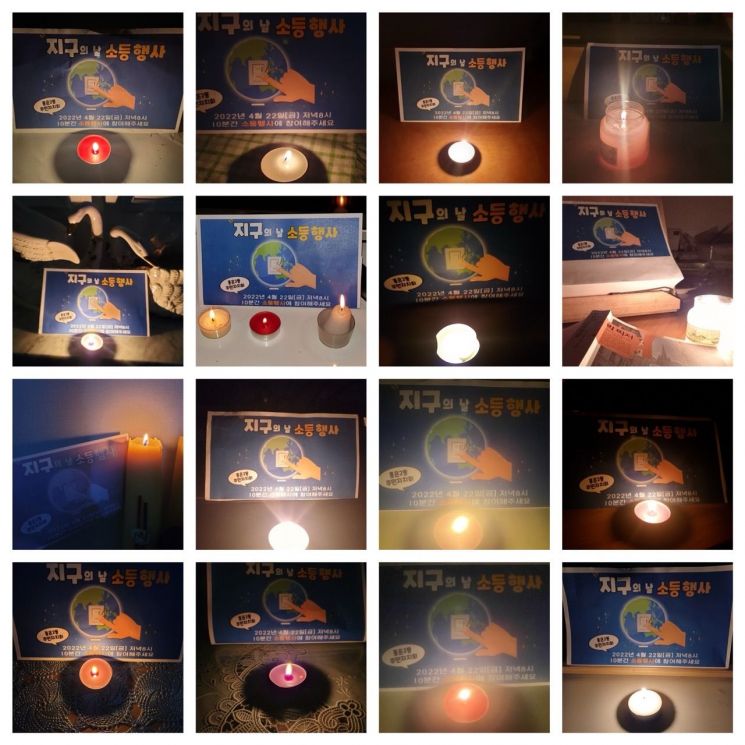
The Hong Eun 2-dong Residents’ Autonomy Committee (Chair Lee Mi-seon) in Seodaemun-gu participated in the “Happy Lights Out” event from 8 p.m. on the 22nd in celebration of Earth Day.
Many committee members voluntarily participated, turning off unnecessary household electricity, lighting candles, taking certification photos, and sharing them, continuing online communication within the residents’ autonomy committee.
If the entire nation participates in the 10-minute lights-out event, it can reduce approximately 2,660 kg of greenhouse gases.
While planning this event, the residents’ autonomy committee raised awareness of the environmental crisis caused by climate change and formed a consensus on practicing low-carbon living.
Vice Chair Jang Soon-gi, who participated in the lights-out event, said, “I am glad to join the nationwide effort to save energy and will continue to strive to maintain small daily practices.”
This year, the Hong Eun 2-dong Residents’ Autonomy Committee is conducting the Green Connection Campaign, engaging in various environmentally conscious village activities such as using eco-friendly dishcloths and scrubbers, neighborhood trash collection by subcommittees, and hosting flea markets.
© The Asia Business Daily(www.asiae.co.kr). All rights reserved.
![Clutching a Stolen Dior Bag, Saying "I Hate Being Poor but Real"... The Grotesque Con of a "Human Knockoff" [Slate]](https://cwcontent.asiae.co.kr/asiaresize/183/2026021902243444107_1771435474.jpg)

















