2 out of 8 Businesses Closed Since COVID-19
Failure to Adapt in Old Downtown Markets and Trends
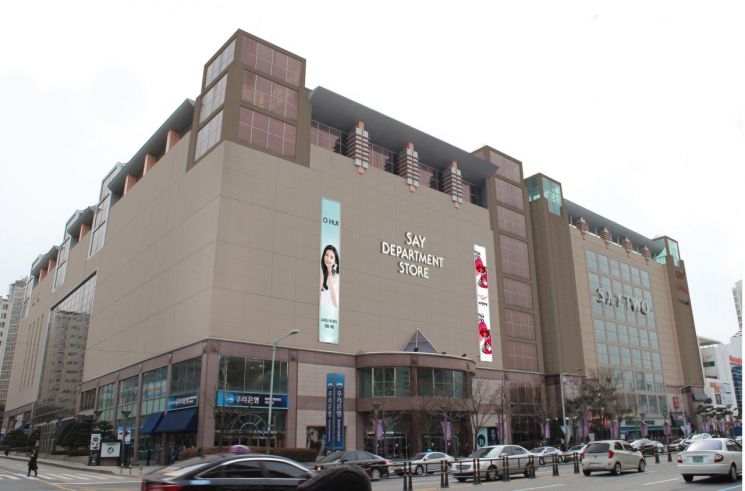
[Asia Economy Reporter Jeon Jinyoung] Local department stores, which once led regional commercial districts, are now facing a precarious situation in maintaining their existence after COVID-19. This is the result of a complex interplay of changes in consumption patterns and trends sparked by the pandemic, shifts in commercial districts, and aggressive competition from large corporate department stores emphasizing luxury brands.
According to industry sources on the 26th, there were eight local department stores that met the standards of department stores under the Distribution Industry Development Act with private single capital, excluding large corporations, until 2019 before COVID-19. However, two of them have closed during the pandemic. Taepyeong Department Store in Dongjak-gu, Seoul, closed after 30 years, and Daegu Department Store (Main Branch) in Jung-gu, Daegu, considered a major player, shut down after 52 years.
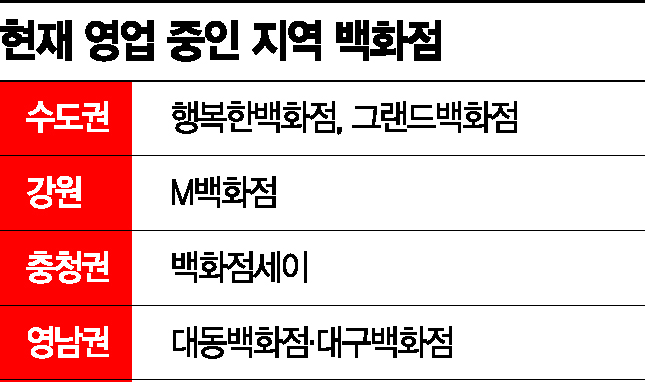
Currently, six remain: Haengbokhan Department Store in Yangcheon-gu, Seoul; Grand Department Store in Goyang-si, Gyeonggi-do; Daegu Department Store (Plaza Branch); Daedong Department Store in Changwon-si, Gyeongnam; Sei Department Store in Jung-gu, Daejeon; and M Department Store in Chuncheon-si, Gangwon-do. However, the situation is not favorable. Sei Department Store is currently undergoing a sales process, and Daedong Department Store has previously entered court receivership. The other department stores are also struggling to escape the quagmire of deficits.
Industry insiders view the decline of local department stores as an irreversible trend. Over time, commercial districts have shifted, and the environment of the department store industry has changed, including large corporations acquiring local department stores. For example, Mihwadan Department Store in Gwangbok-dong, Busan, was Busan’s first local department store and was known as a ‘promised landmark’ at the time, but it went bankrupt after failing to withstand the International Monetary Fund (IMF) crisis. Subsequently, as Busan’s commercial district moved to Haeundae, Gwangbok-dong became an old downtown area.
An official from the Department Store Association explained, "As consumers moved to new commercial districts, the commercial areas where local department stores were established became old downtowns. Additionally, after the IMF, the three major department stores (Lotte, Shinsegae, Hyundai Department Store) acquired regional department stores and turned them into chains." He added, "Currently, with the impact of COVID-19 and changes in consumer culture such as online shopping, local department stores inevitably face decline."
Experts agree that the decline of local department stores follows the trend, but they emphasize the need to focus on roles that only these stores can fulfill to revive them as regional industries. Professor Eunhee Lee of Inha University’s Department of Consumer Studies said, "What consumers expect from department stores is the ability to shop for luxury goods in one place." She added, "Local department stores focused more on daily necessities and miscellaneous goods rather than luxury items, making it difficult to meet these expectations. Going forward, the strategy of luxury specialization will continue to remain a survival strategy for department stores."
Professor Yonggu Seo of Sookmyung Women’s University’s Department of Business Administration said, "Local department stores provide services specialized for local residents," and cautioned, "We should not just leave things to the flow of the times and do nothing." He emphasized, "To survive competition between cities and attract tourists, and to prevent population decline, support from local governments is necessary to build infrastructure suited to regional characteristics."
Meanwhile, this trend is not unique to Korea. Japan also saw local department stores falter once during the COVID-19 pandemic. The number of department store outlets nationwide in Japan peaked at 311 in 1999 and has been steadily decreasing since then, dropping sharply from 271 in 2009 to 176 as of April this year. Regional local department stores such as Miharuya closed in April and held farewell sales.
© The Asia Business Daily(www.asiae.co.kr). All rights reserved.
![Clutching a Stolen Dior Bag, Saying "I Hate Being Poor but Real"... The Grotesque Con of a "Human Knockoff" [Slate]](https://cwcontent.asiae.co.kr/asiaresize/183/2026021902243444107_1771435474.jpg)
















