[Seoul District News] Nowon-gu Enhances Basic Livelihood Security Selection System to Eliminate Welfare Blind Spots; Reviewed 246 Cases Jan-Feb, Rescued 13... Guro-gu Restarts Resident Participation Programs for Daily Recovery... Seongbuk-gu Holds Citizen Action Campaign for ‘Earth Day’... Gangseo-gu Offers ‘AI Humanities Lectures’... Dongdaemun-gu Provides 400,000 KRW Each to 1,249 Freight and 255 Individual Cargo Workers
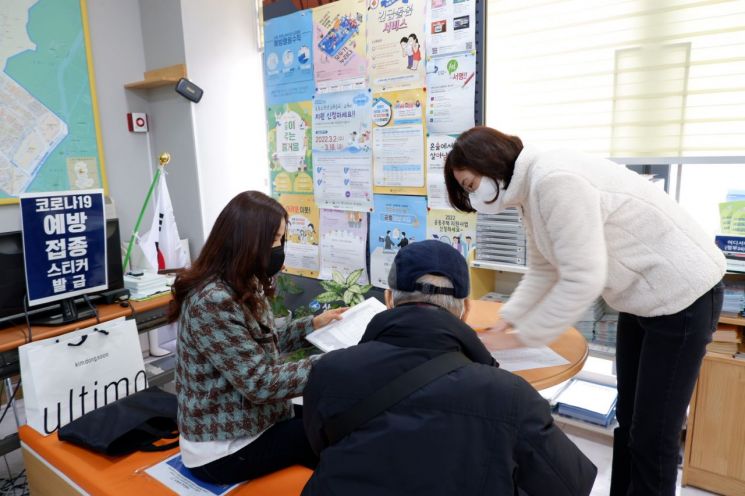
[Asia Economy Reporter Park Jong-il] Nowon-gu (Mayor Oh Seung-rok) announced that it will implement the nation’s first-ever ‘Welfare Plus’ system to protect the rights of residents in blind spots who are unable to receive welfare benefits despite difficult circumstances.
Recipients of the National Basic Livelihood Security are representative low-income welfare beneficiaries, and those not selected often fall outside the formal social safety net. Generally, the selection process for National Basic Livelihood Security recipients involves initial consultation and application submission at the local community service center, followed by income, property, and household investigations by the district office’s Welfare Department, and then notifying applicants of eligibility or ineligibility.
Due to the relaxation of the support obligation criteria for livelihood benefits last year, the number of applicants surged, with 6,170 new applications for basic livelihood security livelihood benefits in Nowon-gu in 2021, more than double the 2,912 cases in 2020.
Despite this surge in applications, the number of frontline integrated investigation managers has remained almost unchanged, making it challenging to process eligibility determinations within deadlines.
Moreover, the current system lacks a procedure for re-examining those deemed ineligible, leading to increased complaints from dissatisfied applicants, and residents facing real hardship often encounter immediate livelihood crises. The shortage of manpower in welfare services and the absence of rights protection measures have been factors hindering the effective operation of welfare systems.
To address these issues, the district has devised and introduced the ‘Welfare Plus’ system, which starts by re-examining those deemed ineligible for National Basic Livelihood Security benefits.
The Welfare Policy Division of the district office receives integrated investigation data from the Welfare Department and reviews the selection process to check for errors in guidelines and special cases application. During this process, they assist applicants in reapplying if they can be protected by the Local Livelihood Security Committee or if they are eligible for other welfare benefits.
If relief is difficult through this re-screening process, the district provides tailored guidance on various social welfare services it operates, such as emergency welfare support, neighborly aid, and care services, according to the applicant’s individual circumstances. Among these, applicants who find it difficult to solve problems independently and have complex needs are linked to integrated case management for long-term monitoring.
The effects appeared immediately. From January to February this year, a total of 246 applicants were re-examined through this system. Among them, 13 were assisted, including 7 who received welfare benefit services such as reduced co-payments for the near-poor and issuance of near-poor certificates, and 6 linked to other social welfare services.
For example, in the case of Mr. A (88), who had been living in a corner of a friend’s house after effectively divorcing his spouse 40 years ago, he was recently asked to leave by the friend. In February, he was diagnosed with stomach cancer but had given up treatment due to hospital costs. Despite this, he was deemed ineligible for livelihood benefits because his support obligor was considered capable of support. Through the Welfare Plus system, the district identified him as a beneficiary and linked him to welfare services.
First, through the district’s integrated case management, he was admitted to temporary housing provided by the Nowon Housing Welfare Center. To care for his health after the cancer diagnosis, health care services from the public health center were linked, and regular welfare checks and meal delivery were provided through the Nowon Ddokddokddok Care Team. Without this system, he would have ended with an ineligibility notice, but he was discovered and brought into the welfare system.
The district plans to analyze interim results semiannually while implementing the system to review the need and direction for expanding the project.
Oh Seung-rok, Mayor of Nowon-gu, said, “This Welfare Plus system is an extension of various efforts to eliminate welfare blind spots, including operating the Ddokddokddok Care Team. We will continue to remove barriers between district office departments to enhance the completeness of the Nowon-type welfare system and provide practical benefits to residents in need.”
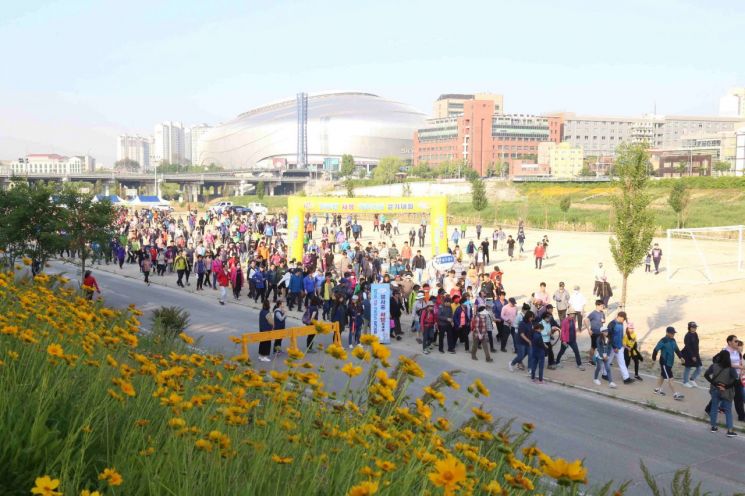
Guro-gu (Mayor Lee Sung) has launched efforts to restore daily life in line with the lifting of social distancing measures.
Guro-gu announced on the 25th, “We will actively promote support projects to recover the daily life that has been stagnant due to COVID-19 for over two years,” adding, “We plan to reopen suspended public facilities and prepare various resident participation programs.”
First, Guro-gu resumed the operation of senior centers that had been suspended due to COVID-19.
Among 201 senior centers in the area, only those wishing to reopen will be autonomously opened, and users must have completed the third dose of the COVID-19 vaccine.
Operating hours are from 1 p.m. to 6 p.m., focusing on programs with low droplet generation risk, and outdoor specialized programs such as walking and cultivation programs will also be conducted. Additionally, each senior center will designate an infection control officer to strictly adhere to quarantine rules.
Guro-gu plans to expand the scope of operations sequentially after a two-week pilot operation, including meals and contact-based programs.
Cultural and sports events that residents can enjoy on-site will also be held.
The 120th Anyangcheon Love Family Health Walking Event, a representative event of Guro-gu, will be held at Anyangcheon from 7 a.m. for two hours on June 5, Environment Day. Residents who love Anyangcheon will participate in the walking event, along with voluntary cleaning activities, energy-saving campaigns, and celebratory and prize events.
The walking event, started in 2003 to simultaneously improve Anyangcheon’s water quality and residents’ health, has been conducted online via a dedicated app since COVID-19.
On the 30th of this month, an outdoor concert will be held at Cheonwangsan Book Shelter (Hang-dong 149). Various performances such as bubble shows, musical gala shows, and balloon magic will be held from 1 p.m. to 4 p.m.
Public multi-use facilities will also gradually resume operations. Fifteen community centers will sequentially conduct programs tailored to each district’s situation at 20 locations. Starting this month with non-active programs such as art, Go, and calligraphy, all programs will be fully operated by July, and shower rooms and lounges will be opened.
In addition, village vitality centers, comprehensive social welfare centers, district libraries, and public sports facilities will gradually expand face-to-face services.
Face-to-face psychological support services for residents exhausted by the prolonged COVID-19 pandemic will also be provided. The ‘Closer Psychological Counseling Room’ located at the Guro-gu Mental Health Welfare Center (Saemal-ro 60) is recruiting participants for the customized psychological counseling service ‘Spring May Psychological Healing Program.’
Residents of Guro-gu aged 20 or older who wish to participate can apply by phone or email by May 11. Applications are accepted on a first-come, first-served basis, and the course is free of charge.
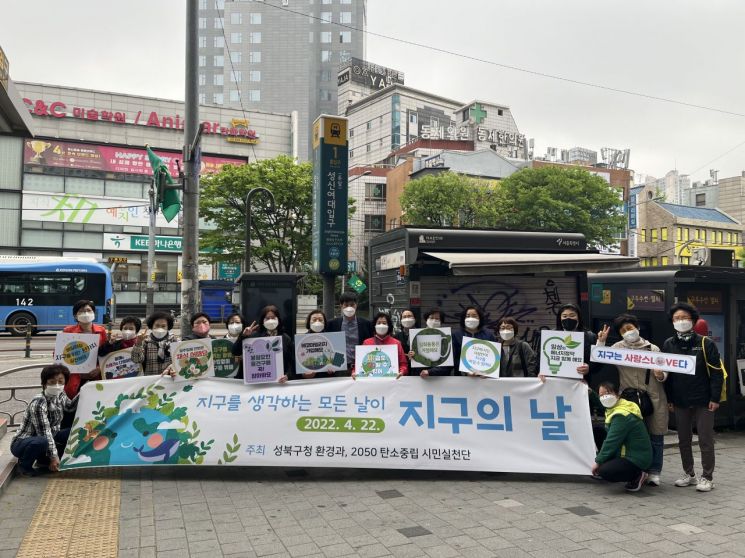
Seongbuk-gu held a street campaign on the 22nd, the 52nd anniversary of ‘Earth Day,’ to promote carbon-neutral practices in daily life to save the planet, together with the ‘Seongbuk-gu 2050 Carbon Neutral Citizen Action Group.’
The campaign was a joint public-private effort by the action group and Seongbuk-gu Office, conducted at Seongsin Women’s University Station, Hanaro Street, and the Seongbuk-gu Office Wind Yard, areas with high foot traffic. The action group carried out various promotional activities encouraging voluntary climate actions by residents, such as energy saving, reducing single-use products, waste reduction, and signing up for eco-mileage programs, while distributing reusable cups to urge the reduction of disposable cup use.
Since May last year, Seongbuk-gu has proactively responded to the climate crisis with the ‘Seongbuk-gu Climate Crisis Emergency Declaration and 2050 Carbon Neutral Citizen Action Group Launch Ceremony,’ setting the goal of creating a carbon-neutral Seongbuk through projects like discovering ‘Zero Packaging Lifestyle Businesses.’
Park Hye-won, leader of the Seongbuk-gu 2050 Carbon Neutral Citizen Action Group, said, “If we practice just one thing every day for the Earth, every day can be Earth Day. It is time for us to make efforts now to leave a beautiful Earth to future generations.”
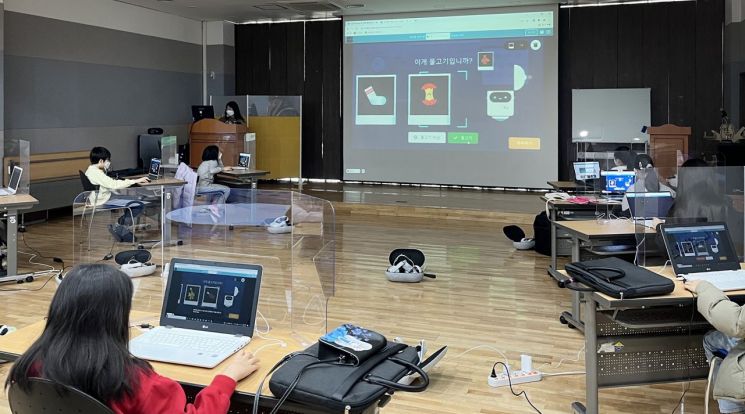
AI (Artificial Intelligence) meets the humanities.
Gangseo-gu, Seoul (Mayor Roh Hyun-song) announced that it will open and operate an ‘Artificial Intelligence Humanities Lecture’ to spread humanities education in the AI era.
The lecture is designed to understand AI, which has become close to daily life through the humanities, and to find solutions on how humans should live in the future.
This lecture is conducted in collaboration with the Humanities Content Research Institute under Chung-Ang University, based on the ‘Mutual Cooperation Agreement for Smart City Gangseo Creation’ signed between the district and Chung-Ang University in 2019.
The university is responsible for developing the lecture and supporting instructors, while the district recruits local institutions to conduct the lectures and handles promotion.
The lectures will be held at five institutions selected by the district, including district libraries and the Gangseo 50 Plus Center.
Each institution will offer six courses targeting elementary, middle, and high school students and adults, including ▲Let’s Do AI! ▲Learn AI ▲Space Age and Culture ▲Algorithms as Da Vinci, among others.
In addition to theoretical classes on AI humanities, various experiential activities such as future science virtual experiences using VR and micro:bit coding experiences will be conducted.
The lectures will start sequentially on May 6 at Dreaming Children’s Library, May 7 at Sumyeongsan Small Library, May 9 at Gangseo 50 Plus Center, May 13 at Gomdallae Library, and May 20 at Deungbit Library.
Classes will be conducted in real-time online via the Zoom platform, and tuition is free. However, students must cover textbook and material costs.
For more details such as schedules by institution, please check the ‘Gangseo Lifelong Learning Center website (homepage) - Notice Board - Announcements.’
Residents wishing to enroll can apply through the Gangseo-gu Integrated Library and Gangseo 50 Plus Center websites.
A district official said, “This lecture was prepared to find solutions for living in the AI era, which has become close to daily life, through the humanities. We hope many residents interested in AI humanities will participate.”
The district plans to recruit new participating institutions in August and continue the lectures in the second half of the year.
Dongdaemun-gu (Mayor Yoo Deok-yeol) will provide disaster relief funds to individual (cargo, private) freight transport workers who are struggling due to decreased cargo volume and soaring fuel prices amid the prolonged COVID-19 pandemic.
The support targets 1,249 cargo freight transport workers and 255 individual freight transport workers, totaling 1,504 people, with 400,000 KRW provided per person.
Those registered as residents in Dongdaemun-gu and who have been operating for more than two months as of April 18, 2022, can apply for the support fund by May 18.
Cargo freight transport workers can apply by visiting the Seoul Cargo Freight Association Branch 2, and individual freight transport workers can apply at the Seoul Individual Freight Association Northeast Branch, submitting the application form along with a resident registration abstract, a copy of the vehicle registration certificate, and a copy of their bankbook.
In January and February, the district provided 10 million KRW each to three local village bus companies and disaster relief funds of 400,000 KRW per person to 2,131 taxi transport workers.
A district official said, “We hope this support fund will help freight workers who have been struggling due to COVID-19. We expect freight workers to recover their pre-COVID daily lives quickly, regain vitality, and further revitalize the local economy.”
© The Asia Business Daily(www.asiae.co.kr). All rights reserved.
![Clutching a Stolen Dior Bag, Saying "I Hate Being Poor but Real"... The Grotesque Con of a "Human Knockoff" [Slate]](https://cwcontent.asiae.co.kr/asiaresize/183/2026021902243444107_1771435474.jpg)

















