[Seoul District News] Dongjak-gu Provides Services Including ▲Smart Commercial Area Analysis ▲Smart Dongjak Map ▲Smart Data Center ▲Smart Statistics · "Integrating Over 140,000 District-Related Data Items to Enhance Resident Accessibility and Activate Data-Driven Administration" ... Seocho-gu Bans Single-Use Cups in Public Buildings from April 1 and Promotes Use of Reusable Cups and Tumblers · Hosts Zero-Waste Events at Public Events, Festivals, and Green Markets ... Gangnam-gu Hosts ‘Gonggam Flea Market,’ a Communication Space for Single-Person Households...
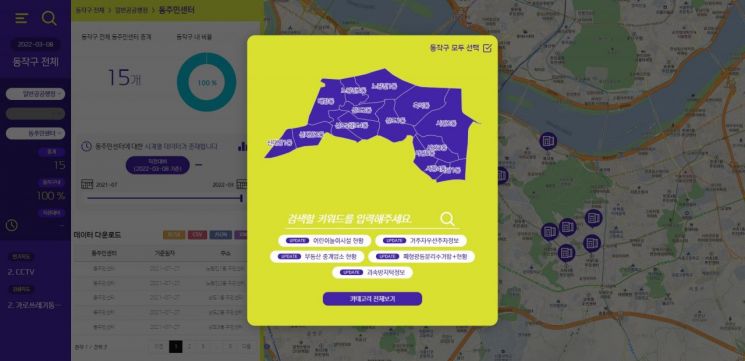
[Asia Economy Reporter Park Jong-il] Dongjak-gu (Mayor Lee Chang-woo) will open the ‘Dongjak-gu Big Data Platform’ system on April 1, enabling any resident to easily search and utilize the district’s current big data.
The ‘Dongjak-gu Big Data Platform’ is a system that consolidates public and private data within the region, shares and utilizes the results of linked data analysis.
The previously operated ‘Public Data Platform’ has been newly revamped to greatly enhance resident accessibility and usability. Additionally, the scope and volume of data provided have been significantly expanded, offering a total of 124 types and over 140,000 data entries in an integrated manner.
The ‘Platform’ operates four main service areas: ▲‘Smart Commercial Area Analysis’ providing commercial area search and comparison functions ▲‘Smart Dongjak Map’ visualizing administrative information closely related to residents’ lives on a map ▲‘Smart Data Center’ where raw data is analyzed and visualized through statistical graph tools and downloadable ▲‘Smart Statistics’ allowing viewing and downloading of various statistical data.
Residents wishing to use the platform can access the website via Chrome or Edge browsers and check data without separate login.
The district has established conditions to continuously receive private sector data related to commercial areas by signing a business agreement with the Seoul Credit Guarantee Foundation. This enhances the reliability of analysis results and not only provides large volumes of data but also advances the quality and level of information.
Furthermore, anticipating an increase in residents’ data demand in the future, the district will continuously discover and add new open data. Using the consolidated data, big data analyses such as ▲status and characteristic analysis of single-person households ▲selection analysis of shuttle bus routes for the disabled ▲analysis of complaint types will be conducted and utilized for tailored policy formulation.
Lee Chang-woo, Mayor of Dongjak-gu, said, “The big data platform has laid the foundation for data-driven administration at the autonomous district level,” adding, “Especially, the revamped ‘Commercial Area Analysis Service’ and ‘Smart Dongjak Map’ this year are expected to practically help improve residents’ quality of life.”
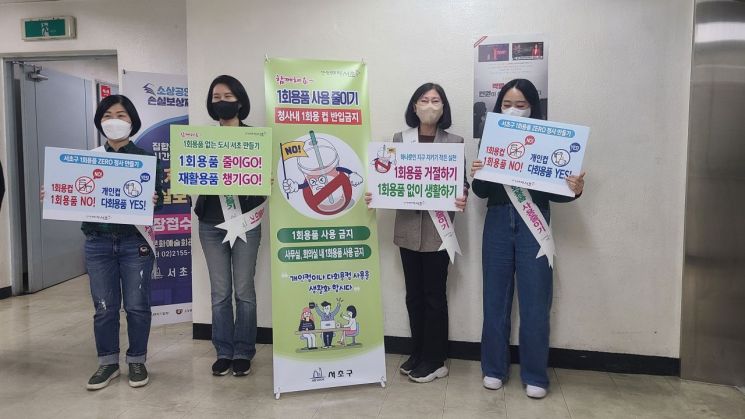
All employees of public institutions in Seocho-gu will take the lead in reducing disposable products.
Seocho-gu announced that from April 1, the use of disposable cups inside government buildings and disposable plates, plastic beverage containers, and other disposable products in workspaces will be restricted.
This initiative aims for Seocho-gu public institutions to proactively raise awareness of environmental pollution and reduce disposable product use amid a significant increase in recyclable waste due to prolonged COVID-19, increased non-face-to-face shopping, and the spread of delivery culture.
Along with the Ministry of Environment’s revision of disposable product regulations, the district enacted the ‘Seoul Special City Seocho-gu Ordinance for Activating Reduction of Disposable Product Use’ in February.
The main provisions include banning disposable cups inside government buildings, ▲promoting habitual use of reusable cups and tumblers in workspaces ▲prohibiting window envelopes containing vinyl in mailings ▲encouraging use of reusable items such as umbrella water removers, drinking fountains, and shopping bags ▲prioritizing purchase of recycled products when ordering supplies.
To encourage active participation from employees, a ‘Ban on Disposable Product Use Inside Government Buildings’ campaign was held on March 31 in front of the main and rear gates of the district office and the council secretariat.
Moreover, disposable products will no longer be seen at public events, festivals, and green markets. Disposable items such as paper cups, plastic cups, and plates are prohibited at event venues, and plastic bag use is banned at markets by encouraging the use of shopping bags.
Additionally, regular monitoring will be conducted through zero-waste officers in each department to ensure compliance with the implementation guidelines.
According to the Ministry of Environment’s revised notice, from April 1, the use of disposable products is banned inside food service establishments. From June 10, a disposable cup deposit system will be implemented at coffee shops and fast-food outlets with 100 or more stores nationwide, and from November 24, paper cups, disposable plastic straws, and stirrers will also be banned.
The district plans to send notices containing these details to relevant businesses and conduct continuous publicity to encourage voluntary practice and participation in reducing disposable product use.
Cheon Jeong-wook, Acting Mayor of Seocho-gu, said, “By leading the reduction of disposable product use in public institutions, we hope an eco-friendly consumption culture will spread in residents’ daily lives,” adding, “We will find ways to easily practice zero waste in daily life and create a disposable product-free city, Seocho.”
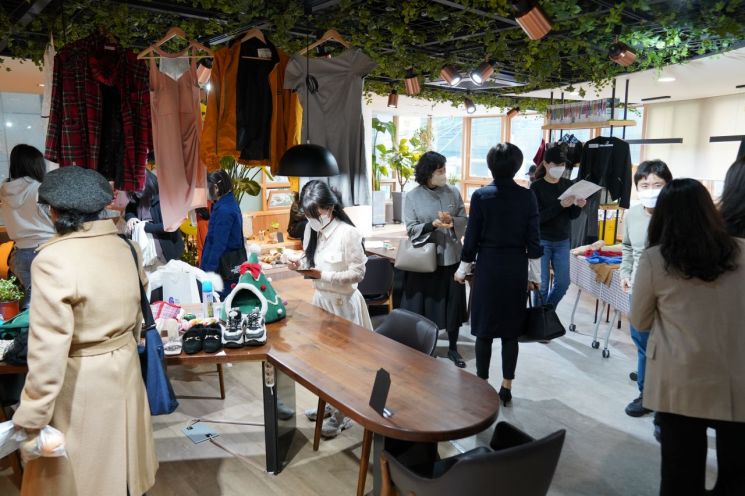
Gangnam-gu (Mayor Jung Soon-kyun) will operate the ‘Empathy Flea Market for Single-Person Households’ every Saturday from 1 PM to 3 PM from March to November at the ‘Gangnam-gu Single-Person Household Community Center’ located in Yeoksam-dong.
The first flea market of this year was held on the 26th, where 15 sellers and about 100 visitors gathered at the center to buy, sell, and exchange unused items. Various programs were also operated, including a ‘Refill Station’ where participants brought their own reusable containers to fill 100ml each of kitchen and laundry detergents, and free sharing of subdivided food items like fruits and companion plants.
Gangnam-gu planned this program to promote the ‘Gangnam-gu Single-Person Household Community Center,’ established nationwide for the first time in 2019, to help form networks among single-person households in the region. Gangnam-gu has 91,093 single-person households, accounting for 40% of all households. Applications to participate in the flea market can be made through the center’s website from the 1st to the 21st of each month.
Jung Soon-kyun, Mayor of Gangnam-gu, said, “I planned this event with the idea that the Gangnam-gu Single-Person Household Community Center should function as a practical exchange space that teaches how to live well alone and together,” adding, “We will continue to lead support for alleviating isolation and loneliness and building networks for single-person households by expanding community centers and planning various programs.”
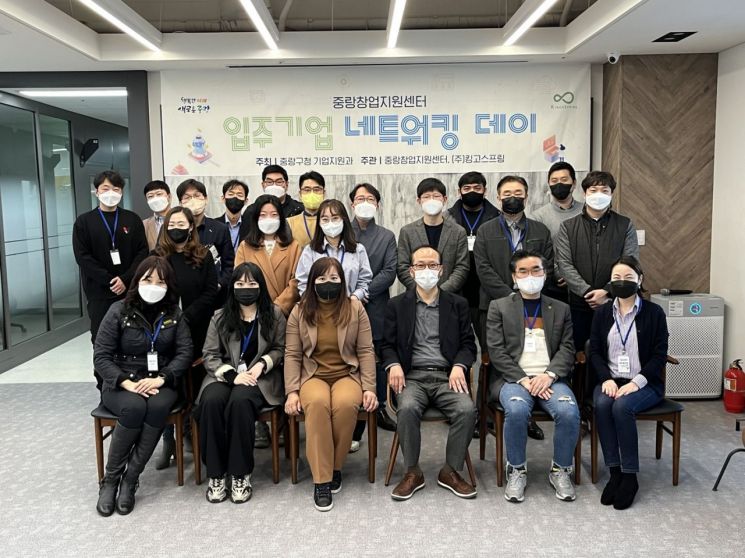
Jungnang-gu (Mayor Ryu Kyung-gi) held a Networking Day event for resident companies at the Jungnang Startup Support Center on the 28th.
The Networking Day was the first official event led by resident companies since the opening of the Jungnang Startup Support Center on the 18th, jointly organized by ㈜Kinggospring, the dedicated accelerator (AC/startup planner) stationed at the center, and Jungnang-gu Office.
The event began with CEO Jeong Jin-dong of Kinggospring sharing know-how on fundraising and a Q&A session on investment attraction. Afterwards, each resident company representative had time to freely present on topics such as their startup background, business plans, business items, industry status, and revenue structure.
Ryu Kyung-gi, Mayor of Jungnang-gu, said, “I hope this Networking Day served as an opportunity not only to share know-how but also to start active exchanges among companies,” adding, “We will continue efforts to firmly establish Jungnang-gu as a new mecca for advanced industry startups.”
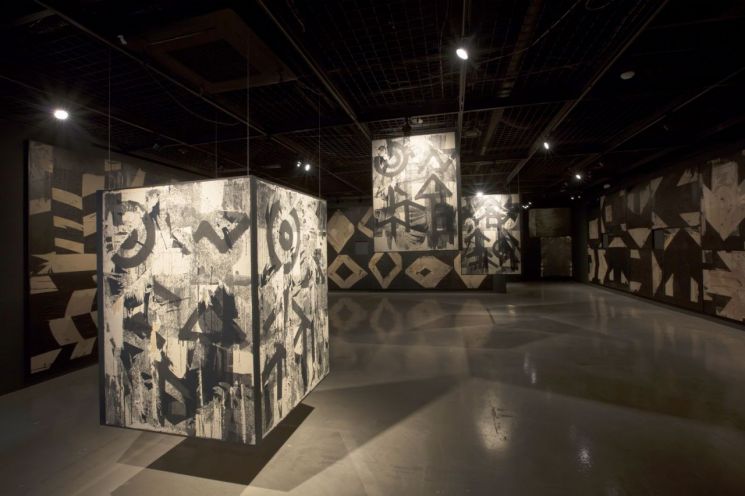
Eunpyeong-gu (Mayor Kim Mi-kyung) is holding the exhibition ‘Art and Codes, Birds of Mahan’ at the Eunpyeong History Hanok Museum and Samgaksan Geumam Art Museum until June 12.
This is the first joint exhibition held at the ‘Eunpyeong History Hanok Museum’ and ‘Samgaksan Geumam Art Museum’ located in the Han Culture Experience Special Zone, Eunpyeong Hanok Village.
The exhibition features a total of 361 works by artist Kim Hye-ryeon, tracing the origins of Korean geometric patterns. Through bold simplicity in ink work, the exhibition presents new possibilities for modern abstraction using primal symbols that inspire imagination.
The exhibition runs until June 12 and is divided into two parts. Part 1, ‘Birds of Mahan,’ is displayed in the planned exhibition hall of the Eunpyeong History Hanok Museum, and Part 2, ‘Sound of Silence,’ is exhibited at the Samgaksan Geumam Art Museum.
Part 1, ‘Birds of Mahan,’ introduces Kim Hye-ryeon’s new works reinterpreting bird-patterned pottery excavated from the Mahan-Baekje cultural area. These new works, exhibited alongside pottery from the Mahan period preserving over 1,600 years of history, revive forgotten codes by adding depth with ink on earth-colored corrugated cardboard. Inspired by bird patterns, these pieces decode the pottery’s symbolic codes through sensory experience, conveying the ancient people’s sentiments in embodied form.
Part 2, ‘Sound of Silence,’ features works reinterpreting ancient petroglyphs the artist observed in places such as Ungok-dong, Naju City, Jeollanam-do, and Gadeok-ri, Imsil-gun, Jeollabuk-do, showcasing even bolder ink usage. The core symbols of Korean art, which the artist calls codes, transcend specific historical conditions to guide aesthetic archetypes.
The exhibition also includes an experience corner. It showcases 272 ancient artifact drawings, the result of Kim Hye-ryeon’s dedicated research visiting heritage sites and museums nationwide.
At the museum’s drawing experience corner, visitors can closely observe and draw seven excavated artifacts from Eunpyeong-gu, including bronze spoons, Buncheong ceramics, and beads. The art museum’s experience corner features a special area where visitors can try action painting with large brushes on walls covered with special paper that creates ink effects.
An exhibition official said, “Through the experience corner, we expect visitors to meet their inner instinctive artistry by drawing abstract symbols found in artifacts,” and added, “We ask for much interest and attendance at the exhibition.”
© The Asia Business Daily(www.asiae.co.kr). All rights reserved.
![Clutching a Stolen Dior Bag, Saying "I Hate Being Poor but Real"... The Grotesque Con of a "Human Knockoff" [Slate]](https://cwcontent.asiae.co.kr/asiaresize/183/2026021902243444107_1771435474.jpg)

















