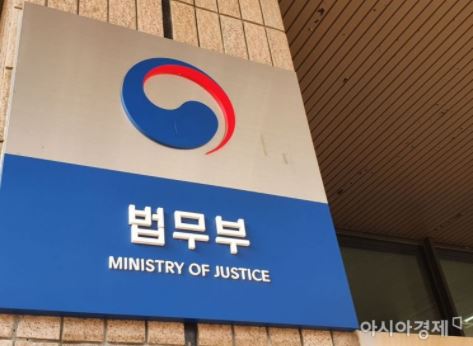
[Asia Economy Reporter Kim Hyung-min] The Ministry of Justice is shifting its policy direction regarding child abuse cases. The focus is changing from the previous method of rescuing victims from perpetrators such as parents to separating the perpetrators first.
According to the legal community on the 18th, the Ministry of Justice recently announced a bid for a research project titled "Study on the Separation Measures for Child Abuse Perpetrators" to prepare policies reflecting this intention.
Since February last year, the Ministry of Justice has established a Special Task Force for the Protection of Children's Rights and has been reviewing the entire child abuse response system. Through the upcoming research project, they plan to examine the current status and issues of the system separating abused children and child abuse perpetrators, as well as the operation forms and status of protective custody. The research will also include collecting relevant overseas cases.
The legal community has often criticized that investigative agencies mainly focus on separating the abused children when child abuse cases occur. Some have suggested that the priority should be to separate the child abuse perpetrators first and, if there are other guardians, allow the abused children to continue living at home.
When abused children are separated into unfamiliar facilities, they often experience emotional anxiety, and there have been many cases where children fail to adapt even after returning home. Taking this into account, the Ministry of Justice is focusing on protective custody for child abuse perpetrators under the Child Abuse Punishment Act.
Protective custody is one of the protective measures imposed by family court rulings. It involves separating the individual into a protective custody facility or care facility.
Rather than separating the abused children from their homes first, it is considered preferable for the child abuse perpetrators to receive counseling and education at protective custody institutions and then return home, which better protects the rights and interests of the abused children.
However, actual cases of protective custody are rare. According to the Ministry of Health and Welfare's "2020 Child Abuse Major Statistics," protective custody accounted for only 2 cases (0.12%) out of 1,635 protective measures.
It is reported that the Ministry of Justice is exchanging opinions with related agencies such as the Ministry of Health and Welfare and the National Police Agency to promote the activation of protective custody. In December last year, Jeon Ju-hye, a member of the People Power Party, also introduced a bill to amend the Child Abuse Punishment Act to include protective custody from the temporary measures stage against child abuse perpetrators, such as isolation, restraining orders, and detention. This bill is currently pending in the National Assembly's Legislation and Judiciary Committee.
© The Asia Business Daily(www.asiae.co.kr). All rights reserved.
![Clutching a Stolen Dior Bag, Saying "I Hate Being Poor but Real"... The Grotesque Con of a "Human Knockoff" [Slate]](https://cwcontent.asiae.co.kr/asiaresize/183/2026021902243444107_1771435474.jpg)















