Investigation Targets Increasing One Month After Law Enforcement
Positive Aspects Exist but Lack of Preparation Causes Side Effects
Controversy Over Ambiguity in Obligated Parties and Punishment Targets
Differences Between Ministry of Employment and Prosecution, Legal Community Divided
Unconstitutional Lawsuit Inevitable... Confusion Until Precedents Accumulate
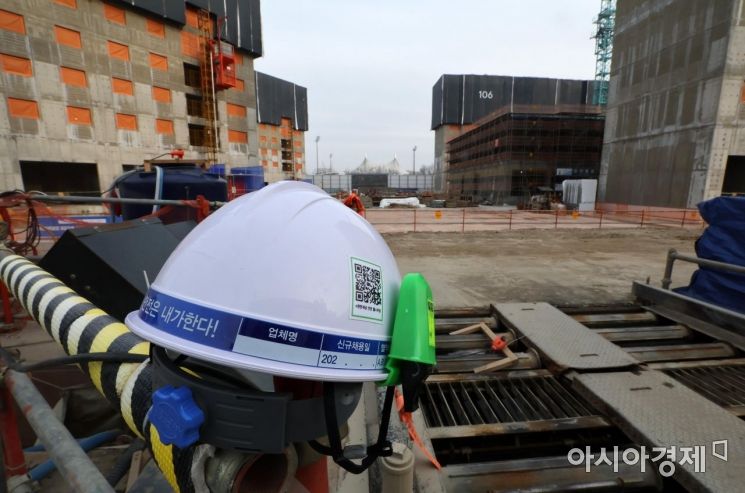
Since the enforcement of the Serious Accidents Punishment Act (Serious Accidents Punishment Law), investigations by the Ministry of Employment and Labor have intensified following a series of serious accidents over the past month, highlighting the initially anticipated ambiguities in the interpretation and application of the law. Due to numerous unclear aspects such as the obligated parties, subjects of punishment, and exemption criteria under the Serious Accidents Punishment Law, uncertainty in corporate management is increasing, and confusion in industrial sites is worsening. While there are positive aspects such as increased attention to worker safety since the law’s implementation, some contentious issues still receive varying interpretations even among government agencies, indicating significant side effects from inadequate preparation.
According to the legal and industrial sectors on the 25th, since the Serious Accidents Punishment Law came into effect on the 27th of last month, confusion has grown across industries including construction, logistics, and manufacturing. Large corporations, which have sufficient personnel and budgets, are improving their safety and health systems through in-house legal teams or consultations with major law firms, but small and medium-sized enterprises find it difficult to expand investments in safety management or recruit related personnel, leaving them frustrated.
Ambiguous Management Responsibility... Both CSO and CEO Can Be Indicted
As this is the first time the law is being enforced, there are no court precedents or investigation cases, leading to heated debates even within the legal community regarding the Serious Accidents Punishment Law. One of the main contentious points is the responsible party subject to punishment when a serious accident occurs. Before the law’s enforcement, the industry prepared countermeasures such as appointing a Chief Safety Officer (CSO) separately to prevent the CEO from being punished, but since responsibility is judged based on ‘substance,’ there is an interpretation that the CSO cannot take responsibility on behalf of the CEO.
According to the law, if the business owner or management responsible for the workplace where a serious accident occurred, who substantially controls, operates, or manages the site, fails to fulfill the obligation to ensure safety and health, they will be punished for violating the Serious Accidents Punishment Law. However, the specific criteria for ‘substance’ are ambiguous, raising concerns that arbitrary interpretations by the Ministry of Employment and Labor or prosecutors could intervene.
A lawyer from a major law firm specializing in serious accidents, Attorney A, explained, "The law defines the management responsible person as ‘someone who represents and oversees the business with authority and responsibility, or someone responsible for safety and health-related tasks equivalent to that,’ but the Ministry of Employment and Labor does not interpret ‘or’ as exclusive." He added, "Therefore, if the Ministry deems it ambiguous, multiple people such as the CEO and CSO could be indicted." In fact, in the case of Yeochun NCC, both the president and two vice presidents were indicted.
Are Serious Accidents at Overseas Subsidiaries Also Investigated?
There is also ongoing disagreement about whether the law applies to overseas subsidiaries of domestic companies. The Ministry of Employment and Labor, the competent authority, holds the position that separately established overseas corporations are not subject to the law, but prosecutors consider that if overseas subsidiaries have workers belonging to the domestic corporation performing tasks and the Korean corporation substantially controls and operates them, the law applies. However, it is known that even within and outside the government, there is no clear consensus on how investigations would proceed if an accident occurs at an overseas site.
Additionally, the law applies to business owners or management responsible for workplaces with five or more regular employees, but it is unclear whether dispatched workers are included in the definition of ‘regular employees.’ The Ministry of Employment and Labor considers dispatched workers included, but prosecutors reportedly believe they are not included due to the absence of separate regulations. A representative from a mid-sized construction company said, "We are striving to ensure safety in preparation for any possible accidents, but it is difficult to know the extent of what must be done," adding, "Most workplaces smaller than ours are in a state of emergency."
Furthermore, the core contentious issues of prosecution and punishment?proving the causal relationship between the fulfillment of safety and health obligations and serious accidents?remain controversial. Attorney B, who is defending serious accident cases, said, "The Ministry of Employment and Labor’s investigation intensity is very high, placing a heavy burden on companies," and added, "Within the legal community, filing a constitutional review petition is seen as an inevitable step."
© The Asia Business Daily(www.asiae.co.kr). All rights reserved.
![Clutching a Stolen Dior Bag, Saying "I Hate Being Poor but Real"... The Grotesque Con of a "Human Knockoff" [Slate]](https://cwcontent.asiae.co.kr/asiaresize/183/2026021902243444107_1771435474.jpg)















