Stole Over 7 Million Won in Unmanned Store
Despite Police Arrest, "I'm a Chokbeop" with Insults and Abusive Language
Growing Concerns Over Increasingly Sophisticated Juvenile Crime
"Loss of Guidance Function," "Chokbeopsonyeon Criteria Must Change," Public Outrage
Experts: "70-Year-Old Standards... Not Necessarily Applicable Today"
 A boy A (13) entering an unmanned store and taking cash from inside the payment machine. / Photo by MBC Broadcast Capture
[Asia Economy Reporter Lim Juhyung] Social outrage is growing as a middle school student who was caught by the police after stealing items about 20 times from an unmanned store verbally abused officers, saying, "I'm a criminal minor, so what are you going to do?" Concerns are being raised that juvenile crime is becoming increasingly sophisticated. Some voices are calling for the abolition or revision of the system that protects juvenile offenders, such as 'criminal minors,' from criminal punishment.
According to an 'MBC' report on the 22nd, around midnight on the 1st, a 13-year-old boy identified as A entered an unmanned store and committed theft.
CCTV footage taken at the time shows A taking advantage of the deserted early morning hours to enter the store, then pulling scissors out of his pocket. He then uses the scissors to pry open the payment terminal, takes the cash inside, and runs away. The entire incident took place in just 40 seconds.
According to the police, this was not the only theft committed by A. Investigations revealed that he carried out about 20 thefts over approximately 11 days. The value of the stolen goods was estimated to be as high as 7 million won.
The police reportedly caught A twice. However, each time, A responded with insults and abusive language, saying, "I'm a criminal minor under 14 years old," and "Can you really punish me?"
The police plan to investigate any additional crimes committed by A and then transfer the case to the family court.
A, who falls under the category of a 'criminal minor' defined as a person aged 10 or older but under 14, is classified as a so-called 'criminal minor.'
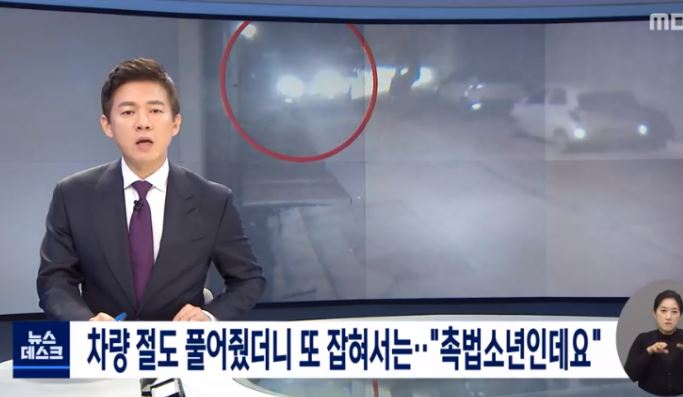 A group involved in habitual vehicle theft in Wonju, Gangwon Province last year was revealed to be juvenile offenders under the age of 14, sparking controversy. / Photo by MBC
Under the current Juvenile Act, criminal minors bear no criminal responsibility and receive protective measures such as custody, community service, or placement in juvenile detention centers even if they commit crimes. No criminal record is kept.
The problem is that some juvenile offenders continuously exploit this loophole.
For example, early last year, four individuals including B, a first-year middle school student in Wonju, Gangwon Province, were caught by the police for multiple vehicle thefts in a residential area. They were found to have used stolen vehicles to travel between cities and spent tens of thousands of won using credit cards found inside the cars. However, the police had to release them because they were criminal minors at the time, and B and his group continued committing vehicle thefts afterward.
Meanwhile, juvenile crime is becoming increasingly sophisticated. According to the '2018-2020 Youth Crime Types' data released by the National Police Agency last year, the number of intelligent crimes related to embezzlement, breach of trust, and fraud among youth increased by about 19.9%, from 9,928 in 2018 to 11,900 in 2020. Special law violations, including traffic offenses, the Act on Promotion of Information and Communications Network Utilization and Information Protection, and the Act on the Protection of Children and Juveniles Against Sexual Abuse, increased by 11.4%, from 13,270 to 14,788 during the same period. This raises concerns that youth crimes abusing their special status under the Juvenile Act may become more serious.
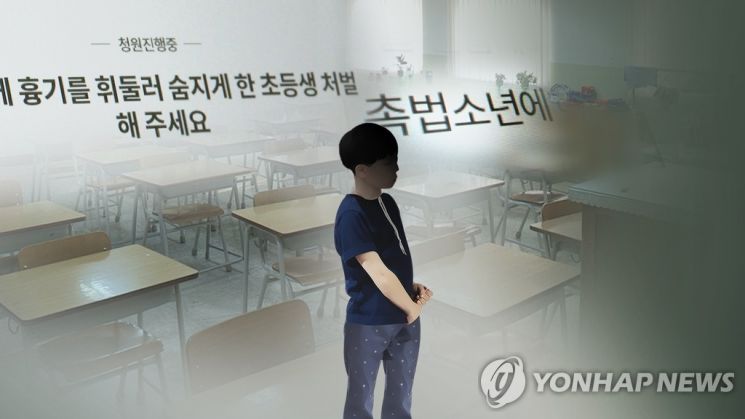 As a juvenile offender, there is ongoing controversy over the age criteria for "chokbeopsonyeon," who receive protective measures such as custody or community service instead of criminal punishment. / Photo by Yonhap News
Given this situation, citizens have expressed outrage, saying, "Shouldn't juvenile offenders receive appropriate punishment if they commit serious crimes?"
C, a worker in their 20s, said, "I agree that youth should be treated differently from adults. But can we say that juvenile offenders who deliberately commit crimes by abusing their legal status are not criminals? If we go easy on them just because they are criminal minors and minors, who will protect the real victims?"
Another office worker, D (33), said, "I doubt whether leniency toward young offenders who have strayed at an early age has any corrective effect. Who knows if crimes that start with minor thefts will escalate into serious crimes later? If the purpose is truly to guide delinquent youth, I think some strict punishment is necessary."
In the political arena, a bill has been proposed to prevent abuse of the criminal minor system. On the 11th, Lee Jong-bae, a member of the People Power Party, introduced the 'Partial Amendment to the Juvenile Act' as the main sponsor. The amendment aims to lower the upper age limit for criminal minors from under 14 to under 12 years old.
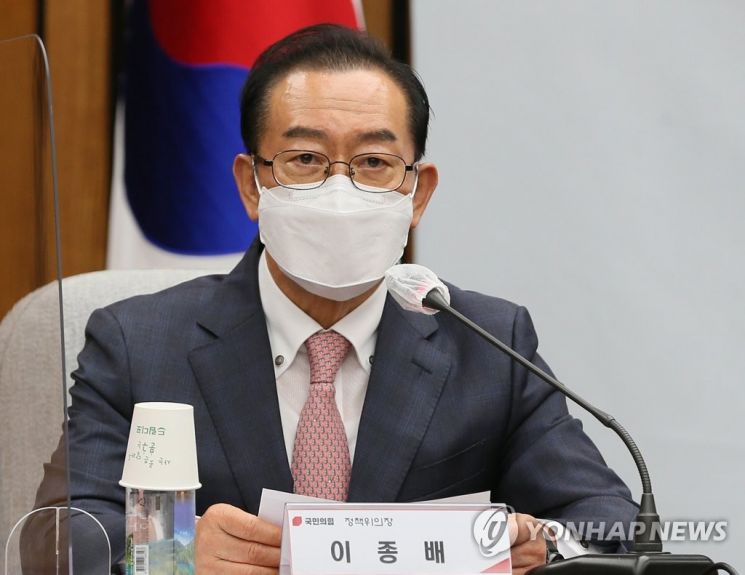 Rep. Jong-bae Lee of the People Power Party, who proposed a partial amendment to the Juvenile Act to lower the upper age limit for juvenile offenders by 2 years / Photo by Yonhap News
Lee explained the reason for the proposal, saying, "It does not align with the public's sense of justice that brutal criminals receive light punishment simply because they are young. To prevent violent juvenile crimes and enhance crime prevention effects, it is necessary to impose appropriate criminal punishment."
Experts have also suggested that the age criteria for criminal minors can be adjusted based on social consensus.
Oh Yoon-sung, a professor of police administration at Soonchunhyang University, said, "The standard for criminal minors was established about 70 years ago. Since the level of development and social environment were very different back then, when Korea was a developing country, the criteria set at that time may not necessarily be appropriate now."
He added, "Currently, the criminal minor age range is defined as 10 to under 14 years old, but with juvenile crime becoming more sophisticated, there are concerns that the current system is not functioning as intended. If the current Juvenile Act is deemed inappropriate, a new standard could be established through social consensus."
© The Asia Business Daily(www.asiae.co.kr). All rights reserved.
![Clutching a Stolen Dior Bag, Saying "I Hate Being Poor but Real"... The Grotesque Con of a "Human Knockoff" [Slate]](https://cwcontent.asiae.co.kr/asiaresize/183/2026021902243444107_1771435474.jpg)


















