[Seoul District News] Jungnang-gu Conducts RPA Pilot Project Following Tech Verification Agreement with Eden T&S in November; Mobile Notification for Confirmed Cases Starts Non-Face-to-Face from 18th... Seongdong-gu Mobilizes Against Omicron Surge... Gangseo-gu Opens ‘Senior Welfare Fund Support Project’ Contest... Dobong-gu Provides 500,000 Won Support to Closed Small Businesses in Restricted Sectors... Gwangjin-gu Launches Temporary Road Occupation Permit Status Public Service... Jongno-gu Distributes 1.1 Billion Won Disaster Relief to Unemployed Youth and Taxi Workers
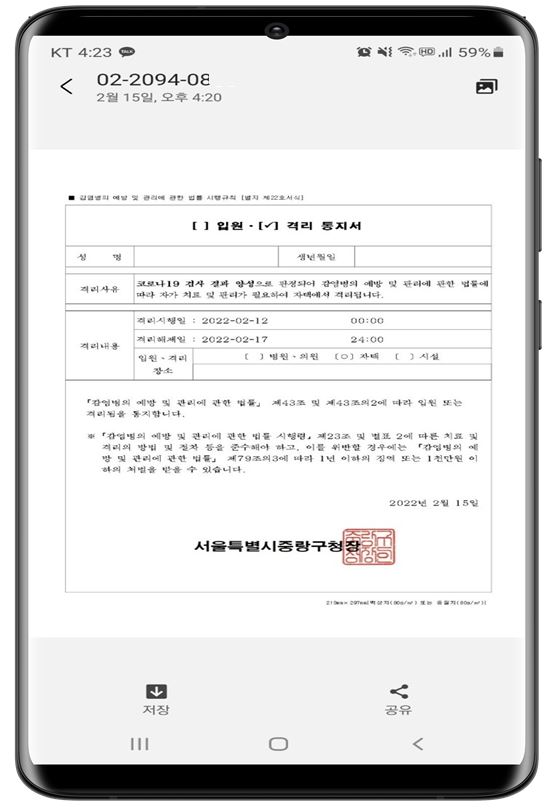
[Asia Economy Reporter Park Jong-il] Jungnang-gu (Mayor Ryu Kyung-gi) will automate the issuance of quarantine notices sent to home treatment patients starting from the 18th, issuing them via non-face-to-face mobile methods using Robotic Process Automation (RPA).
The quarantine notice serves as a certificate necessary for confirmed patients to receive living support funds, daily necessities, and to return to work or school. Previously, it was delivered to the patient's home.
By automating the individual sending of quarantine notices to hundreds of home treatment patients occurring due to the Omicron variant, the RPA application (1,800 cases per 8-hour day) can send more than nine times the number of notices compared to manual sending by staff (200 cases per 8-hour day), and it can operate 24 hours a day.
The district expects to reduce daily working hours by nearly 90%, allowing administrative efforts to focus on systematically and efficiently managing confirmed patients.
The RPA system automates simple and repetitive tasks using software robots. When the public health center staff registers the list of home treatment patients into the RPA system, notices are automatically sent to each individual.
Currently, quarantine notices are automatically issued for home treatment patients, while those under self-quarantine who need notices can call the Jungnang-gu Public Health Center call center to apply and receive self-quarantine notices via mobile.
Since November last year, the district has signed a technical verification agreement with Eden TNS to automate administrative services and is conducting an RPA pilot project, with plans to continuously expand the scope of automation systems.
Ryu Kyung-gi, Mayor of Jungnang-gu, said, “The reduced working hours from automating simple repetitive tasks will allow us to focus more on carefully managing confirmed patients,” adding, “We will gradually expand the automation system according to the work environment to increase efficiency and minimize inconvenience to residents.”
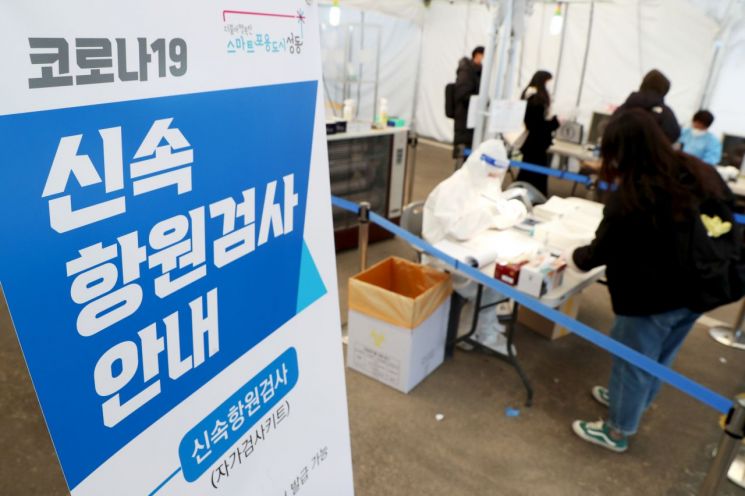 Seongdong-gu Office Temporary Screening Clinic. To eliminate testing gaps, the district operates the temporary screening clinic on Sundays as well, significantly extending the operating hours from the previous 1 PM to 6 PM.
Seongdong-gu (Mayor Jung Won-oh) announced that it is concentrating all administrative efforts to establish a stable and rapid system covering all stages of COVID-19 from testing to quarantine and treatment, fully committed to combating the surging spread of the Omicron variant.
To enable rapid antigen testing (PCR) 365 days a year, the district operates screening clinics and temporary screening centers on weekdays, holidays, and weekends. Since the 13th, the Seongdong-gu Office temporary screening center, which has good transportation access, has also been open on Sundays, significantly extending operating hours from 1 PM to 6 PM.
Preparing for the surge in Omicron variant cases since late November last year, the district doubled the size of its living treatment centers and currently operates 129 rooms and 159 beds, the second largest among Seoul's autonomous districts. To prevent secondary infections within families, safe accommodations for cohabiting family members of home treatment patients and self-quarantined individuals are available free of charge for up to seven days. The number of rooms has increased from 27 to 66 in preparation for the surge in confirmed cases.
Seongdong-gu also expanded the eligibility for the 'Quarantine Taxi Fare Support,' the first of its kind among Seoul's autonomous districts. Previously, support was provided to residents who used quarantine taxis for additional self-quarantine (around 3 days) after early discharge from living treatment centers (including medical institutions) in other districts or provinces. Now, residents admitted to living treatment centers operated by Seongdong-gu who require additional voluntary quarantine after returning home will also receive quarantine taxi fare support.
Having proactively utilized 12 SOS care nurses to monitor home treatment patients, the district plans to increase the COVID-19 initial response and general COVID-19 call center staff from 15 to 24 employees.
Last month, the district strengthened local quarantine by securing 5,000 self-test kits for Seongdong Police Station and Seongdong Fire Station for emergency support. On the 11th of this month, it established a Business Continuity Plan (BCP) to ensure a crisis response system without administrative gaps. Earlier this month, self-test kits were distributed to local elementary students during graduation season and pregnant women who had difficulty visiting screening centers. The district plans to continue actively responding to the surging Omicron spread with meticulous administrative efforts.
Jung Won-oh, Mayor of Seongdong-gu, said, “Just as it is darkest before dawn, the time to return to normal life is not far away,” adding, “We will devote all administrative efforts to the Omicron spread to successfully conclude this long journey amid the COVID-19 crisis.”
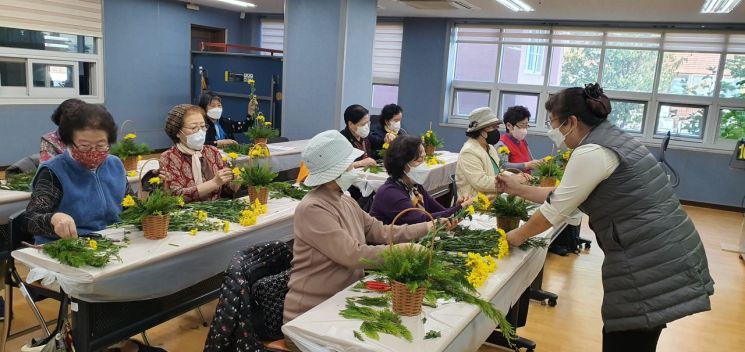
Gangseo-gu, Seoul (Mayor Roh Hyun-song) has begun discovering programs to improve the quality of life for senior citizens.
The district announced that it will publicly recruit for the ‘2022 Senior Welfare Fund Support Project’ to promote senior welfare and establish a foundation for their independence.
This public recruitment aims to discover and support projects that promote senior welfare, including health promotion and social participation activities for seniors.
Eligible projects include ▲support projects for senior welfare-related organizations ▲projects to spread filial piety and respect for elders ▲projects for seniors’ health and hobby activities ▲support projects for seniors’ social volunteer activities ▲and other projects related to senior welfare promotion. However, considering the ongoing COVID-19 situation, projects that strictly comply with quarantine rules and can be conducted non-face-to-face or as small outdoor programs will be prioritized.
The total support amount this year is 65 million KRW. To receive support, applicants must secure at least 10% of the total project cost as self-funding, and operating expenses such as personnel costs are not supported.
Applicants must be nonprofit public interest-oriented organizations (facilities) or corporations whose main activity area is Gangseo-gu and whose activity period is at least one year.
Organizations or corporations wishing to apply should submit project plans, support applications, articles of incorporation, and activity records for the past year in person or by mail to the Gangseo-gu Senior Welfare Division between the 21st and 25th.
Detailed information and application forms can be found on the Gangseo-gu website under Gangseo News - Notices.
Support organizations and amounts will be decided through the Senior Welfare Fund Operation Deliberation Committee, which will comprehensively review the feasibility of project content, budget appropriateness, and ripple effects. Results will be individually notified to each organization in March.
A district official said, “We hope various and innovative projects will be proposed to ensure healthy senior lives,” adding, “We ask for much interest and participation in this project to promote welfare for local seniors.”
Meanwhile, last year, through the Senior Welfare Fund Support Project, the district supported 10 projects including Happy Digital Consultant, Wise Mind Quarantine, and Good Neighbor Silver Puppet Theater with a total of 57.19 million KRW.
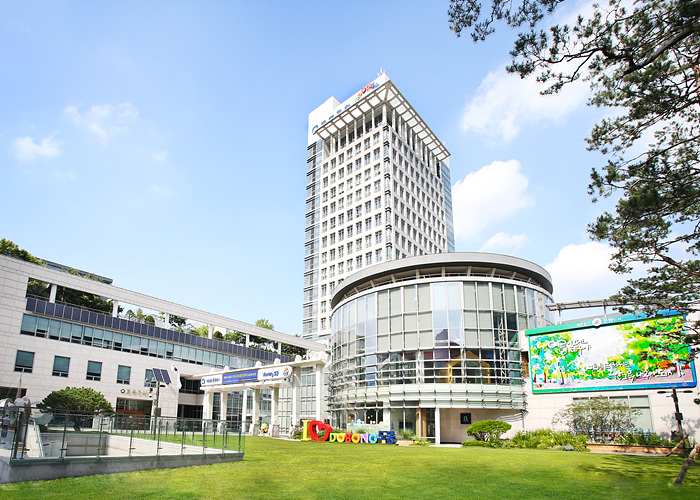
Dobong-gu (Mayor Lee Dong-jin) will provide 500,000 KRW per business to small business owners who have closed due to business restrictions and gathering bans under the strengthened social distancing measures in the district.
Eligible recipients are small business owners in Dobong-gu who have closed businesses in sectors subject to gathering bans or business restrictions. Those who have already received the 2021 closed small business support fund or are effectively on temporary closure are excluded.
Applications can be made by businesses that closed between March 22, 2020, when the strengthened social distancing measures began, and the application period. Businesses must have at least 90 days of operation before closure. If multiple businesses are closed by one person, applications can be made for up to four locations, with 50% support from the second location onward.
Applications can be submitted online via the Dobong-gu official website or in person. Online applications are accepted from February 14 to December 11, and in-person applications from February 14 to December 9. Early closure is possible if the budget is exhausted, and it may take more than a week from approval to payment.
Details on eligibility, closure certificates, small business confirmation certificates, and other application documents (alternative documents) can be found on the Dobong-gu official website (Life/COVID-19/Closed Small Business Support Fund).
Lee Dong-jin, Mayor of Dobong-gu, said, “This support fund is implemented to help small business owners who closed due to prolonged COVID-19 difficulties. We hope the Dobong-type disaster support fund will help close blind spots in livelihood and assist closed small business owners in making a fresh start.”
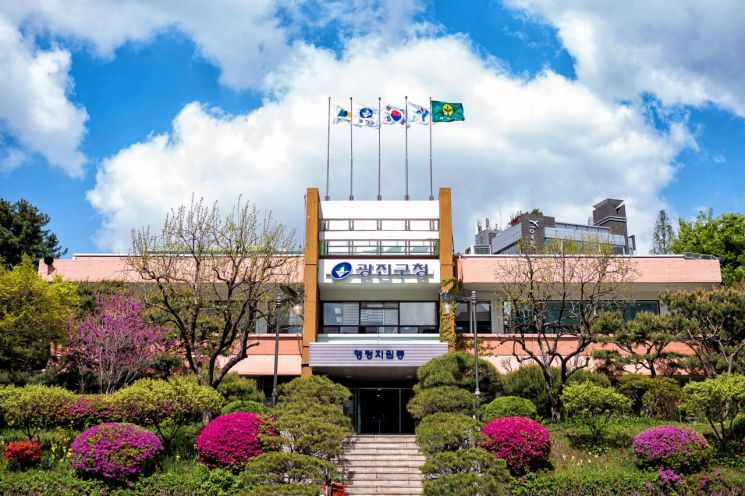
Gwangjin-gu (Mayor Kim Sun-gap) will disclose the status of temporary road occupancy permits on its website to facilitate residents’ convenience in checking construction site road occupancy details.
A temporary road occupancy permit is granted by the road management authority under certain conditions when it is unavoidable to use the road during construction, such as for using construction equipment or storing materials.
Previously, residents had to contact the district office and speak with the person in charge to find out detailed information such as the road occupancy period at construction sites or to address inconveniences caused by temporary road occupancy.
To minimize such inconveniences, since October last year, the district has published information on temporary road occupancy permits on its website, allowing residents to check the location, area, and period of permitted occupancy at any time.
The temporary road occupancy permit status can be found on the Gwangjin-gu website under Information by Category → Traffic/Parking/Road → Road → Temporary Road Occupancy Permit Status.
Previously, applying for a temporary road occupancy permit required at least two visits to the district office for submitting the application and receiving the permit. Now, after consulting with the person in charge, applicants can conveniently apply by sending documents via email.
Online applications can be made by downloading the form from the district website under Information by Category → Traffic/Parking/Road → Road → Temporary Road Occupancy Permit Application, filling it out, and emailing it along with location maps and photos or design drawings showing the occupancy area to the person in charge.
For residents who find online applications difficult, the existing in-person application process is still available.
For more information, please refer to the Gwangjin-gu website or contact the Street Landscape Division.
Kim Sun-gap, Mayor of Gwangjin-gu, said, “By disclosing temporary road occupancy permit status and providing online application services, we will minimize residents’ inconvenience and alleviate concerns caused by the prolonged COVID-19 situation.”
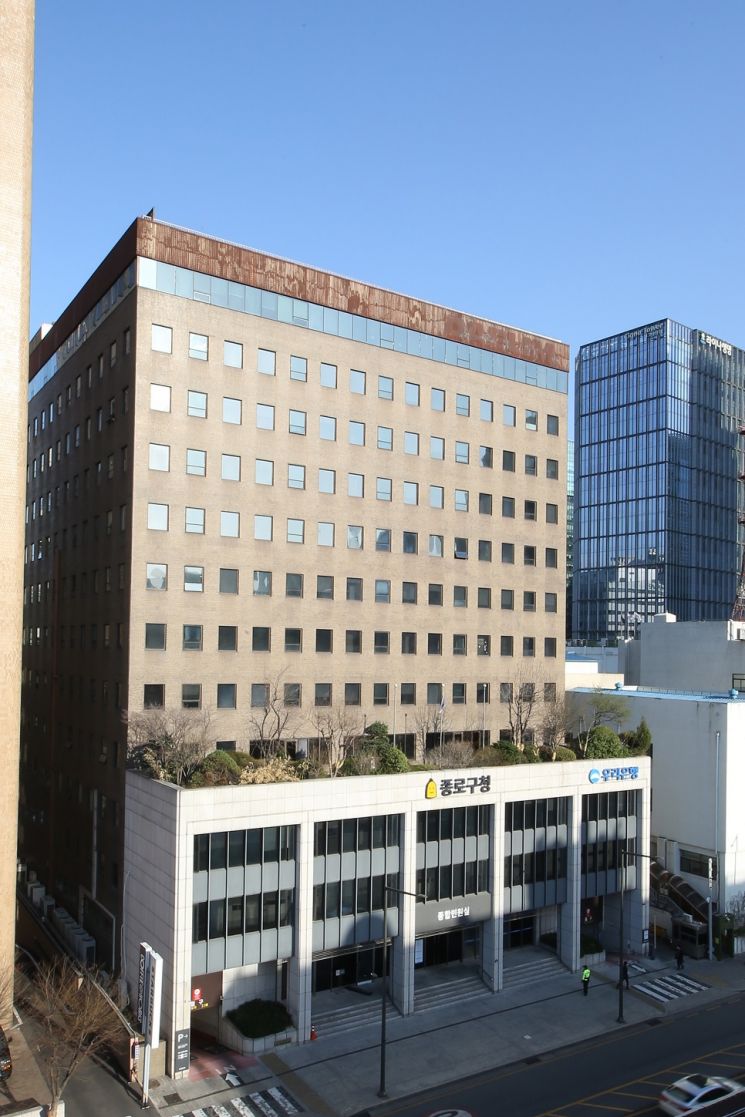
Jongno-gu will provide disaster relief funds totaling 1.1 billion KRW this year to support businesses affected by COVID-19 and vulnerable residents, aiming to stabilize livelihoods and accelerate economic recovery.
The targets include 495 businesses across seven sectors and about 1,600 residents in vulnerable groups. The focus is on sectors excluded from government loss compensation or Seoul’s comprehensive livelihood protection measures and on residents in gap groups.
The ‘COVID-19 affected sectors (facilities)’ receiving support include ▲village bus companies ▲elderly care facilities ▲daycare centers ▲local children’s centers ▲kindergartens ▲religious facilities ▲performance venues. Vulnerable groups include ▲small business owners who closed due to gathering bans or restrictions ▲unemployed youth ▲individual and corporate taxi drivers.
Jongno-gu plans to first provide 10 million KRW per company to seven village bus companies in the district by the 25th of this month.
Fourteen elderly care facilities will receive differentiated support ranging from 500,000 to 1 million KRW for quarantine costs.
Forty-five daycare centers, eleven local children’s centers, and sixteen kindergartens will each receive 1 million KRW. The funds can be used for purchasing teaching materials, snacks, or meals but not for other purposes.
Two hundred thirty-five registered religious facilities and 167 performance venues in Jongno-gu will receive quarantine supplies worth about 300,000 KRW, considering size, number of users, and on-site conditions. Distribution is planned for March with separate notice.
About 500 small business owners who closed due to gathering bans or restrictions will receive 500,000 KRW each next month. Eligible recipients are those who operated businesses in Jongno-gu for at least 90 days before closure and filed closure reports after March 22, 2020. Those who received support in 2021 are excluded.
Disaster relief funds for unemployed youth will be provided as 500,000 KRW per person in the form of local gift certificates. Eligible individuals are unemployed residents aged 19 to 34 living in the district who graduated (including dropout, suspension, or completion as of March 2, 2022) within the last two years. Distribution is planned for April to May this year.
Finally, individual and corporate taxi drivers registered before January 21, 2022, and currently operating as of the announcement date (February 11, 2022) will receive 400,000 KRW each. Applications will be accepted through the Transportation Administration Division by the end of this month, with payments made sequentially from February 21 to March 4.
Additionally, Seoul City provides ‘Small Business Keeper Funds,’ ‘Emergency Living Expenses for Vulnerable Special Employment and Freelancers,’ and ‘Tourism Industry Crisis Recovery Funds,’ while the Ministry of SMEs and Startups supports ‘Small Business Quarantine Support Funds’ and ‘Small Business Quarantine Supplies Support Funds.’ More details are available on the Jongno-gu website.
Last year, Jongno-gu also provided disaster relief funds to about 9,200 COVID-19 affected groups, including those in gathering ban and restriction sectors. The district also established cooperative systems with Woori Bank, Shinhan Bank, and Hana Bank to offer interest-free loans up to 20 million KRW per business for one year (with Jongno-gu covering 500 million KRW in interest for the first year) to small business owners.
A district official said, “We sincerely hope that the disaster relief funds will help small business owners and residents who are struggling day by day,” adding, “We will do our best to accelerate local economic recovery and restore pre-COVID daily life.”
© The Asia Business Daily(www.asiae.co.kr). All rights reserved.
![Clutching a Stolen Dior Bag, Saying "I Hate Being Poor but Real"... The Grotesque Con of a "Human Knockoff" [Slate]](https://cwcontent.asiae.co.kr/asiaresize/183/2026021902243444107_1771435474.jpg)

















