[Asia Economy New York=Special Correspondent Joesulgina] "A staggering 7 million dollars (about 8.39 billion KRW) for 30 seconds." The commercials during the American professional football (NFL) championship game, the 'Super Bowl,' reveal the fields currently drawing the most attention in the United States.
At the second Super Bowl held after the COVID-19 pandemic, the messages presented by leading global companies were all about the 'future.' Automotive brands including Kia showcased 'electric vehicles' and 'robots' without exception, while rapidly growing virtual asset companies such as Coinbase Global and Crypto.com made their debut appearances.
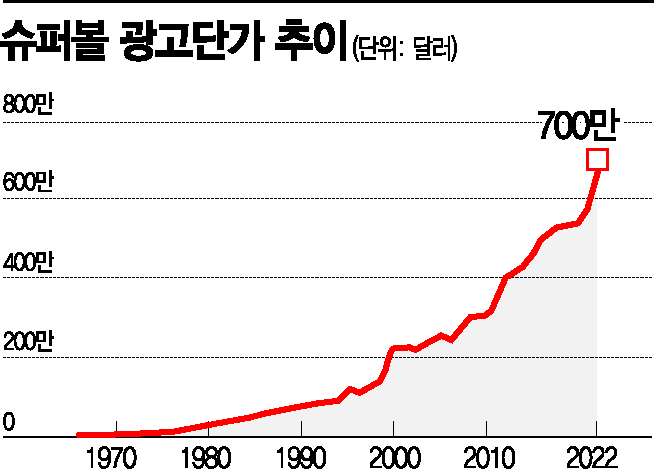
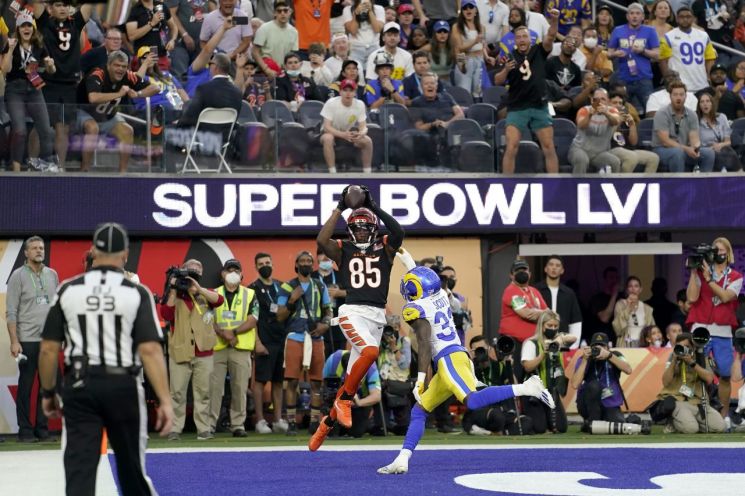
On the 13th (local time), the Super Bowl held at SoFi Stadium in Los Angeles (LA) is the largest sports event in the U.S., watched by over 100 million people worldwide, and is famous as a 'super advertising battle.' The commercials aired during timeouts or breaks become hot topics just by appearing, earning the nickname 'golden billboards' worth hundreds of millions per second. NBC, the broadcasting network, announced that this year's Super Bowl ads sold out early, with 30-second spots going for 7 million dollars. This is more than seven times the 1 million dollars charged in 1994.
According to the Associated Press (AP), the message from companies participating in this year's Super Bowl advertising battle can be summarized as 'Forget the pain of COVID-19 and focus on the future.'
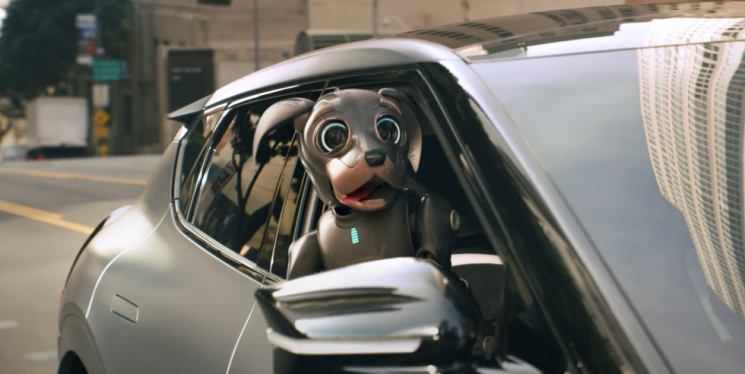
The advertising keywords for global automakers such as Kia, BMW, and General Motors (GM) were unified around electric vehicles this year. Kia's Super Bowl commercial featured a robot dog craving human affection that follows a young man driving the electric vehicle EV6 and runs out of power, but is revived by charging through EV6's signature 'V2L' (Vehicle to Load) function.
In BMW's Super Bowl commercial, viewers can meet actor Arnold Schwarzenegger, who transforms from the 'Terminator' into Zeus, the 'God of Thunder.' The ad humorously depicts Zeus, who used his lightning powers to help neighbors charge their appliances, encountering the electric vehicle 'iX' that doesn't require lightning.
GM featured actor Mike Myers, who played Dr. Evil in the movie Austin Powers. They cleverly renamed the character from Dr. Evil to 'Dr. EV-il' to emphasize GM's commitment to its electric vehicle business. Additionally, VoltaBox, appearing in the Super Bowl ads for the first time, showcased a home electric vehicle charger commercial featuring a real person who was once struck by lightning. The AP reported, "What will the future look like?" and noted that the automotive brands making a massive return to Super Bowl ads are all doing something related to 'electricity.'

Automotive brands were not the only ones presenting ads embodying the future. Amazon showcased its AI assistant Alexa, who accurately reads human emotions. Meta, the operator of Facebook and Instagram, released an ad presenting the future vision of the metaverse. The Wall Street Journal (WSJ) described, "Super Bowl ads are a trend indicator reflecting the hottest investment sectors of the year," noting that virtual asset companies like Coinbase Global and FTX have taken the place of past IT online companies.
Local media analyzed that many companies, while promoting their products, focused on delivering laughter and hope to comfort the past two years of suffering from the pandemic. Ads featuring 1990s movies like Austin Powers evoked nostalgia and laughter. Kimberly Whisler, a marketing professor at the University of Virginia, evaluated, "It reflects the recognition that Americans have endured difficult and challenging two years." Kelly O’Keefe, CEO of brand consulting firm Brand Federation, said, "They made it fun, positive, and happy," adding, "They did not aim to divide, unify, or provoke deep thought."
© The Asia Business Daily(www.asiae.co.kr). All rights reserved.
![Clutching a Stolen Dior Bag, Saying "I Hate Being Poor but Real"... The Grotesque Con of a "Human Knockoff" [Slate]](https://cwcontent.asiae.co.kr/asiaresize/183/2026021902243444107_1771435474.jpg)

















