"Close the gallery that abuses stray cats"... Cheong petition
1,014 animal protection law violators arrested in 2020
Experts say "Lenient judicial punishments reproduce animal abuse"
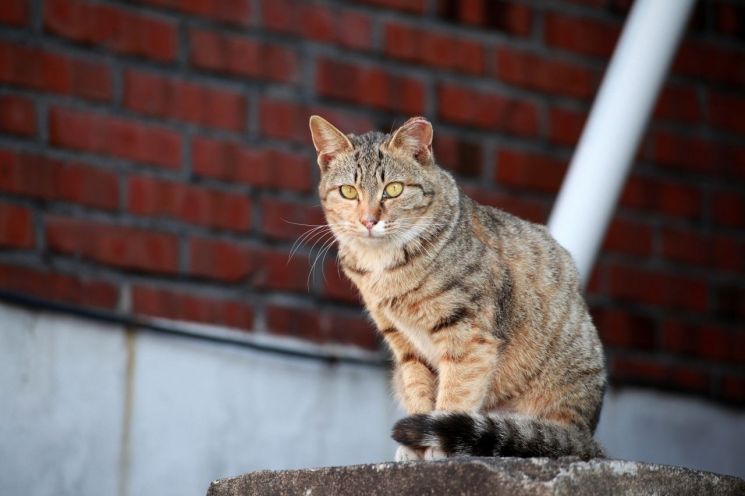 Recently, a series of incidents involving the abuse of stray cats has caused a public outcry. Photo by Pixabay.
[Asia Economy Reporter Heo Midam] Recently, a petition titled "Please punish the online community that abused stray cats and posted videos of it" was posted on the Blue House's national petition board, sparking widespread controversy. It has been reported that some members of the community captured stray cats in metal traps, set them on fire alive, and fed them rat poison, among other acts of abuse.
Crimes targeting stray cats continue to occur, but criticism is rising as cases where animal abusers are caught by the police or actually punished are rare. Experts point out that the judiciary's lenient punishments reproduce animal abuse.
On the 30th of last month, a petition titled "Please shut down the gallery that abuses stray cats and conduct a thorough investigation" was posted on the Blue House national petition board. This petition met the preliminary consent condition of over 100 people on the 3rd and is currently under review by the administrator for public disclosure.
The petitioner, Mr. A, said, "Last year, an online community gallery where cats were brutally abused and killed was shut down," adding, "However, most members who escaped capture by hiding behind anonymity are currently uploading abuse videos on a gallery of the same site."
According to Mr. A, on the 28th of last month, a video was posted in the problematic gallery showing a stray cat trapped in a metal capture cage with its face set on fire with a torch. Another video showed a stray cat desperately crawling away with a broken leg.
Mr. A pointed out, "There are photos of cats covered in blood and damaged inside illegally captured traps being mocked, and even videos of them being fed crushed rat poison," adding, "They recommend and praise each other whenever cat abuse videos are uploaded, encouraging even more cruel abuse."
He also urged, "They are preparing second and third galleries in anticipation of closure and plan to move if necessary, persistently committing stray cat abuse," and called for a strict investigation and closure of the gallery.
 A petition urging an investigation into an online community where people abuse stray cats and post videos of it has been posted. Photo by the Blue House National Petition Board screen capture.
This is not the first time malicious crimes against stray cats have occurred. Early last year, the 'Gore Specialist Room' KakaoTalk open chatroom, where videos and photos of cruel killings and abuse of stray cats and other animals were shared, was exposed, causing public outrage. Known as the 'animal version of the nth room,' about 80 people, including minors, participated in this 'Gore Specialist Room.'
As more people keep pets, awareness of animal rights is increasing, but animal abuse crimes are not decreasing. According to Eunju Lee, a Justice Party lawmaker, who received data from the National Police Agency last year on 'Animal Protection Act violations over the past 11 years,' a total of 1014 people were arrested in 2020 for violating the Animal Protection Act.
However, cases where animal abuse crimes result in criminal punishment are rare. According to the Ministry of Justice, among 3398 people booked for violating the Animal Protection Act from 2016 to October 2020, 1741 (51.2%) were not prosecuted. Only 93 people (2%) faced formal trials, and only 12 (0.3%) received prison sentences.
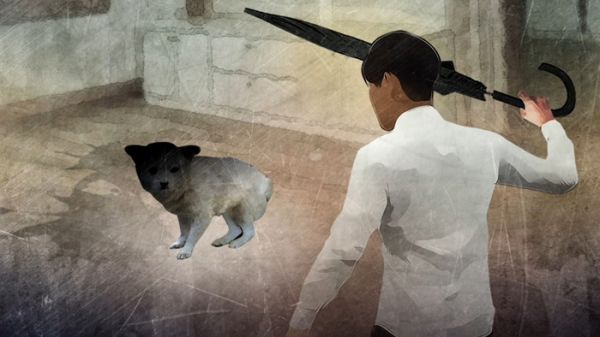 Terrible animal abuse crimes can lead to violent crimes against people, increasing public demand for stronger punishments.
 [Image source=Yonhap News]
According to Article 46 of the current Animal Protection Act, if an animal is abused to death, the offender may face up to three years in prison or a fine of up to 30 million won; if physical pain or injury is inflicted, up to two years in prison or a fine of up to 20 million won may be imposed. However, cases leading to legal punishment are extremely rare.
In particular, it is pointed out that animal abuse crimes may be precursors to violent crimes, necessitating stronger punishments. Serial killers such as Kang Ho-soon and Yoo Young-chul have been found to have histories of animal abuse. Kang Ho-soon showed tendencies of animal abuse by operating a dog breeding farm and brutally slaughtering dogs. Yoo Young-chul was also investigated for practicing murder on dogs. 'Tooth Fairy' Lee Young-hak was reported to have killed six dogs he raised by hitting them with a hammer.
Experts emphasize that animal abuse crimes should be punished under a zero-tolerance principle. Wonbok Lee, head of the Korea Animal Protection Alliance, criticized, "Recently, horrific crimes targeting stray cats have occurred one after another. Although punishments were strengthened with last year's amendment to the Animal Protection Act, the rate of prison sentences remains very low."
He also pointed out that the low level of punishment compared to the cruel animal abuse crimes is problematic. Lee said, "Most receive fines or are cleared of charges," adding, "Ultimately, even though the law exists, the judiciary enforces lenient punishments for animal abuse crimes. They fail to recognize that animal abuse is a serious social crime." He added, "Animals are socially vulnerable. Crimes against socially vulnerable groups must be punished strongly under a zero-tolerance principle."
© The Asia Business Daily(www.asiae.co.kr). All rights reserved.
![Clutching a Stolen Dior Bag, Saying "I Hate Being Poor but Real"... The Grotesque Con of a "Human Knockoff" [Slate]](https://cwcontent.asiae.co.kr/asiaresize/183/2026021902243444107_1771435474.jpg)

















