Intense Competition in Semiconductor Sector Among China's 10 Key Industries
"Countries Providing Technology to China May Trigger US Response"
"Korean Manufacturing Could Also Face Challenges"
"Must Prepare for US to Take a Hard Line on Science and Technology Issues"
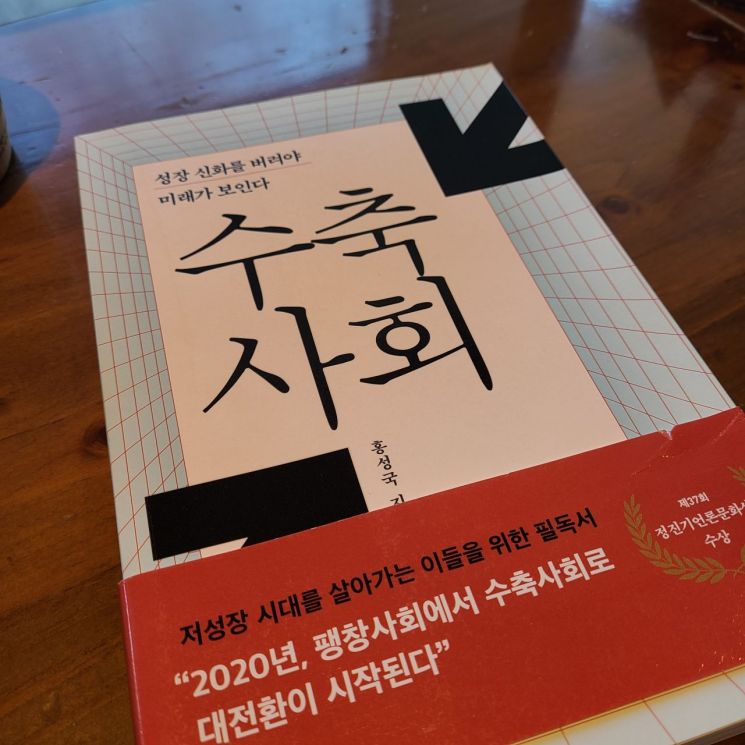
[Asia Economy Reporter Hwang Yoon-joo] Hong Seong-guk, a member of the Democratic Party of Korea, is gaining renewed attention as the US-China hegemonic competition predicted in his book "Contraction Society," published three years ago, is materializing in reality. At that time, Rep. Hong anticipated that the US-China hegemonic competition would center around the Fourth Industrial Revolution sectors and that countries providing technology to China would also face sanctions. As industries such as semiconductors and batteries emerge as the forefront of the US-China hegemonic competition, the situation appears to be unfolding similarly to Rep. Hong’s predictions.
In his book "Contraction Society," Rep. Hong stated, "The US may be outpaced by China in many areas, but if it falls behind in science and technology, recovery will be impossible," and added, "The US is expected to wage an intense science and technology war."
He diagnosed that the US-China trade war is focusing efforts on countering China’s "Made in China 2025" plan. "Made in China 2025" is a 30-year industrial upgrading strategy initiated in 2015 to advance China’s manufacturing sector into the ranks of developed countries. It aims to reach world-class levels in ten core industries through technological innovation and green growth. The plan includes increasing the localization rate of key components and materials to 40% by 2020 and achieving 70% by 2025.
The ten core industries China aims to develop are ▲next-generation information technology (semiconductors, information and communication OS, industrial software) ▲high-precision robots ▲aerospace equipment ▲marine equipment/advanced ships ▲advanced rail transit equipment ▲future vehicles and energy saving ▲power equipment ▲agricultural machinery equipment ▲new materials ▲biopharmaceuticals and medical devices.
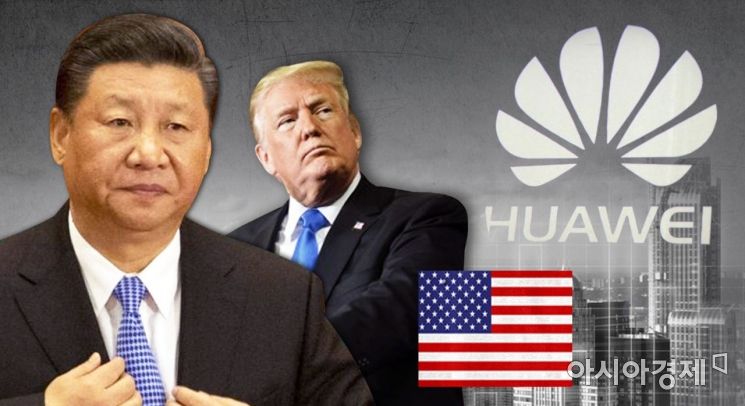
Rep. Hong cites the "Huawei indictment" as a symbolic event of the US’s countermeasures. The US indicted Meng Wanzhou, Huawei’s vice-chairwoman, in 2018 for violating sanctions against Iran. Meng was under house arrest in Canada for three years while fighting extradition to the US but was released in 2021. The Chinese government strongly opposed the US, accusing it of fabricating charges against Meng to suppress Huawei, the world’s largest telecommunications equipment company, deepening the US-China conflict.
Rep. Hong evaluated, "As the possibility of global communication networks falling under China’s control increases, countries including the US, Australia, and the UK have imposed major sanctions on Huawei’s telecommunications equipment," adding, "The emerging threat from China in the realm of science and technology and the US’s preemptive response strategy illustrate a facet of the ‘US-China science and technology war.’"
'Semiconductors' at the forefront of US-China hegemonic competition... fierce competition in electric vehicle supply chains
He pointed out that if the US-China hegemonic front narrows to "Made in China 2025," more battles are expected. Primary commodities like agricultural products and industries with low technological levels may be negotiable, but items within "Made in China 2025" will be excluded from negotiations or subjected to strict US oversight with limited talks. The ongoing US-China trade war in new industries such as semiconductors and electric vehicles goes beyond simple price adjustments and is linked to hegemonic rivalry.
Rep. Hong emphasized, "We must not forget that the US-China G2 hegemonic confrontation began during the Obama administration of the Democratic Party," and noted, "As the Fourth Industrial Revolution spreads, the US power elites increasingly regard science and technology hegemony as crucial."
The frontlines have shifted to semiconductors and eco-friendly vehicles. Last year, the US held meetings with global semiconductor companies such as Samsung, Intel, and TSMC, pressuring them to reorganize the semiconductor supply chain centered on the US. Additionally, the US House of Representatives recently introduced the "America COMPETES Act of 2022" to counter China and support domestic semiconductor industry growth. This bill includes $52 billion (62.322 trillion KRW) in support for the semiconductor industry. It also denies tariff benefits to products exported to the US from non-market economies like China, where product pricing is deemed unfair due to state intervention. Semiconductors are one of the ten core industries in the "China 2025" strategy.
Rep. Hong warned, "In the future, the US will intervene in all areas of the global economy," and cautioned, "If South Korea tries to use loopholes or provides advanced science and technology to China, it could provoke a strong US response."
He added, "Since South Korea also has considerable competitiveness in the 'Made in China 2025' industrial sectors, the US may find South Korea’s manufacturing sector troublesome," advising, "We must prepare for the US to be uncompromising on science and technology issues."
Meanwhile, Rep. Hong, known as the "futurist of the securities world," is a remarkable figure who rose from a regular employee at Daewoo Securities to president of Mirae Asset Daewoo. He is famous for predicting the 2008 global financial crisis. After the inauguration of the Moon Jae-in administration, he was appointed president of the Korea Institute for International Economic Policy in 2018 and entered the National Assembly in 2020 by running for Sejong Gap.
© The Asia Business Daily(www.asiae.co.kr). All rights reserved.
![Clutching a Stolen Dior Bag, Saying "I Hate Being Poor but Real"... The Grotesque Con of a "Human Knockoff" [Slate]](https://cwcontent.asiae.co.kr/asiaresize/183/2026021902243444107_1771435474.jpg)

















