Government Advisory Committee Recommends 4th Vaccine Dose
"Lack of Scientific Data" Sparks Opposition from Some Medical Professionals
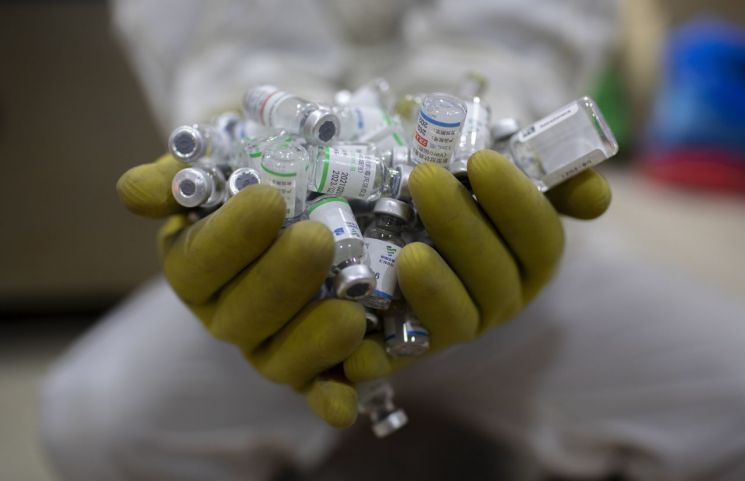
[Asia Economy Reporter Lim Juhyung] Israel's plan for a fourth COVID-19 vaccine dose has been put on hold. Although the Israeli government's expert advisory committee recommended the fourth dose, the Ministry of Health has yet to finalize the specific vaccination method and schedule. Currently, scientists are reportedly concerned that excessively frequent vaccinations could negatively affect immunity.
◆Israel, the world's first to administer a third dose, puts the fourth dose on hold
On the 25th (local time), Israeli media such as the 'Jerusalem Post' reported that the fourth dose plan might be postponed or canceled. This is because Nahman Ash, the Chief Administrative Officer who holds the final approval authority for the fourth dose plan, is delaying approval. According to these media outlets, the Israeli Ministry of Health is currently reviewing UK data on symptoms related to the Omicron variant.
Earlier, Israel began administering the world's first third 'booster shot' in July. The vaccination target initially focused on high-risk groups aged 60 and above, then gradually expanded to those in their 50s, healthcare workers, 40s, and 30s.
As a result of hastening the booster shot rollout, Israel reportedly managed to overcome the fourth wave of COVID-19 without imposing strict measures such as movement restrictions or business closures.
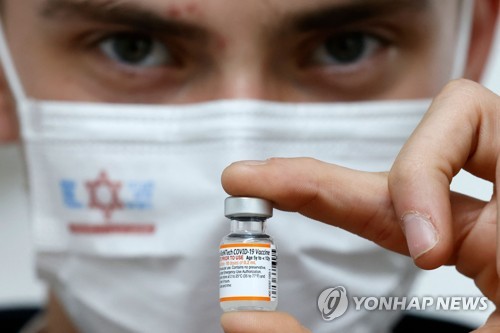 The Israeli government, which was the first in the world to administer the third COVID-19 vaccine dose, is currently holding off on plans for the fourth dose. The photo shows Israeli medical staff holding a COVID-19 vaccine / Photo by Yonhap News
However, the situation has recently changed. The Omicron variant, known to have a higher transmissibility than the Delta variant, is spreading in Israel as well.
Amid this, the expert advisory committee recommended the Israeli government proceed with the fourth dose. Israeli Prime Minister Naftali Bennett also expressed a positive stance on the 4th dose on the 21st, stating it would help overcome the global spread of Omicron.
◆"It could have adverse effects"?some in the medical community oppose
However, some in Israel's medical community are reportedly opposing this decision, pointing out the lack of sufficient scientific data to verify the effectiveness of the fourth dose.
The US media 'The New York Times (NYT)' reported, "Some Israeli scientists say that too many injections can fatigue the immune system," warning that "it could have the opposite effect by impairing the body's ability to fight the coronavirus," reflecting local concerns.
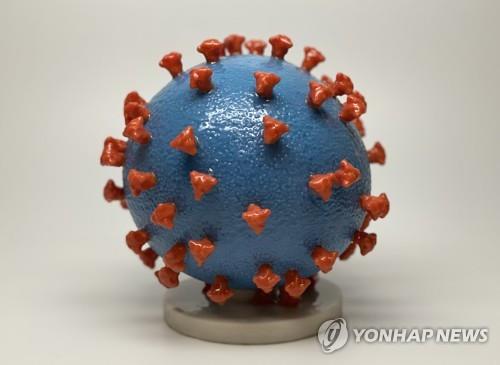 Some in the Israeli medical community are concerned that excessively frequent vaccination may actually cause physical fatigue and weaken immunity. / Photo by Yonhap News
An Israeli scientist told the NYT, "Just because we were the first in the world to administer booster shots doesn't mean we have to do the fourth dose as well," emphasizing, "There must be proper scientific evidence to proceed with the fourth dose."
He also predicted, "The decrease in antibodies over time is a natural phenomenon," adding, "The benefits of continuously increasing antibodies may be limited."
◆Third dose increases protection against Omicron but weakens after 10 weeks
Omicron is already spreading in Israel. On the 21st, the first death confirmed to be caused by Omicron was reported. According to local health authorities, the deceased was a man in his 60s who had completed only two doses; after death, a PCR test confirmed a positive result for the Omicron variant.
Omicron was first detected in Israel on the 26th of last month. About a month later, on the 24th, it is estimated that out of 1,775 daily confirmed cases, 591 were infected with the Omicron variant. The number of infections increased to triple digits in less than a month.
 On the morning of the 3rd, a monitor installed at the screening clinic of Buk-gu Public Health Center in Gwangju displayed information expressing concerns about the spread of the Omicron variant. / Photo by Yonhap News
Meanwhile, according to research by the UK Health Security Agency (UKHSA), the third COVID-19 vaccine dose significantly reduces the risk of Omicron infection, but the protective effect lasts only for a short period.
According to reports from UK media such as the 'BBC' on the 10th, UKHSA analyzed 581 individuals infected with Omicron and found that the preventive effect against Omicron during the two weeks after the third dose was about 70-75%.
However, this effect reportedly begins to decline gradually after 10 weeks. On the 23rd, UKHSA, based on research from Imperial College London and the University of Edinburgh, stated, "There is evidence that vaccine effectiveness decreases by 15-25% about 10 weeks after the booster shot, indicating weakened protection." However, protection against severe disease is understood to persist.
Additionally, UKHSA estimated that "Omicron-infected individuals are 31-45% less likely to visit the emergency room and 50-70% less likely to be hospitalized compared to Delta-infected individuals," but added, "Since the number of Omicron patients in hospitals is low and most confirmed cases are among younger age groups, this analysis is preliminary and carries significant uncertainty."
© The Asia Business Daily(www.asiae.co.kr). All rights reserved.
![Clutching a Stolen Dior Bag, Saying "I Hate Being Poor but Real"... The Grotesque Con of a "Human Knockoff" [Slate]](https://cwcontent.asiae.co.kr/asiaresize/183/2026021902243444107_1771435474.jpg)

















