[Seoul Autonomous District News] Gangdong-gu Signs Construction Contracts for Phase 4 Extension of Subway Line 9 Sections 1 (1.348km, Tentative Gildong Ecological Park Station) and 3 (1.485km, Tentative Godeok Gangil 1 Station), Construction Begins December 30... Gangbuk-gu Recruiting 20 Households from 22nd to 31st, Applications Only via Email; Convenient Transportation Near Uisinseol Subway Station... Gangdong-gu Starts Full Phase 4 Construction of Subway Line 9 on December 30... Guro-gu Installs ‘Smart Right-Turn Alert’ in Gaebong 1-dong Residential Area... Dobong-gu Supports Facilities for Health-Vulnerable Groups
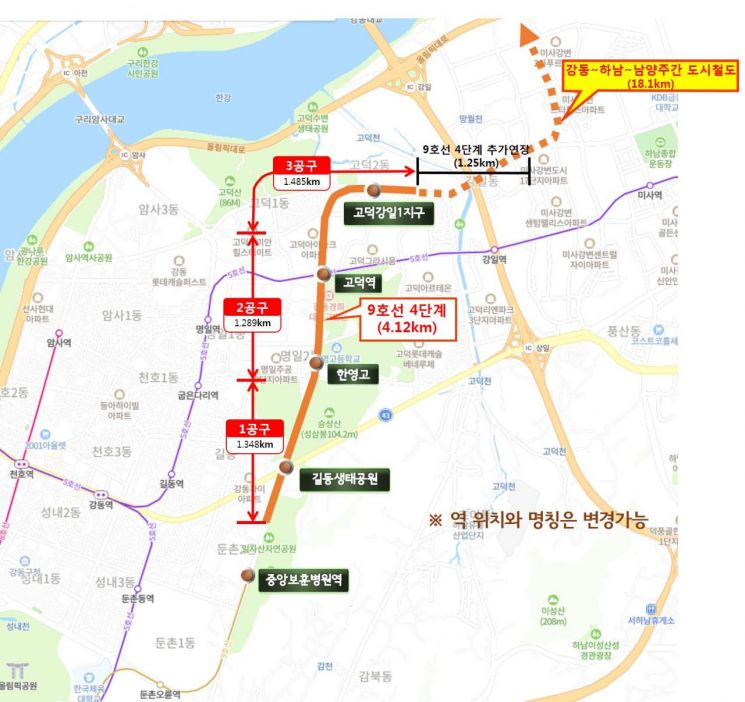
[Asia Economy Reporter Park Jong-il] Gangdong-gu (Mayor Lee Jeong-hoon) announced that construction contracts for Section 1 (1.348km, tentatively named Gildong Ecological Park Station) and Section 3 (1.485km, tentatively named Godeok Gangil 1 Station) of the Phase 4 extension project of Seoul Subway Line 9 have been signed, and construction will begin on December 30.
The Phase 4 extension project of Seoul Subway Line 9 is a project to build four new stations along a 4.12 km section starting from Jungang Veterans Hospital Station in Gangdong-gu, passing through Gildong Ecological Park, Hanyeong High School, and Godeok Station on Line 5, to the Godeok Gangil 1 District. The Seoul Metropolitan Government is overseeing the construction. The project is divided into three sections, and following the priority start of Section 2 ('Daemyeong Elementary School Intersection to Godeok I-Park Apartment' section, 1.289 km, tentatively named Hanyeong High School Station and Godeok Station) on August 31, the commencement of Sections 1 and 3 means that construction has finally started on the entire Phase 4 extension of Line 9, with completion expected in 2028.
Previously, Gangdong-gu proactively demanded transportation measures from the announcement of the Ministry of Land, Infrastructure and Transport's candidate sites for public housing districts in 2011. Since including the Line 9 Phase 4 project in the Ministry's Godeok-Gangil public housing district's wide-area transportation improvement plan in 2012, the project has been actively pursued for over 10 years through key milestones such as inclusion in Seoul's 10-year urban rail network plan in 2015, passing the preliminary feasibility study in May 2018, basic plan approval in April 2020, and turnkey construction confirmation in June 2020.
In particular, in September 2011, the mayor held a press conference presenting 'policy alternatives for public housing promotion,' which was a decisive opportunity to secure the feasibility of the Line 9 Phase 4 extension project. Since then, more than ten meetings with the Ministry of Land, Infrastructure and Transport, Seoul City, and SH Corporation, as well as meetings with the Seoul Mayor and the Minister of Land, Infrastructure and Transport, were held. As a result, on October 29, 2012, Gangdong-gu, the Ministry, Seoul City, and SH signed an agreement among related agencies to promote the extension of Subway Line 9 as part of the wide-area transportation improvement plan for the Seoul Godeok Gangil public housing district, enabling the inclusion of the Line 9 extension project in the plan.
Furthermore, on April 23, 2020, during a meeting with the Seoul Mayor, the district proposed advancing the construction and opening of the Line 9 Phase 4 project by implementing it as a turnkey project, delivering a petition with signatures from about 30,000 residents expressing their earnest wish for early construction. Consequently, on June 29, 2020, the Seoul Metropolitan Government decided to adopt the turnkey (lump-sum bidding) method for the Line 9 Phase 4 extension project during the review of bidding methods for large-scale projects. This shortened the period from basic plan approval to construction start by half.
Additionally, the district announced that the section following Phase 4, from Godeok Gangil 1 District to Gangil-dong (1.25 km, an additional extension of Line 9 Phase 4), is also progressing smoothly. This additional extension section was included in the Namyangju Wangsuk District wide-area transportation improvement plan in December 2020, and on July 5, it was officially designated as a new project in the Ministry of Land, Infrastructure and Transport's 4th National Railway Network Plan (2021?2030) under the 'Gangdong, Hanam, Namyangju Line (18.1 km)' (Ministry of Land, Infrastructure and Transport Notice No. 2021-936). It also passed the public institution preliminary feasibility study at the end of September.
Currently, the Korea Land and Housing Corporation (LH) and Gyeonggi Province are establishing the basic plan, and after going through basic and detailed design procedures, construction will commence.
Lee Jeong-hoon, Mayor of Gangdong-gu, stated, “With the commencement of construction on the entire Phase 4 extension of Line 9, the transportation network connecting the 'three hearts' of the economic industrial complex?Godeok Biz Valley, the advanced business district, and the engineering complex?has been established, enabling Gangdong-gu to stand tall as the economic center city of the eastern metropolitan area.” He added, “The district will also do its best to ensure the smooth progress of the ongoing Line 5 direct connection, Line 8 extension, and additional Phase 4 extension projects of Line 9 to realize transportation welfare.”
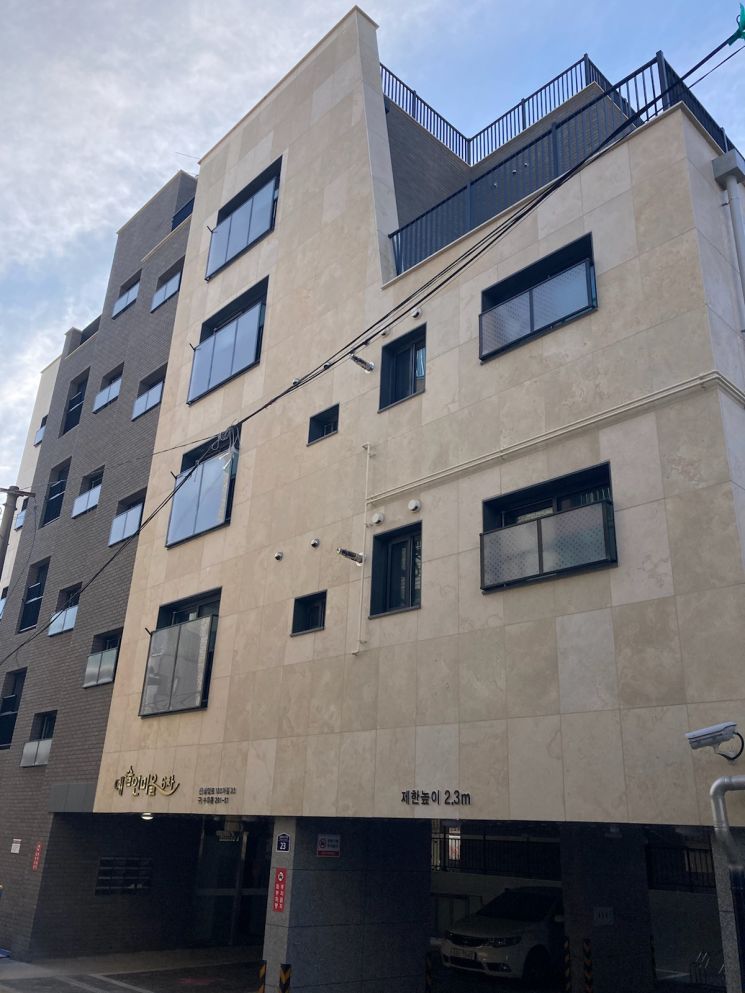
Gangbuk-gu (Mayor Park Gyeom-su) is recruiting residents for the 'Artist Village' public housing from the 22nd to the 31st.
The 'Artist Village' public housing is a type of demand-tailored community housing. Local cultural artists gather in one area to focus on creative activities without worrying about housing, and it is supplied sequentially. The rental period is two years, and residents can live for up to 20 years if they maintain eligibility.
The supply scale includes 3 remaining units from phases 2 and 4 and 20 new units from phases 5 and 6. The area per unit ranges from 22.46 to 40.03㎡ for the remaining units and 45.58 to 59.83㎡ for the new units. Facilities include community spaces, pillar-type (pilotis) parking lots, and elevators. All artist housing is located near stations on the Uisinseol Urban Railway Line, offering excellent accessibility. Phases 2 and 4 are near Solbat Park Station, phase 5 near Bukhansan Ui Station, and phase 6 near April 19th Democratic Cemetery Station.
Applicants must meet all residency conditions. They must reside in Seoul as of the announcement date (December 17, 2021), be at least 19 years old, and be workers in the cultural and artistic fields according to the Cultural Arts Promotion Act. A certificate of artistic activity issued by the Korean Artists Welfare Foundation or relevant association is required.
Additionally, all household members (including the applicant) must be members of a household without home ownership, have an average monthly urban worker income of 70% or less of the previous year or 50% or less income while meeting asset criteria. Rental deposits and monthly rent are applied differentially according to income level.
Applications are accepted only via email (dncl2865@gangbuk.go.kr). Winners will be individually notified on March 7 next year, and move-in can begin from April 4. For more details, refer to the district office website (notice section) or contact the Culture, Tourism, and Sports Department.
Park Gyeom-su, Mayor of Gangbuk-gu, said, “We hope for the active interest and participation of local cultural artists struggling with housing issues,” and added, “We will continue to supply demand-tailored public rental housing under a long-term plan.”
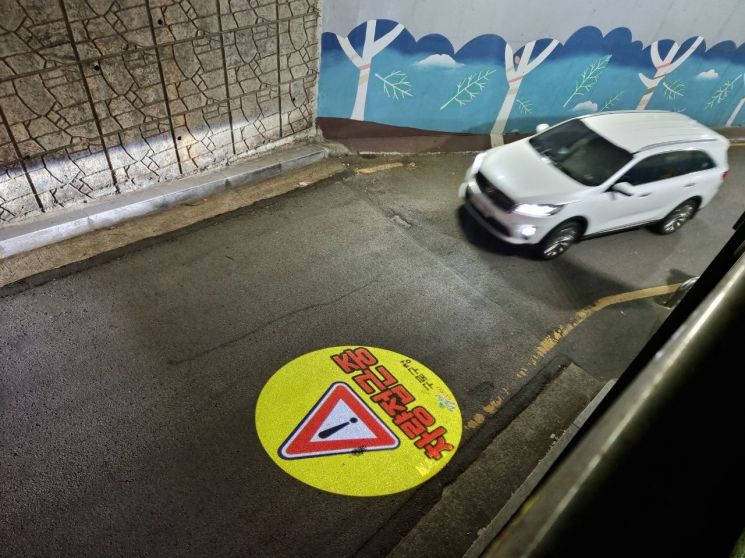
Guro-gu (Mayor Lee Seong) has installed a 'Smart Right-Turn Alert' in the residential area of Gaebong 1-dong.
Guro-gu stated on the 20th, “We are building a traffic system using smart technology to create a safe pedestrian environment. As part of this, we installed a 'Smart Right-Turn Alert' near the underpass by Geoseong Pureumoe Apartment in Gaebong 1-dong, where installing traffic safety facilities was difficult.”
The underpass near Geoseong Pureumoe Apartment (Gaebong 1-dong 60-83) has many pedestrians and vehicles, but visibility was poor, posing a risk of traffic accidents.
Therefore, Guro-gu installed the 'Smart Right-Turn Alert' to allow drivers and pedestrians to recognize each other and prevent traffic accidents.
The Smart Right-Turn Alert consists of alert panels for drivers and pedestrians and a logo projector. The alert panels use LED signs and voice guidance to notify vehicles entering the underpass of pedestrians' presence and inform pedestrians of approaching vehicles, enhancing attention and preventing accidents.
The logo projector projects the phrase 'Vehicle Approaching' onto the ground, helping pedestrians easily recognize vehicle approach even at night.
A Guro-gu official said, “We plan to continue expanding 'Smart Alerts' in areas lacking traffic safety facilities such as crosswalks without traffic lights and side roads,” adding, “We will continue to create a safer city through smart administration using advanced technology.”
Since 2018, Guro-gu has operated 'Smart Intersection Alerts' at 12 locations, including Gocheok Middle School, Guil Middle School, Guil Elementary School, Oryu Nam Elementary School, and Dongguro Elementary School. These facilities measure and display traffic conditions in real time to inform drivers and pedestrians.
At seven locations including Mirae Elementary, Gosan Elementary, and Segok Elementary, 'Smart Right-Turn Alerts' are operating to prevent traffic accidents caused by vehicles turning right at crosswalks. Next year, three more intersection alerts and one right-turn alert will be added.
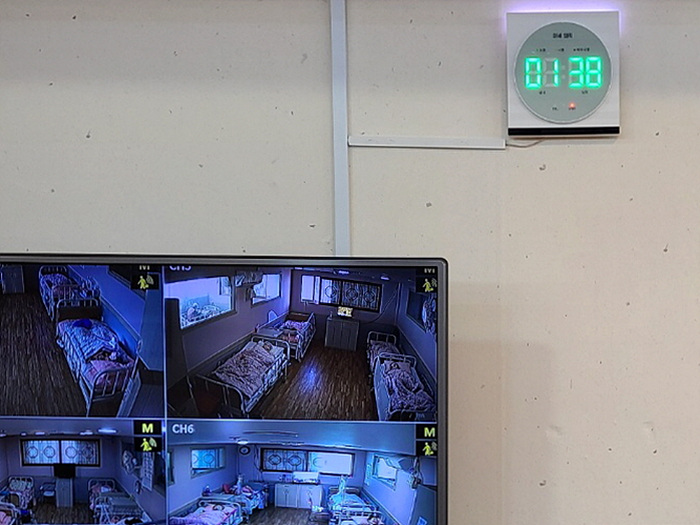
Dobong-gu (Mayor Lee Dong-jin) has established an 'Indoor Air Quality Smart Management System' that measures indoor air quality in real time at facilities used by health-sensitive groups and transmits data to induce air quality improvement.
Based on demand surveys conducted at elderly care facilities and postpartum care centers, the district has installed IoT-based air quality monitors at a total of 32 locations this month (27 elderly care facilities, 4 fine dust shelters, and 1 postpartum care center), introducing the indoor air quality smart management system to manage and monitor indoor air quality in real time.
The measured items include ultrafine dust, fine dust, carbon dioxide, total volatile organic compounds, temperature, and humidity. The measured data can be monitored by facility managers via web and mobile.
The district analyzes that this smart management system will have a positive effect on protecting residents' health by scientifically exploring indoor air quality improvement measures through big data on air quality at facilities used by health-sensitive groups and inducing facility managers to respond to air quality improvement.
Lee Dong-jin, Mayor of Dobong-gu, said, “As indoor life has increased due to COVID-19, managing indoor air quality for vulnerable groups who spend most of their day indoors is very important. We expect the indoor air quality smart management system we have prepared to play a significant role in creating a healthy and clean indoor environment.”
© The Asia Business Daily(www.asiae.co.kr). All rights reserved.
![Clutching a Stolen Dior Bag, Saying "I Hate Being Poor but Real"... The Grotesque Con of a "Human Knockoff" [Slate]](https://cwcontent.asiae.co.kr/asiaresize/183/2026021902243444107_1771435474.jpg)

















