Netflix Original Series 'Jigok' Ranks No.1 Worldwide Within a Day of Release
Foreign Media Highlights K-Content Popularity, Calling Korea a 'Cultural Powerhouse'
"Sharp Messages and Uniqueness Created in a Free Production Environment Target Niche Fans"
Experts Say "Korean Dramas' Strength Lies in Sharp Satire and Criticism Alongside Entertainment"
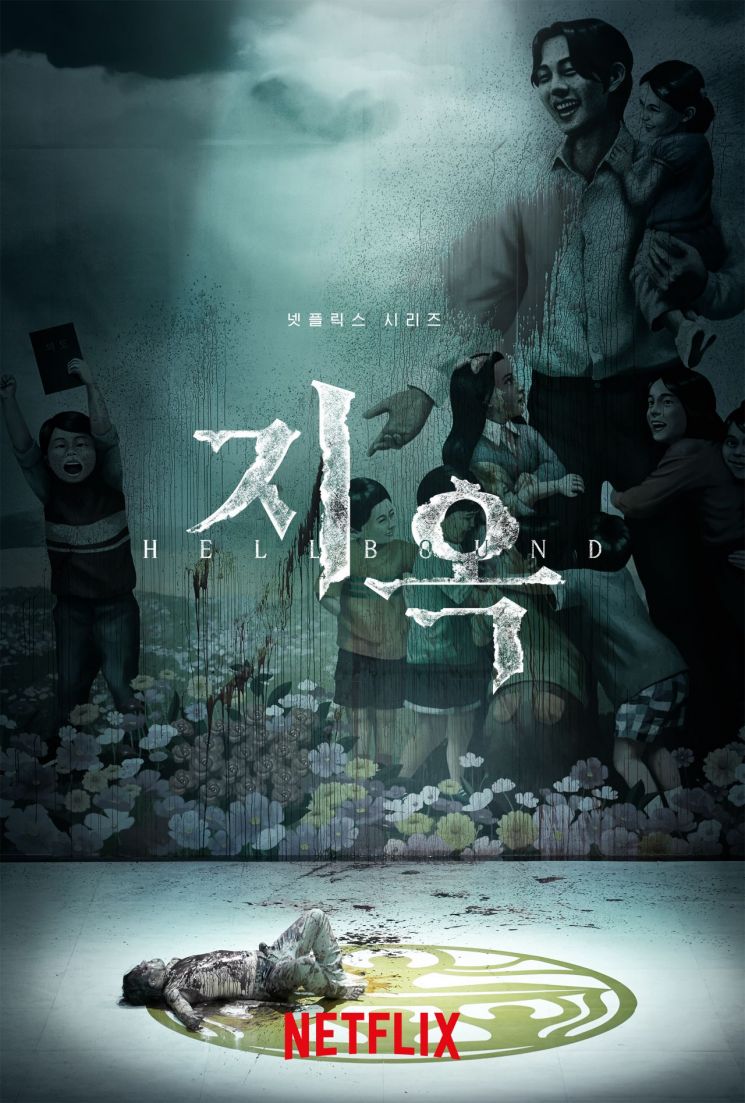
[Asia Economy Reporter Park Hyun-joo] As the popularity of K-dramas created by the Netflix original series 'Squid Game' is continued by 'Hellbound,' attention is focusing on the secret behind the popularity of Korean dramas. Experts believe that incorporating social satire elements into the dramas is the unique key to the popularity of K-dramas.
'Hellbound' progresses under the premise that hell's emissaries appear and kill those who have been notified of the date and time of their death. The series garnered global attention by achieving the number one spot in worldwide drama rankings within 24 hours of its release. This was much faster than 'Squid Game,' which reached number one in eight days, marking the first time a Korean Netflix drama topped the charts within a day of release. Additionally, 'Hellbound' ranked first in 24 countries worldwide, including Belgium, Indonesia, Mexico, Portugal, Saudi Arabia, and South Africa.
Regarding the popularity of Korean dramas, some argue that Netflix's policy of providing sufficient production budgets while not interfering with the subject matter or storyline created a free production environment that made this possible.
Experts agree with this analysis, explaining that Netflix's drama production policy differs from traditional production environments. Since Netflix only supports a portion of the production costs, the remaining expenses must be covered through product placement (PPL) and other means, which inevitably allows external influences such as broadcasters to intervene. Cultural critic Jung Deok-hyun explained, "On terrestrial TV, common formulas for success are added to boost ratings. This dulls the sharpness of the original message the creators intended to convey. As a result, even well-written genre works end up becoming melodramas."
He continued, "However, Netflix uses a policy that targets tastes and niche audiences. When they highlight unique aspects using sharp messages and themes, people become enthusiastic. While it might seem like they are creating a manic viewer base, the overall audience is global, so the numbers are large."
Previously, foreign media also analyzed the popularity of 'Squid Game' and highlighted the status of K-content. The British BBC, on the 15th of last month (local time), published an article titled 'Squid Game and the Rise of Korean Drama Addiction,' stating, "(Idols) BTS and Blackpink have become household names in the music industry, and (films) 'Parasite' and 'Minari' shook Hollywood by winning Oscars," adding "The popularity of 'Squid Game' is the latest wave of the 'Korean cultural tsunami' that has spread across the West in recent years."
The New York Times in the United States also praised Korea as a "cultural powerhouse." In an article titled 'From BTS to Squid Game: How Korea Became a Cultural Powerhouse' published on the 3rd, the outlet cited △ rapid benchmarking combined with Korea's unique sensibility △ the rise of over-the-top (OTT) streaming services △ rapid social changes as reasons for Korea becoming a cultural powerhouse.

Experts see the sharp satire as the reason behind the success of Korean dramas. Cultural critic Jung Deok-hyun said, "Simply put, Korean dramas are entertaining but also give viewers something to think about. In the case of Squid Game, it is a death survival genre, but it does not just focus on the game itself; it satirizes and criticizes the capitalized competitive society. That characteristic has become a hallmark of Korean dramas," he analyzed.
He also praised 'Hellbound' for breaking away from the typical creature feature formula. He explained, "Usually, creature features focus on what the creature is, what its weaknesses are, and how to overcome it. For example, in the Netflix original series 'Sweet Home,' the identity of the creatures and how the characters trapped in the apartment survive against them are depicted," he elaborated.
He added, "However, in 'Hellbound,' the identity of the creature (the emissary) is never questioned, and the story centers on what choices humans make in the face of an irresistible force. It interestingly explores deep themes such as justice, law, and religion. This is precisely the strength of K-content."
© The Asia Business Daily(www.asiae.co.kr). All rights reserved.
![Clutching a Stolen Dior Bag, Saying "I Hate Being Poor but Real"... The Grotesque Con of a "Human Knockoff" [Slate]](https://cwcontent.asiae.co.kr/asiaresize/183/2026021902243444107_1771435474.jpg)
















