Global LNG Price Surge Due to Worldwide Supply Shortage
Coinciding with Onset of Severe Cold Wave... Increased Burden on Low-Income Households
Experts: "Energy Welfare Blind Spots Must Be Reduced"
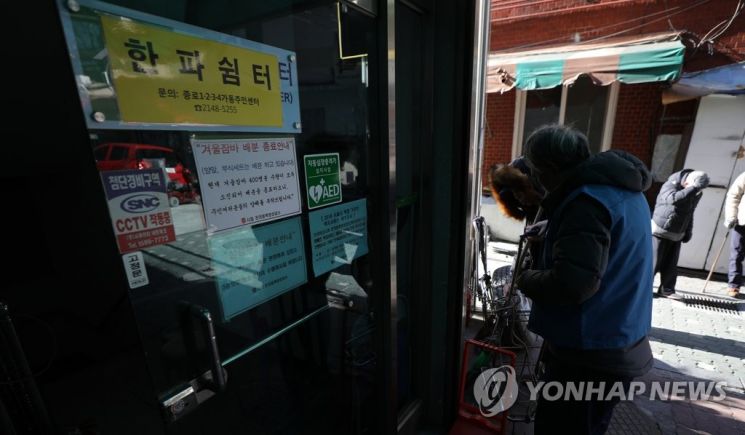 In February 2019, when a cold wave hit, residents gathered in the alley of Donui-dong, Jongno-gu. / Photo by Yonhap News
[Asia Economy Reporter Lim Ju-hyung] As the recent minimum temperatures drop to single digits, signaling the onset of a full-fledged cold wave, concerns over heating costs among low-income households are growing. This winter is likely to coincide with a global gas shortage crisis. If gas import prices rise, heating costs will inevitably increase, deepening the financial hardships of low-income groups. Experts emphasize the need to minimize the blind spots of households excluded from the government's energy welfare policies.
On the 16th, the Korea Meteorological Administration issued the first cold wave advisory of the year for various parts of the country, including Seoul. A cold wave advisory is issued when the morning minimum temperature drops by 15 degrees or more compared to the previous day and falls below 3 degrees Celsius, or when it is expected to be 3 degrees lower than the average for the season. Since then, minimum temperatures have continued to register in the single digits, ranging from 3 to 6 degrees Celsius, indicating the beginning of a serious cold wave.
With the sudden temperature drop, worries about heating costs this winter are increasing. The biggest issue currently faced is the global shortage of 'natural gas,' a primary fuel for urban heating. Korea Gas Corporation imports natural gas from overseas and supplies it domestically, but if import prices remain high throughout the winter, there will inevitably be pressure to raise fees.
◆Global Supply Shortage... Soaring Gas Prices
According to the UK financial media outlet 'Financial Times (FT),' as of the 18th (local time), wholesale natural gas prices in Europe surged by up to 18% in a single day. The Dutch TTF exchange, a representative natural gas futures market, saw prices rise from 89 euros (approximately 122,000 KRW) per megawatt-hour (MWh) to 100 euros (approximately 137,000 KRW).
Gas price instability can have direct and indirect effects on domestic heating costs. In Korea, Korea Gas Corporation purchases gas in the form of liquefied natural gas (LNG), and if import prices continue to rise, the corporation's burden will also increase. According to US financial media 'Bloomberg' and others, as of early this month, LNG prices for Korea and Japan have risen to 34 dollars (approximately 40,000 KRW).
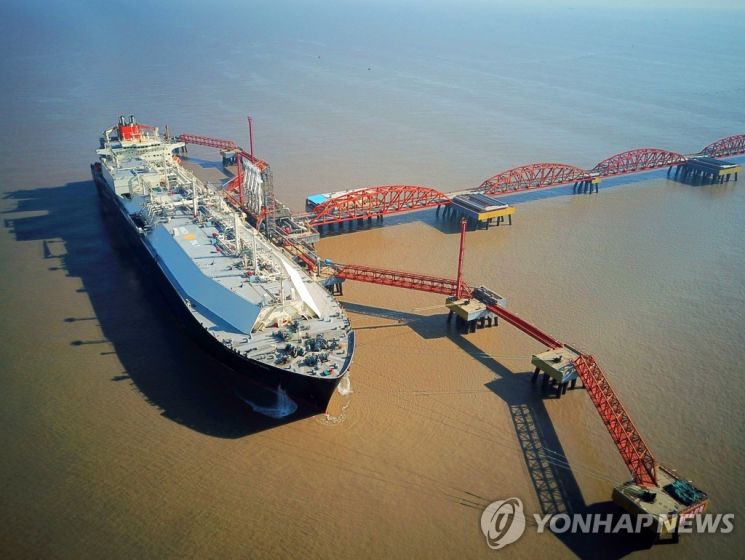
The Gas Corporation has already raised the need for a gas price increase. On the 15th, Chae Hee-bong, President of Korea Gas Corporation, attended the National Assembly's Industry, Trade, Small and Medium Enterprises Committee audit and stated, "A reasonable scale of urban gas price increase is necessary," adding, "Since July last year, international LNG prices, crude oil prices, and spot prices have all risen. While we understand the difficulties faced by price authorities, considering the increased cost burden, we hope that a reasonable level of price increase will be permitted."
◆Concerns Grow Over Winter 'Energy Vulnerable Groups'
With gas prices unstable even before the full onset of the cold wave, concerns are rising that winter heating cost burdens may increase. The damage could be greater for 'energy vulnerable groups,' who must allocate a significant portion of their income to energy expenses.
Energy vulnerable groups refer to households that lack the economic capacity to afford adequate energy consumption. In Korea, this includes households that spend more than 10% of their income on energy costs such as heating and electricity bills. Most basic livelihood security recipients and near-poverty groups fall into this category.
According to Statistics Korea, as of last year, there were approximately 1.46 million basic livelihood security recipient households. Most of these households suffer from heating burdens during winter.
Among the total energy vulnerable households, about 30%, or 440,000 households, are elderly households, which makes the issue even more serious. This age group is particularly vulnerable to cold-related illnesses during winter.
According to the Korea Disease Control and Prevention Agency, from the end of last year to January this year, a total of 190 patients were reported with cold-related illnesses due to the winter cold wave, about 30% more than the 149 patients during the same period last year.
◆"Need to Reduce Energy Welfare Blind Spots"
The government provides support to energy vulnerable groups through the issuance of 'energy vouchers.' Energy vouchers are coupons that can be used to purchase heating means such as electricity, city gas, district heating, kerosene, LPG, and briquettes. The Ministry of Trade, Industry and Energy has allocated a budget of 113.9 billion KRW for the energy voucher policy this year and is accepting applications from energy vulnerable groups.
Experts suggest minimizing the energy welfare blind spots to reduce the number of households excluded from government support benefits.
The Energy Citizens' Solidarity stated, "Among vulnerable groups, some are not fully aware of the welfare programs they are eligible for, or even if they are receiving benefits, they may not recognize it. The main channel through which vulnerable groups learn about energy welfare programs such as energy vouchers is local government officials, accounting for 73%, highlighting their importance."
They added, "If local governments lack dedicated field personnel for energy welfare, blind spots will occur. It is very important to increase manpower for proper information delivery and support guidance."
© The Asia Business Daily(www.asiae.co.kr). All rights reserved.
![Clutching a Stolen Dior Bag, Saying "I Hate Being Poor but Real"... The Grotesque Con of a "Human Knockoff" [Slate]](https://cwcontent.asiae.co.kr/asiaresize/183/2026021902243444107_1771435474.jpg)

















