[Asia Economy Reporter Ji Yeon-jin] Amid increased volatility in the domestic stock market this month, concerns over stagflation in the United States are emerging as another potential trigger. Stagflation is a phenomenon where inflation, corporate earnings, and economic recession occur simultaneously.
According to the financial investment industry on the 9th, the U.S. Department of Labor announced that nonfarm payrolls increased by only 194,000 in September (local time) the day before. This is less than half of the market forecast of a 500,000 increase and represents the smallest growth so far this year. The unemployment rate fell from 5.2% in the previous month to 4.8%, but the average hourly wage rose by $0.19 (0.62%) to $30.85 compared to the previous month. The market expects that the Federal Reserve officials, having signaled that the criteria to start tapering at the November meeting have been met, will not change their course due to this weak employment report, and the U.S. stock market closed lower.
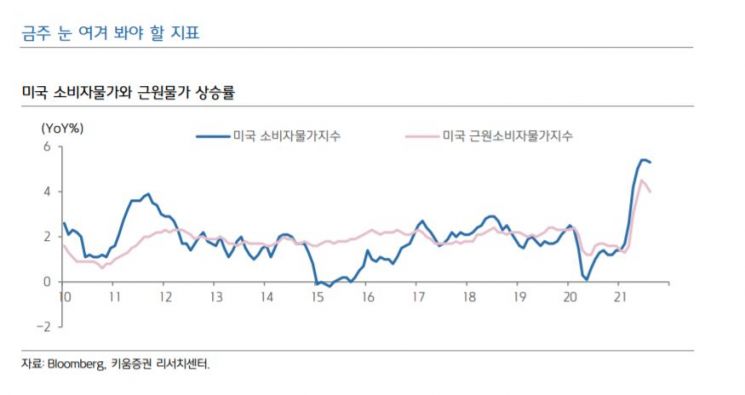
On the 13th of this month, the U.S. will release the September Consumer Price Index along with retail sales and the University of Michigan consumer sentiment index. It is forecasted that the consumer price inflation rate will remain high at 5.3% year-over-year, and the core consumer price inflation rate will be 4.1%.
Although the inflation rate has peaked, the rise in housing costs and prolonged supply disruptions have continued to push up product prices, maintaining a high level of inflation.
September U.S. retail sales are expected to decrease by 0.3% compared to the previous month. The slower-than-expected vaccination rate has limited improvements in service sector consumption, and automobile sales, which account for the largest share of retail sales, may have been weak due to production disruptions, suggesting overall poor performance. While the resolution of supply chain issues and increased vaccination rates could boost face-to-face service consumption and improve retail sales, the outlook remains weak for the time being.
In particular, the minutes of the U.S. Federal Open Market Committee (FOMC) to be released on the 14th are expected to reaffirm the hawkish stance of Fed officials. Considering that at last month’s FOMC, the number of members advocating for a rate hike next year increased by two to nine out of eighteen according to the dot plot, it is likely that there have been changes within the Fed regarding inflation views and the timing of rate hikes. Especially, as comments advocating for faster tapering in terms of scale and speed have increased, if the minutes confirm a hawkish tendency, concerns over early tightening could rise again.
China’s September consumer price index and producer price index releases are also variables. Both consumer and producer price inflation rates are expected to increase compared to last month. With China’s recent power shortages intensifying concerns over upward pressure on producer prices, a continued rise in inflation could exacerbate worries about China’s economic slowdown and increase cost burdens on companies. Kim Yumi, a researcher at Kiwoom Securities, stated, "The rise in China’s producer prices could influence U.S. import prices and consumer prices, potentially fueling global inflation concerns."
© The Asia Business Daily(www.asiae.co.kr). All rights reserved.
![Clutching a Stolen Dior Bag, Saying "I Hate Being Poor but Real"... The Grotesque Con of a "Human Knockoff" [Slate]](https://cwcontent.asiae.co.kr/asiaresize/183/2026021902243444107_1771435474.jpg)















