Proposed Partial Amendment to the Act on Public Audit
Exemption from Post-Audit Liability if Preemptive Audit Conducted After Prior Consulting
[Asia Economy Reporter Naju-seok] To resolve the issue of bureaucrats' welfare inertia, Park Su-young, a member of the People Power Party, proposed the Pre-Consulting Audit Act. This aims to prevent passive responses by exempting public officials from post-audit responsibility for tasks that have been pre-consulted with auditors.
On the 7th, Representative Park proposed the "Partial Amendment to the Public Audit Act." He introduced the pre-consulting audit as "a system where, upon application by frontline administrative officers, the audit agency proactively conducts an audit, decides on alternatives, and exempts post-audit responsibility." This system was first introduced in 2014 when Park served as the Vice Governor of Gyeonggi Province and has been actively promoted by the Board of Audit and Inspection since 2019.
Although the pre-consulting audit system has already been introduced institutionally, its current legal basis remains limited to presidential decrees and prime ministerial directives, and provisions regarding exemption are regulated by the Board of Audit and Inspection's internal rules, resulting in low effectiveness. In a survey by the Board of Audit and Inspection, about 77% of public officials responded that they have never used the pre-consulting audit.
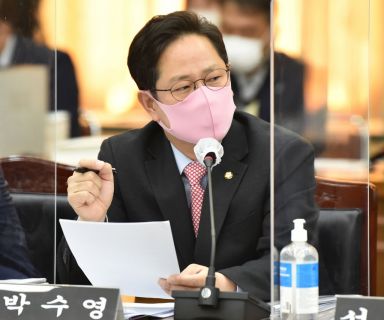
He stated, "The biggest cause of welfare inertia lies in the retrospective and punitive nature of audits." He explained, "The current audit system conducts audits 2 to 3 years after execution is completed, so when there are ambiguous issues between reality and regulations, frontline public officials with insufficient information inevitably respond passively, making the audit system an obstacle to proactive administration."
The pre-consulting audit differs from the current proactive administration exemption. Representative Park explained, "The current proactive administration exemption system offers no guarantee of exemption when problems occur," and added, "The pre-consulting audit is decisively different because if the execution follows what was decided in advance through the best efforts of auditors and related departments, exemption is confirmed beforehand."
Representative Park emphasized, "The legalization of the pre-consulting audit will bring about a paradigm shift that completely changes the existing audit system," and stated, "It will perform not only preemptive and preventive audits but also the function of identifying public officials who engage in passive administration by the Board of Audit and Inspection and auditors of each institution."
© The Asia Business Daily(www.asiae.co.kr). All rights reserved.
![Clutching a Stolen Dior Bag, Saying "I Hate Being Poor but Real"... The Grotesque Con of a "Human Knockoff" [Slate]](https://cwcontent.asiae.co.kr/asiaresize/183/2026021902243444107_1771435474.jpg)















