36.8% of Drug Offenders Arrested in the First Half of This Year Are Aged 10-20
Drug Offenders Under 19 Soar 156.5% Compared to Last Year
Anonymous Transactions Enabled by SNS and Cryptocurrency Development
Experts: "Preventing Youth from Accessing Drugs Is Urgent"
"Drug Prevention Policies and Rehabilitation Programs for Addicts Must Be Established"

[Asia Economy Reporter Lim Juhyung] The age group of drug offenders caught supplying and using illegal drugs is rapidly decreasing, causing shock. Not only has the status of being a 'drug-free country' become precarious, but there are also concerns that exposure to drugs during adolescence could lead to bigger social problems in the future. Experts suggest that fundamental prevention and relapse prevention policies must be established to address youth drug addiction issues.
According to the National Police Agency, a total of 5,108 drug offenders were arrested through crackdowns in the first half of this year (January to June), of which 36.8% (1,877 people) were young people in their teens and twenties. By age group, teenagers accounted for 178 people (3.5%) and those in their twenties accounted for 1,699 people (33.3%).
The number of drug offenders arrested is increasing every year, and the age group is rapidly getting younger. According to the overall crackdown data for the first half of the year jointly compiled by the government, including the National Police Agency, Ministry of Foreign Affairs, Ministry of Food and Drug Safety, Supreme Prosecutors' Office, Customs Service, and Korea Coast Guard, the number of people caught was 7,565, an increase of about 8.6% compared to the same period last year. Teen drug offenders aged 19 or younger surged by a staggering 156.5% to 277 compared to the same period last year.
The sharp increase in drug offenders in their teens and twenties is due to the development of the internet and payment methods. It has become easy to contact drug dealers anywhere and conduct anonymous transactions. The proportion of internet drug offenders in the first half of the year was 25%, a significant rise from 19.6% the previous year. The proportion of offenders using virtual currency, which is difficult to trace, also increased more than threefold from 1.8% last year to 6.6%.
 Accounts promoting drug sales on the social networking service (SNS) 'Twitter.' Drug slang has been blurred to prevent copycat crimes. / Photo by Twitter capture
Social networking services (SNS) frequently used by young people, such as Twitter and Facebook, openly host accounts promoting drug transactions. They post specific keywords related to drugs on SNS to attract buyers' attention, then lure them into secret messenger rooms like 'Telegram' to induce virtual currency payments.
As drug offenders grow younger, various social problems have also occurred one after another. In July last year, two people in their twenties who had taken drugs brutally assaulted and killed a peer friend, then dismembered the body and abandoned it in a travel bag, causing shock.
At the time of the crime, they were intoxicated and hallucinating due to drugs when they assaulted their friend. After abandoning the body, they even sent false text messages to the victim's mother saying "I'm doing well."
In May, 41 teenagers were arrested by the police for illegally obtaining and using or selling the opioid painkiller 'Fentanyl' from hospitals and pharmacies in the Busan and Gyeongnam regions. Fentanyl is an opioid analgesic mainly prescribed to terminal cancer patients or patients with complex regional pain syndrome (CRPS) who experience prolonged severe pain.
The teenage suspects arrested by the police were found to have sold the drug to their peers and used drugs not only in parks, shopping areas, and restrooms but also inside schools.
 Experts have urged support for drug addiction prevention and rehabilitation education programs to prevent the spread of drugs. / Photo by Yonhap News
As the number of teenagers and young adults exposed to drugs increases, citizens have expressed concerned reactions.
A 20-something office worker, Mr. A, said, "Honestly, I thought drug problems only existed overseas, but I was very surprised to hear the news that they have spread a lot domestically. I'm worried that people under the influence of drugs might commit violent crimes."
Another office worker, Mr. B (33), said, "It's a serious problem that even children as young as high school students can easily purchase drugs. Drugs are scary enough to ruin adults easily, so wouldn't they be even more fatal to children?"
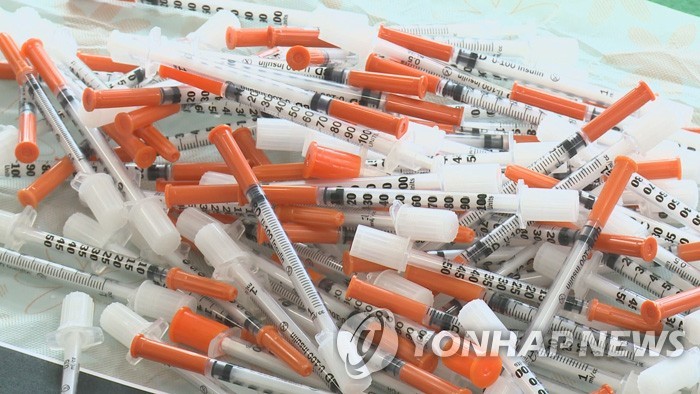 It has been confirmed that 36.8% of drug offenders arrested by the police in the first half of this year belong to the 10-20 age group, causing shock. / Photo by Yonhap News
Experts advise that fundamental drug addiction prevention and rehabilitation programs are necessary to solve the problem of drug spread in society.
Jeon Kyungsoo, president of the Korean Society of Drug Science, said, "With the development of SNS, children can easily purchase drugs, and drugs have already spread throughout everyday life in Korean society. It is no longer a situation where we can call ourselves a drug-free country. Especially, exposure to drugs from adolescence is more serious because it can harm health due to brain diseases," he pointed out.
He continued, "To eradicate drugs, arresting drug offenders is important, but it is more urgent to prepare preventive measures so that adolescents cannot access drugs in the first place. Also, rehabilitation education programs to prevent relapse among drug addicts should be supported. These measures together can prevent drugs from infiltrating society and help rescue addicts," he suggested.
© The Asia Business Daily(www.asiae.co.kr). All rights reserved.
![Clutching a Stolen Dior Bag, Saying "I Hate Being Poor but Real"... The Grotesque Con of a "Human Knockoff" [Slate]](https://cwcontent.asiae.co.kr/asiaresize/183/2026021902243444107_1771435474.jpg)

















