National Museum of Korea and National Museum of Modern and Contemporary Art to Hold 'Lee Kun-hee Collection' Special Exhibition on the 21st
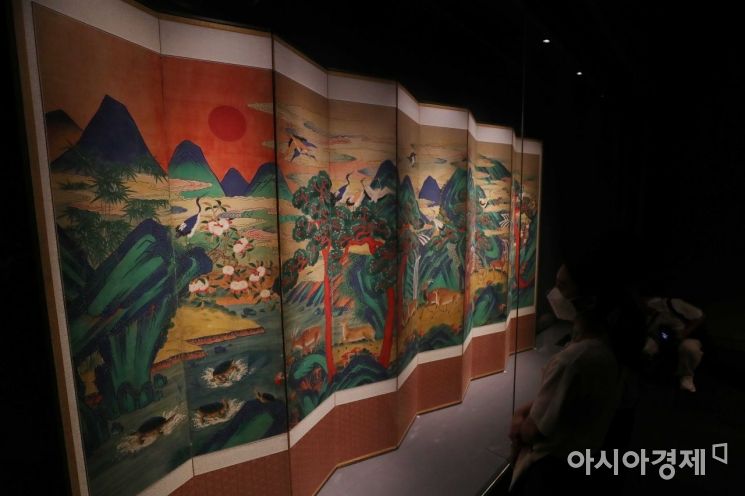 The press preview for the exhibition "Enjoying the Great Cultural Heritage Together - Masterpieces Donated by the Late Chairman Lee Kun-hee" was held on the 20th at the National Museum of Korea in Yongsan-gu, Seoul. A ten-panel folding screen of the Ten Longevity Symbols is on display.
[Asia Economy Reporters Donghyun Choi, Hyunjin Jung] 'Inwangjesaekdo' (National Treasure No. 216), 'Thousand-Armed Avalokitesvara Bodhisattva Painting' (Treasure No. 2015), 'Red Ganto Pottery' (Bronze Age artifact)...
On the 20th, at the National Museum of Korea's permanent exhibition hall located in Yongsan-gu, Seoul, the collection of the late Samsung Chairman Lee Kun-hee was unveiled at a press preview held a day before the first large-scale exhibition of the 'Lee Kun-hee Collection.' The exhibition featured numerous Korean antiques from the Bronze Age to the Joseon Dynasty, pieces often seen only in textbooks. It was a moment to witness firsthand Chairman Lee Kun-hee's collecting philosophy and vast spectrum, who said, "Collecting and preserving cultural heritage is our collective duty for the future of human culture."
The National Museum of Korea and the National Museum of Modern and Contemporary Art will jointly hold a special exhibition of the 'Lee Kun-hee Collection' starting from the 21st. This is the first large-scale exhibition since the Samsung family donated over 23,000 items from Chairman Lee's collection to the nation in April. Visitors can see 135 masterpieces selected as the finest works from his collection at the two institutions.
National Museum of Korea: Extensive Collection from Bronze Age to Joseon Dynasty
The exhibition at the National Museum of Korea, open until September 26, is titled 'Sharing Great Cultural Heritage - Masterpieces Donated by the Late Chairman Lee Kun-hee.' Among the more than 21,600 items donated by Chairman Lee's family to the museum, 77 masterpieces representing various eras and fields are displayed.
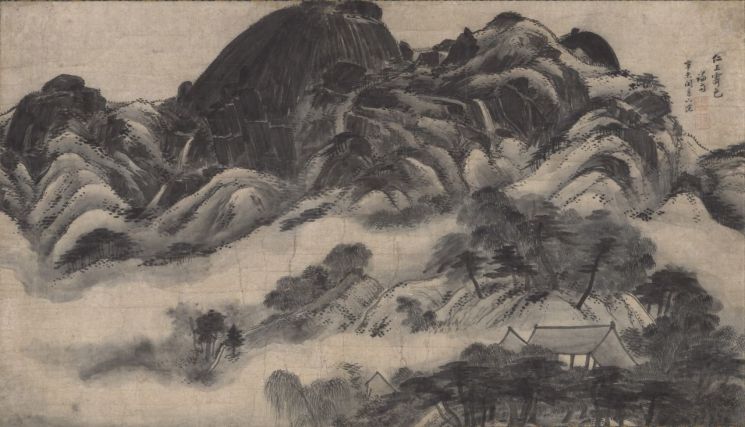
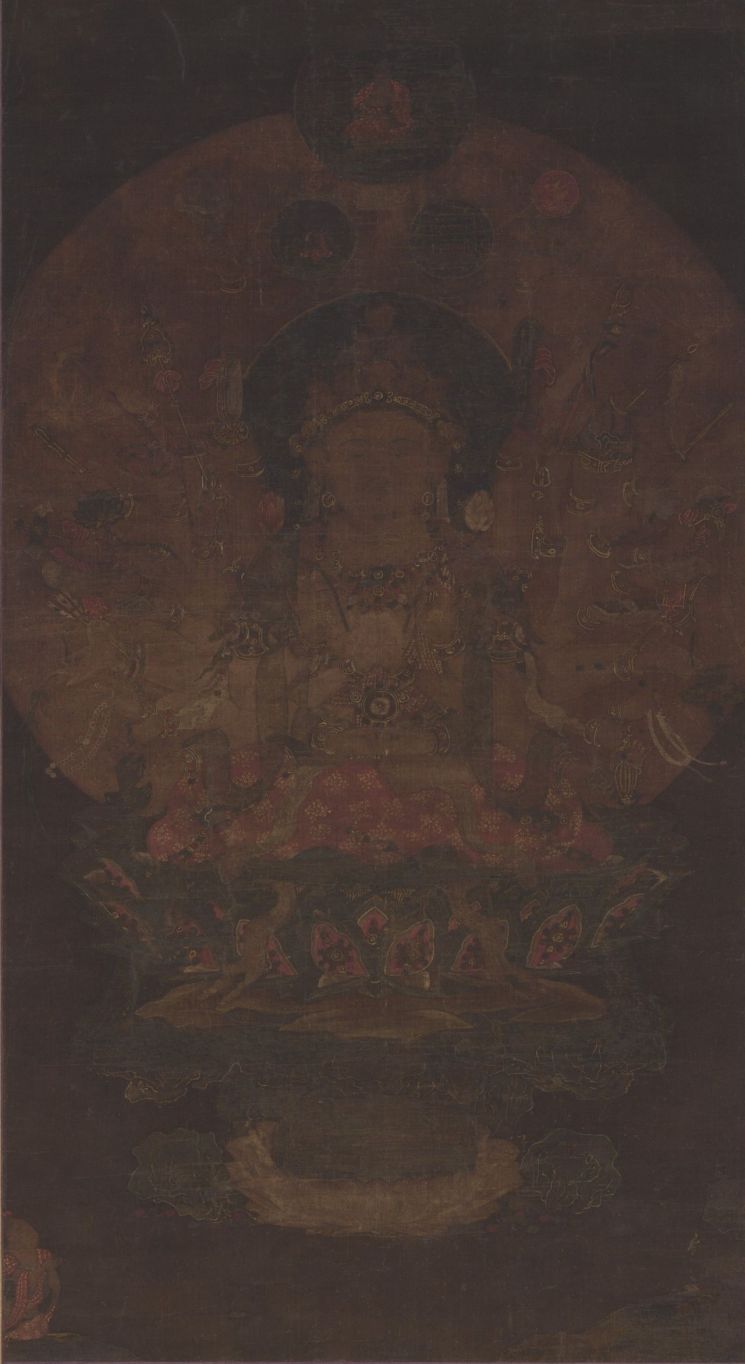
Key works include 'Inwangjesaekdo' by the master painter Jeong Seon (1676?1759), the delicate 'Ilgwang Samjon Statue' (National Treasure No. 134) from the Three Kingdoms period, the exquisite Goryeo Dynasty Buddhist scripture painting 'Daebangwangbul Hwaeomgyeong Bohyeonhaengwonpum' (National Treasure No. 235), the only existing 'Thousand-Armed Avalokitesvara Bodhisattva Painting,' and 'Chuseongbudo' (Treasure No. 1393) painted in his later years by Danwon Kim Hong-do (1757?circa 1806).
The National Museum of Korea focused on the 'diversity' of the Lee Kun-hee Collection in this exhibition. The actual works encompass all periods and fields of Korean history, including pottery and bronze artifacts from the Bronze Age and Early Iron Age, gilt-bronze Buddha statues and pottery from the Three Kingdoms period, Buddhist scriptures, paintings, celadon ceramics from the Goryeo Dynasty, and literature, paintings, ceramics, and wooden furniture from the Joseon Dynasty. The oldest piece is the Bronze Age pottery called 'Red Ganto Pottery,' which features a beautiful red gloss created by applying iron oxide. The most recent works are the 19th-century Joseon Dynasty 'Three-tier Chest' and the painting 'Magpie and Tiger.' Su-kyung Lee, a curator at the National Museum of Korea, said, "We selected only historically, art historically, and artistically valuable works that are well known to the public," adding, "We hope the public's curiosity will lead to genuine interest in culture and the arts."
Facilities that allow visitors to explore parts of the artworks difficult to see with the naked eye, such as pigments and internal structures, using digital technology are installed throughout the exhibition hall. A 98-inch large screen lets visitors virtually tour Inwangsan Mountain's famous spots depicted in 'Inwangjesaekdo,' such as Chima Rock, Beom Rock, and Suseongdong Valley. The scene of rain clearing over Inwangsan is also shown. The 'Goryeo Buddhist Paintings' are presented through touch-screen videos featuring infrared and X-ray photographs. A National Museum of Korea official explained, "Infrared photos reveal the ink underdrawings, and X-ray photos show the coloring methods and pigments," adding, "Visitors will enjoy discovering new aspects of the 'Thousand-Armed Avalokitesvara Bodhisattva Painting' and 'Water Moon Avalokitesvara Painting.'"
National Museum of Modern and Contemporary Art: Carefully Selected Representative Works of Early 20th Century Korean Modern and Contemporary Art
The National Museum of Modern and Contemporary Art will hold the 'Lee Kun-hee Collection Special Exhibition: Masterpieces of Korean Art' at its Seoul branch until March 13, 2022. Among the 1,488 donated items, 58 representative works of early to mid-20th century Korean art will be exhibited.
The museum divided the exhibition into three themes: 'Reception and Change,' 'Expression of Individuality,' and 'Settlement and Exploration.' 'Reception and Change' examines the Korean art scene's transformation during the Japanese colonial period as new influences arrived. Western media such as oil painting emerged, and terms like portrait, still life, and landscape painting were first used. Traditional Joseon calligraphy and painting also underwent changes. Representative works include Baek Nam-soon's 'Paradise' (circa 1936) and Lee Sang-beom's 'Mureungdowon' (1922).
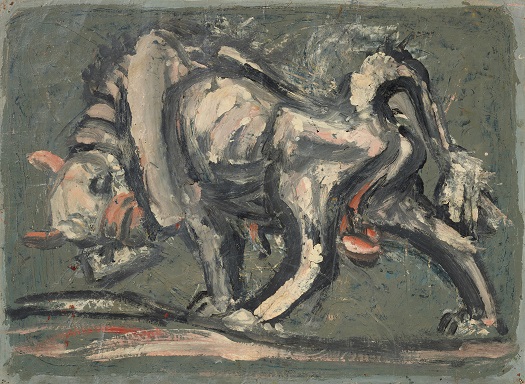 Lee Jung-seop, White Ox, 1950s, Oil on paper, 30.5x41.5cm. (Photo by National Museum of Modern and Contemporary Art)
The 'Expression of Individuality' theme explores artists who poured their passion into their work during the turbulent period from 1945 to 1950, encompassing liberation and the Korean War. Notable artists include Kim Whanki, Yoo Youngkuk, Park Soo-keun, and Lee Jung-seop. Visitors can appreciate representative works of Korean modern and contemporary art such as Kim Whanki's 'Women and Jars' (1950s), Lee Jung-seop's 'Bull' (1950s), and Park Soo-keun's 'Woman Pounding Grain' (1954).
The 'Settlement and Exploration' theme investigates the artistic worlds of artists who settled domestically and abroad after the civil war. During this period, artists such as Lee Seung-ja, Nam Kwan, Lee Ungno, Kwon Ok-yeon, Kim Heung-soo, Moon Shin, Park Saeng-gwang, and Chun Kyung-ja established unique artistic styles, enriching Korean art. Representative works include Lee Seung-ja's 'A Thousand-Year Old House' (1961) and Kim Heung-soo's 'Korean Women' (1959).
Yun Bum-mo, director of the National Museum of Modern and Contemporary Art, said, "We deeply thank the family of Chairman Lee Kun-hee for generously donating a large number of artworks of high art historical value both domestically and internationally," adding, "Starting with this exhibition, we will create opportunities for the public to enjoy quality donated works and broaden the horizons of art historical research."
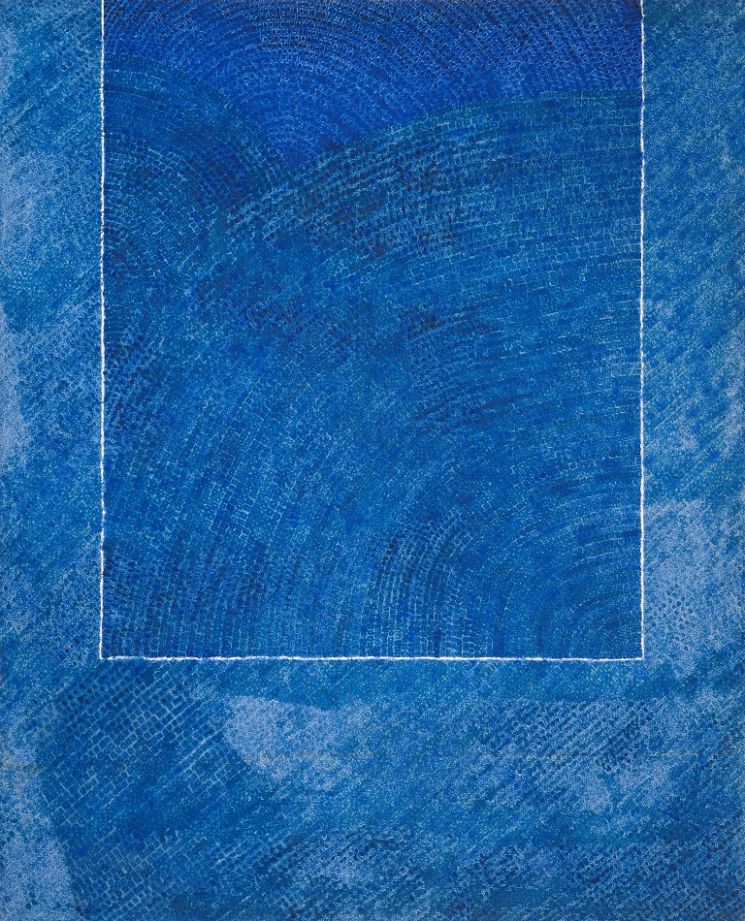 Kim Whanki Sanullim 19-II-73#307, 1973, oil on canvas, 264x213cm. (Photo courtesy of National Museum of Modern and Contemporary Art)
Chairman Lee Kun-hee's Exceptional Love for Culture and the Arts
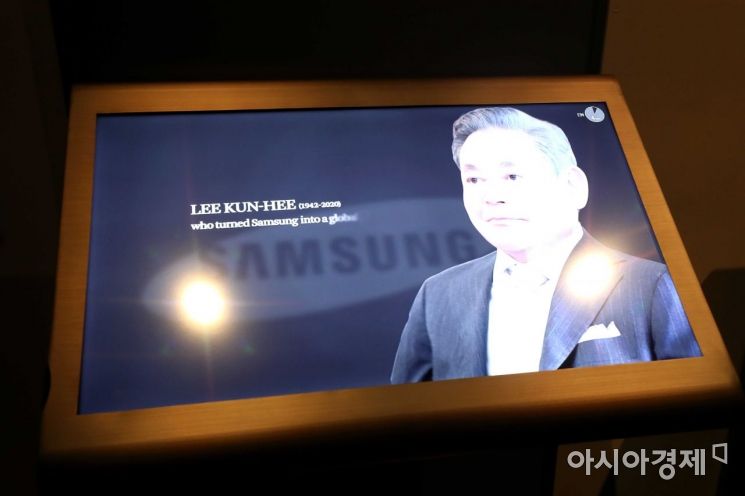 The press preview for the exhibition "Sharing the Great Cultural Heritage - Masterpieces Donated by the Late Chairman Lee Kun-hee" was held on the 20th at the National Museum of Korea in Yongsan-gu, Seoul. A photo of Chairman Lee Kun-hee is displayed on the exhibition information monitor.
The family honored Chairman Lee's lifelong emphasis on the importance of collecting and preserving cultural heritage by donating a large-scale collection of designated cultural properties and artworks with high artistic and historical value to national institutions.
During his lifetime, Chairman Lee stressed the need to gather Korean cultural assets scattered worldwide in one place to elevate the status of the National Museum. His passion for culture and the arts was extraordinary. He actively supported cultural discovery and sponsorship, believing that representative works by major artists recognized in world art history should be in Korea, and he frequently mentioned the importance of collecting and preserving cultural heritage.
Moreover, Chairman Lee supported the globalization of Korean art by helping establish Korean art rooms at prestigious overseas museums such as the Victoria and Albert Museum in the UK and the Metropolitan Museum of Art in the US. He placed a 'Samsung Asia Art Curator' at the Guggenheim Museum in the US and spared no effort in supporting artistic talent by selecting promising artists and sending them abroad for training.
© The Asia Business Daily(www.asiae.co.kr). All rights reserved.
![Clutching a Stolen Dior Bag, Saying "I Hate Being Poor but Real"... The Grotesque Con of a "Human Knockoff" [Slate]](https://cwcontent.asiae.co.kr/asiaresize/183/2026021902243444107_1771435474.jpg)

















