"Harassed at Work" Woman in Her 40s in Pohang, Gyeongbuk, Takes Extreme Measures
7.8% of Workplace Power Abuse Reports Involve Sexual Crimes
Experts Say "Reporting Is Harder in Small Businesses with Fewer Than 50 Employees"
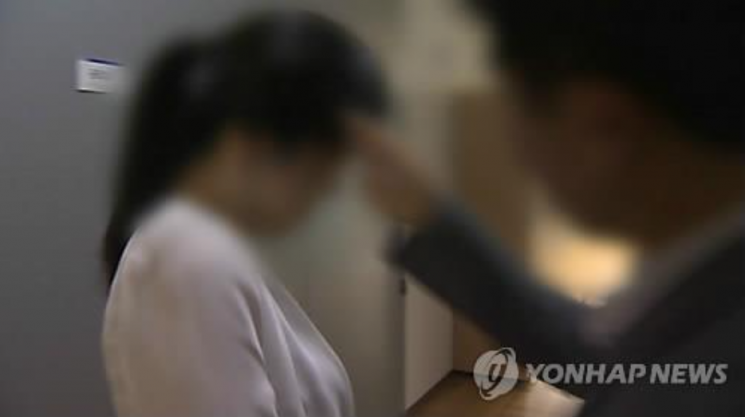
[Asia Economy Reporter Heo Midam] "It was truly miserable and humiliating, so I really hope (the perpetrators) get punished."
This is part of the suicide note left by a woman in her 40s who worked at a construction company and experienced sexual harassment and verbal abuse from a manager before taking her own life. Recently, cases of sexual harassment, including verbal sexual insults and physical contact using workplace authority, have been continuously reported. The victims complain that even though they suffer from sexual harassment and molestation, it is difficult to report because the perpetrators hold superior positions within the company. Experts suggest that related laws need to be supplemented to reduce sexual crimes in the workplace.
Recently, A (48, female), who worked at a construction company in Pohang, Gyeongbuk Province, caused a stir after posting about workplace bullying and sexual harassment and then taking her own life.
According to the Pohang branch of the National Plant Construction Union and others, A, who worked as a fire watcher at a construction site in April, received instructions unrelated to her duties from two site managers within less than a week of joining the company. They reportedly ordered A to move 100 heavy steel pipes and frequently used informal and rude language such as "Hey, hey, hey" and "Hey, move this."
In particular, A was said to have been subjected to sexually harassing remarks. A’s daughter expressed her anger in an interview with a media outlet, saying, "My mother cried and said, 'It’s so shameful, so humiliating, I can’t bear it.'"
A eventually reported the abuse to the labor union. However, the perpetrators reportedly shouted at her, saying things like "When did I ever do that?" right in front of her.
Ultimately, A could not endure this and ended her life about 50 days after joining the company. The seven-page suicide note she left reportedly contained details of suffering caused by her manager’s verbal abuse and unfair work orders.
Sexual crimes in the workplace are not new. According to Workplace Gapjil 119, among 1,014 email reports received from January to May this year, 79 cases (7.8%) involved workplace sexual crimes such as sexual assault, molestation, and harassment. From the launch of Workplace Gapjil 119 in 2017 until last year, 486 out of 10,101 reports (4.8%) were related to workplace sexual crimes, but this year alone, the proportion has increased by about 1.6 times.
On the 31st of last month, B, a former tax office official, was found dead in an apartment in Michuhol-gu, Incheon, after claiming to have been sexually molested. B had quit his job after being sexually harassed by a superior during a department dinner in September 2017. It was understood that he suffered from depression and psychological anxiety afterward.
In particular, B posted several messages during his lifetime stating that workplace measures were insufficient, such as the failure to properly separate him from the perpetrator at work. B also complained of secondary damage, saying that after reporting the sexual harassment, defamatory text messages about him circulated within the workplace.
The text messages included content criticizing B, such as "That woman (B) is spreading rumors (about being victimized), but it’s unconfirmed, she doesn’t even come to the office, and she has 16 prior offenses. The manager is a good person, but she lost weight due to emotional distress."
 Message posted by the deceased former public official Mr. B as evidence of secondary harm. Photo by online community capture.
According to the current Gender Equality Employment Act, when sexual harassment occurs in the workplace, the employer must immediately begin fact-finding investigations upon receiving a report and take appropriate measures such as changing the victim’s work location or granting paid leave. Failure to comply may result in a fine of up to 5 million KRW.
However, some victims do not even report due to fear of retaliation such as group ostracism. Especially, some victims hesitate to report due to unstable employment status, such as probationary or contract workers.
According to a recent case disclosed by Workplace Gapjil 119, a new employee C was sexually molested by a superior during a company dinner in April but did not report it.
C said, "I demanded an apology and received one, but I could not see any remorse, and rather, the superior talks about me to colleagues as if I am the victim," adding, "I am afraid to report because I fear retaliation and worsening secondary harm."
Experts point out that it is even more difficult to report workplace sexual crimes in small businesses with fewer than 50 employees.
Gumi Young, a research fellow at the Korean Women's Development Institute, said, "Employers have an obligation to investigate and take follow-up measures when sexual harassment occurs. However, in Korea, the proportion of businesses with fewer than 50 employees is high. In small businesses, the perpetrator is often the employer. In such cases, victims may judge that problems are unlikely to be resolved through internal procedures."
She added, "Some hesitate to report because they think investigations or measures against perpetrators will not be properly conducted in the workplace. It is necessary to supplement administrative and judicial aspects to ensure that laws regulating workplace sexual harassment, such as the Gender Equality Employment Act, are effectively applied in reality."
© The Asia Business Daily(www.asiae.co.kr). All rights reserved.
![Clutching a Stolen Dior Bag, Saying "I Hate Being Poor but Real"... The Grotesque Con of a "Human Knockoff" [Slate]](https://cwcontent.asiae.co.kr/asiaresize/183/2026021902243444107_1771435474.jpg)

















