Highest Risk Asset Regulation
Proposal to Impose 1250% Weight
Funds Needed to Offset 100% Losses
IMF Also Suggests Possible Regulation Introduction
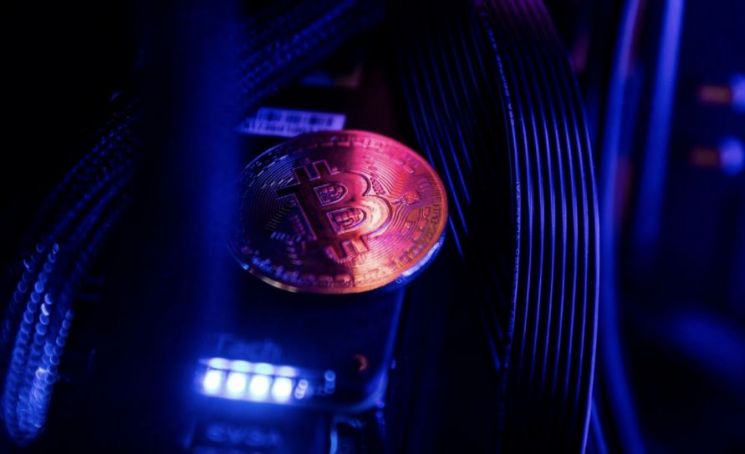
[Asia Economy reporters Yujin Cho and Suhwan Kim] Global financial authorities have stepped in to curb attempts by governments and banks around the world to incorporate cryptocurrencies, including Bitcoin, into the formal financial system.
According to Bloomberg and The Guardian on the 10th (local time), the Basel Committee on Banking Supervision (BCBS) has classified cryptocurrencies, including Bitcoin, as the highest risk assets and proposed that banks investing in cryptocurrencies be required to hold additional capital.
The Basel Committee, composed of central banks and banking supervisors from 10 major countries including the U.S. Federal Reserve (Fed) and the European Central Bank (ECB), proposed imposing a 1250% risk weight on cryptocurrencies. This means that banks must secure other safe assets equivalent to 1250% of the value of the cryptocurrencies they hold.
The Basel Committee stated, "Cryptocurrencies pose significant risks of being used for money laundering, terrorist financing, and other illicit activities, and they can destabilize the financial system, putting banks at risk," and demanded that banks in each country be required to reserve funds sufficient to fully offset 100% of losses from cryptocurrencies.
This measure is expected to disrupt banks' plans for cryptocurrency-related investments or product management worldwide. In particular, since banks must prepare sufficient funds to fully offset losses from the highly volatile cryptocurrencies, it is observed that the incentives for banks to enter the cryptocurrency market have further diminished.
On the same day, the International Monetary Fund (IMF) also hinted at the possibility of introducing regulatory measures, citing the significant risks posed by cryptocurrencies. The IMF announced that El Salvador's decision to adopt Bitcoin as legal tender would raise a series of risks and regulatory issues.
Jerry Rice, IMF spokesperson, said, "Adopting Bitcoin as legal tender is a matter that requires very careful analysis," adding, "Many macroeconomic, fiscal, and legal issues could arise, and we are closely monitoring El Salvador's situation."
He further added, "Generally, cryptocurrencies can cause very significant risks, and effective regulatory measures are crucial when dealing with them." El Salvador approved Bitcoin as legal tender on the 9th, becoming the first country in the world to do so.
Experts pointed out that El Salvador's adoption of Bitcoin could worsen corruption issues under the authoritarian regime and exacerbate economic difficulties.
Siobhan Modern, Head of Latin America Bond Investment Strategy at Amherst Pierpont Securities, analyzed, "Adopting Bitcoin under an authoritarian regime will further worsen concerns about corruption, money laundering, and the independence of regulatory agencies." Citibank also judged in a recent report that "the Bitcoin news coming out of El Salvador complicates discussions with the IMF."
© The Asia Business Daily(www.asiae.co.kr). All rights reserved.
![Clutching a Stolen Dior Bag, Saying "I Hate Being Poor but Real"... The Grotesque Con of a "Human Knockoff" [Slate]](https://cwcontent.asiae.co.kr/asiaresize/183/2026021902243444107_1771435474.jpg)















