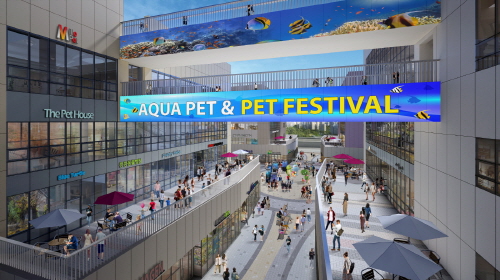
A wave of change is sweeping through commercial districts that were once uniformly arranged. These shopping areas, which existed solely for the purpose of ‘consumption,’ are transforming into places where people can also enjoy ‘tourism,’ ‘culture,’ and ‘experiences.’ As consumer culture evolves, shopping districts have adapted to the times. The recently gaining attention shopping centers are the entertainment complex malls known as the ‘4th generation shopping districts.’
People’s consumer culture has been steadily changing. Recently, consumption has become not just about purchasing goods but part of leisure and hobbies. The era has arrived where the act of ‘shopping’ itself holds symbolic meaning, rather than focusing on questions like ‘How much cheaper can I buy it?’ or ‘How many varieties are available?’
Therefore, people now desire spaces not just for buying things but for enjoyment. They want places where they can rest and relax, shopping spaces where they can immediately access what interests them, and new concept complex spaces are being created in cities.
Accordingly, shopping district trends have changed. The 1st generation (late 1990s) consisted of box-type malls existing solely for consumption purposes. Examples include department stores, Techno Mart, and shopping malls in Dongdaemun Shopping Town. The 2nd generation (early 2000s) popularized commercial facilities combining culture and consumption. Places where you could eat, watch movies, and shop all in one location. Representative examples include COEX Mall and Ilsan La Festa.
Entering the 3rd generation in the mid-2000s, as online shopping became widespread, commercial facilities focusing on F&B and emotional appeal gained attention. These included European-style street malls and themed shopping districts. Facilities within apartment complexes like Avenue France and Karim Avenue also focused on creating themed local landmarks. Toward the late 2000s, commercial facilities incorporating entertainment began to emerge. These grew in scale and became tourist attractions, with Starfield and Lotte Mall being representative 4th generation entertainment commercial facilities.
Shinsegae Group’s ‘Starfield’ is a prime example of a 4th generation entertainment-type commercial facility. It offers everything from F&B to shopping centers, cultural facilities, and experience zones. Looking at the first branch, ‘Starfield Hanam,’ it includes a large supermarket (Emart), restaurants & cafes, fashion apparel & accessories, beauty shops, a golf practice facility called GDR Academy, a leisure activity zone called ‘Sports Monster,’ a jjimjil spa, and a water park facility named ‘Aqua Field.’ ‘Starfield Hanam’ set a record by surpassing 10 million visitors within 140 days of its opening in 2017. It established itself as a tourist destination, attracting consumers not only from Hanam City but also from Seoul, Gyeonggi, and Incheon regions.
Lotte Mall is similar. Lotte Mall Eunpyeong, which opened in 2016, also incorporates F&B, a large supermarket (Lotte Mart), fashion apparel & accessories, beauty shops, a sports experience zone, a cinema, a car center, and a car wash. Lotte Mall Eunpyeong attracted approximately 2.3 million visitors within just over a month after opening.
‘Aqua Pet Land’ on Turtle Island in Siwha MTV, Siheung City, Gyeonggi Province, is also expected to be a 4th generation entertainment shopping mall. This shopping district is the nation’s first aquarium-themed park mall concept combined with lifestyle elements. It features an aqua pet facility zone exhibiting and selling rare ornamental fish and specialized species from around the world. Additionally, it plans to introduce various experience facilities and attractions related to aqua pets. It is expected to attract about 1.5 million consumers annually from regions including Siheung City, Incheon, Gyeonggi, and Seoul.
Park Sang-eon, CEO of real estate consulting firm UNR Consulting, stated, “The realization of shopping district development and operation concepts closely linked to consumer attraction is a crucial factor for revitalization,” adding, “When investing in shopping districts, it is important to secure locations and understand recent consumer trends to gain a competitive edge.”
© The Asia Business Daily(www.asiae.co.kr). All rights reserved.
![Clutching a Stolen Dior Bag, Saying "I Hate Being Poor but Real"... The Grotesque Con of a "Human Knockoff" [Slate]](https://cwcontent.asiae.co.kr/asiaresize/183/2026021902243444107_1771435474.jpg)















