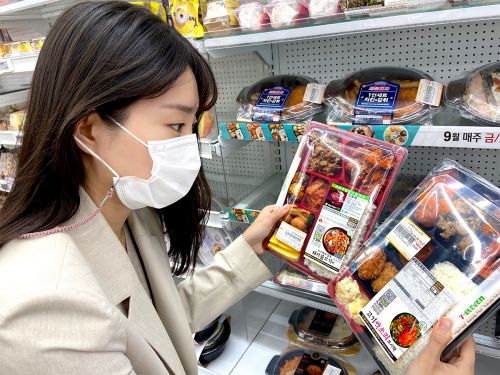
[Asia Economy Reporter Jo In-kyung] "There were no lunch boxes left, and when I tried to pay with Zero Pay, they said orange juice wasn’t allowed, nor was drinking yogurt, so it was embarrassing..." (Parent)
"Since it was the first day, some items hadn’t yet been registered in the system as voucher products, and as a part-time worker like me didn’t really know much, students and parents kept asking all sorts of questions, so it was several times more hectic than usual." (Convenience store employee)
First Day of Hope Meal Service, Complaints from Students and Parents
On the 20th, the first day of using the ‘Hope Meal Voucher’ at convenience stores in the Seoul area, complaints from students and parents erupted everywhere. The main criticism was that the available items were limited to lunch boxes, fruit, milk, and fruit juice, leaving few choices, and the lack of proper guidance caused confusion. In some convenience stores in residential areas, lunch boxes were in short supply and sold out early.
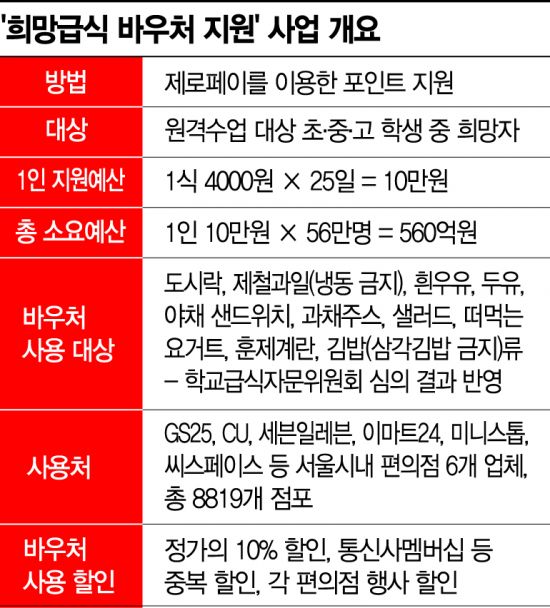
This voucher program, which provides 1 million KRW per student to 560,000 elementary, middle, and high school students in Seoul who are attending remote classes due to the prolonged COVID-19 pandemic, allows them to purchase lunch boxes at convenience stores. The program is funded with 56 billion KRW from the education office budget and local government free meal budgets.
A Seoul Metropolitan Office of Education official explained, "Last year, we supported households with food ingredient packages consisting of rice, agricultural, fishery, and livestock products, and processed foods, but parents wanted more ready-to-eat lunch boxes, so this year we changed the usage location to convenience stores." Convenience stores are easily accessible for students and make it easier to meet the meal price of 4,000 KRW per meal compared to lunch box companies or restaurants. The items available for purchase were finalized through deliberation by the Korean School Meal Advisory Committee, which includes nutrition societies, the Ministry of Food and Drug Safety, and university professors.
On Site: "Do They Really Have to Eat Lunch Boxes?"
Parent A, met at a convenience store in the Mapo area, said, "From a parent's perspective, no matter how good the composition is, I don’t want to force my child to eat cold convenience store lunch boxes every day," and added, "Bread, hot bars, or cup rice would be fine too, so it’s frustrating that no one asked for these opinions in advance."
Sixth-grade elementary student B said, "Cup noodles or drinks aren’t healthy, so I get why they’re not allowed, but I’d still be hungry eating just vegetable sandwiches and salads," and sighed, "My favorite is a triangle kimbap and banana milk, but I guess I’ll just have to buy those with my mom’s card."
On that day, orders for lunch boxes, kimbap, sandwiches, smoked eggs, fruit, vegetable juice, white milk, and soy milk at convenience stores increased by about 15-24% compared to usual. A convenience store representative explained, "On the first day of implementation, each store stocked more voucher-eligible items like lunch boxes and fruit, but many places sold out early because so many customers came looking for them."
Convenience Stores Selling High-Priced Fruit Packages
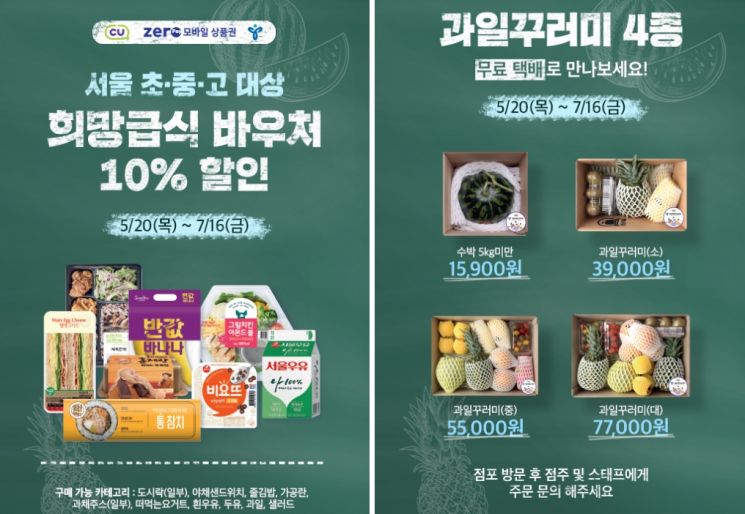
Given the situation, fruit packages priced to match the voucher limit have become popular. CU has introduced fruit packages at some stores that bundle small quantities of watermelon, melon, pineapple, kiwi, mango, cherry tomatoes, and other fruits. A whole watermelon costs 15,900 KRW, and fruit packages range from 39,000 to 77,000 KRW. When paid with vouchers at convenience stores, these are delivered to homes by courier.
Consumer reactions are mixed. Parent C, met at a convenience store, said, "I received 200,000 KRW worth of vouchers for my two children, but there wasn’t much I wanted to buy except milk, so I’ll just let them eat plenty of fruit." On the other hand, another parent D said, "They provide vouchers to solve students’ lunch problems, but nothing is allowed, and in the end, they’re just forcing expensive fruit on us," and criticized, "The education office’s desk-bound administration and convenience stores’ tricks are just wasting taxpayers’ money."
© The Asia Business Daily(www.asiae.co.kr). All rights reserved.
![Clutching a Stolen Dior Bag, Saying "I Hate Being Poor but Real"... The Grotesque Con of a "Human Knockoff" [Slate]](https://cwcontent.asiae.co.kr/asiaresize/183/2026021902243444107_1771435474.jpg)

















