Surging Domestic Demand for Rebar Cheaper Than Imported Chinese Rebar
Steelmakers Fully Operate Rebar Production Lines... Market Hoarding
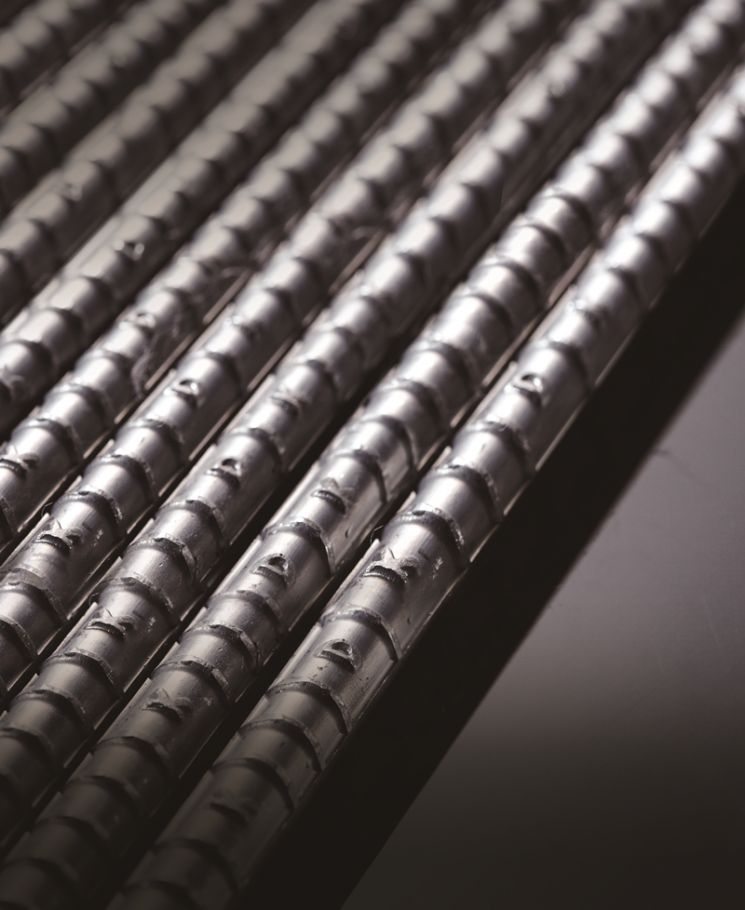
[Asia Economy Reporter Hwang Yoon-joo] Amid rising rebar prices and worsening supply shortages, a price inversion phenomenon has occurred where low-priced Chinese rebar is being sold at higher prices than high-quality domestic products. This is because Chinese rebar prices are set in real-time in the distribution market, unlike domestic products supplied at fixed prices every three months.
According to the steel industry on the 21st, the current price of Chinese rebar circulating domestically is 980,000 to 1,000,000 KRW per ton. This is a 66.6% surge compared to the same period last year (600,000 KRW) and about 200,000 KRW more expensive than domestic rebar.
The selling price of domestic rebar by Korean steelmakers recorded 803,000 KRW per ton as of May, up 20.6% from the same period last year. Domestic rebar prices were set at 660,000 to 663,000 KRW until the third quarter of last year, about 10% higher than Chinese rebar. Since the fourth quarter of last year, with the global economic recovery and the rise in raw material iron ore prices coinciding, the selling prices of both domestic and Chinese rebar shifted to an upward trend. Recently, as the supply shortage worsened, the price inversion phenomenon of Chinese rebar has also appeared.
The reversal of prices between domestic and Chinese rebar is due to different pricing methods. The domestic steel industry determines rebar prices quarterly based on scrap prices with the top 10 construction companies, adding the rate of price increase. In contrast, Chinese prices are decided by immediately reflecting market prices. As domestic rebar became relatively cheaper than Chinese rebar, even speculative demand surged, causing domestic rebar inventory to drop to 150,000 tons recently. Typically, rebar inventory is maintained steadily at around 300,000 tons.
A steel industry official said, "The rapid surge in rebar demand and prices is similar to the 'raw material super cycle' from 2008 to 2010 when steel and iron ore prices skyrocketed," adding, "However, since the rise in iron ore prices is not reflected in domestic rebar selling prices, steelmakers face significant opportunity costs."
© The Asia Business Daily(www.asiae.co.kr). All rights reserved.
![Clutching a Stolen Dior Bag, Saying "I Hate Being Poor but Real"... The Grotesque Con of a "Human Knockoff" [Slate]](https://cwcontent.asiae.co.kr/asiaresize/183/2026021902243444107_1771435474.jpg)















